Blog
What Is UV DTF Printing? A Beginner’s Guide

Feeling lost in a sea of printing acronyms? If you’re trying to figure out how to get vibrant, durable designs onto tricky hard surfaces like glass, metal, or plastic-without buying any special equipment-you’re in the right place. The world of custom printing can be confusing, but the solution for tough-to-decorate items is simpler than you think. This guide is all about answering one key question: what is uv dtf printing? Think of it as a game-changing method for creating permanent, high-quality designs that function like next-level stickers. They are waterproof, scratch-resistant, and apply with a simple peel-and-stick process. No heat press, no weeding, no hassle.
In this beginner’s guide, we cut straight to the facts. We’ll break down exactly how this technology works, show you the best products to use it on, and provide a step-by-step guide to applying your first transfer perfectly. You’ll leave knowing precisely what UV DTF is and how to use it to get professional, long-lasting results for your projects. Let’s get your designs on anything.
Key Takeaways
- Get a direct answer to what is uv dtf printing and learn how it creates permanent, vibrant designs for hard goods.
- Master the simple peel-and-stick application process that requires absolutely no heat press or special equipment.
- Instantly identify the key difference between UV DTF and regular DTF so you always order the right transfer for your material.
- Discover the most popular items you can customize with UV DTF transfers, from tumblers and glass cans to phone cases.
UV DTF Printing Explained: More Than Just a Sticker
So, what is UV DTF printing? At its core, it’s a cutting-edge method for creating vibrant, permanent decals designed for hard, non-fabric surfaces. The name breaks down the technology: “UV” stands for the ultraviolet light used to instantly cure the ink, and “DTF” comes from the Direct-to-film printing (DTF) process it’s based on. Think of the final product as a high-tech, permanent sticker but with no vinyl background-just your design, crisp and clean.
To see exactly how these transfers are applied, check out this quick video demonstration:
The Core Technology: How It’s Made
The magic happens in a precise, multi-layered process that ensures unmatched quality and durability. This isn’t just ink on paper; it’s a structured decal built for performance. Here’s a simple breakdown of the production steps:
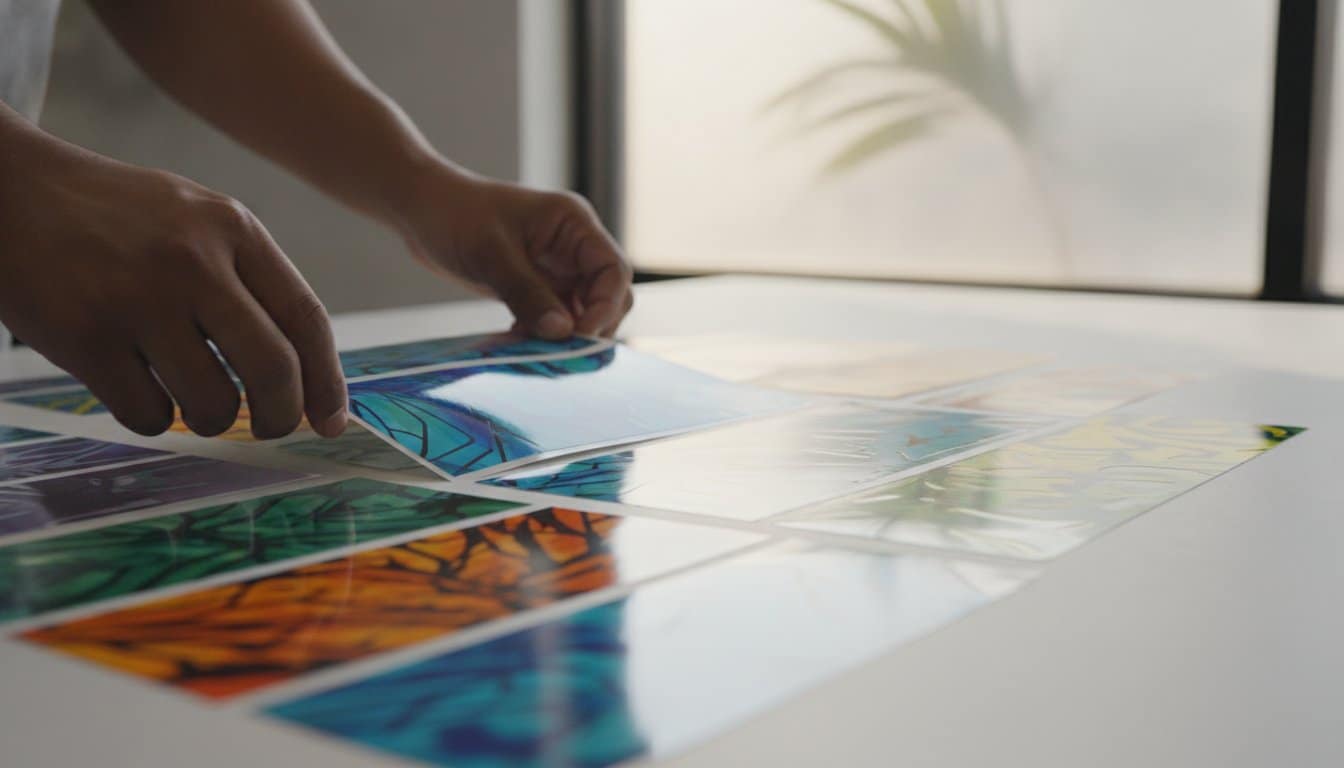
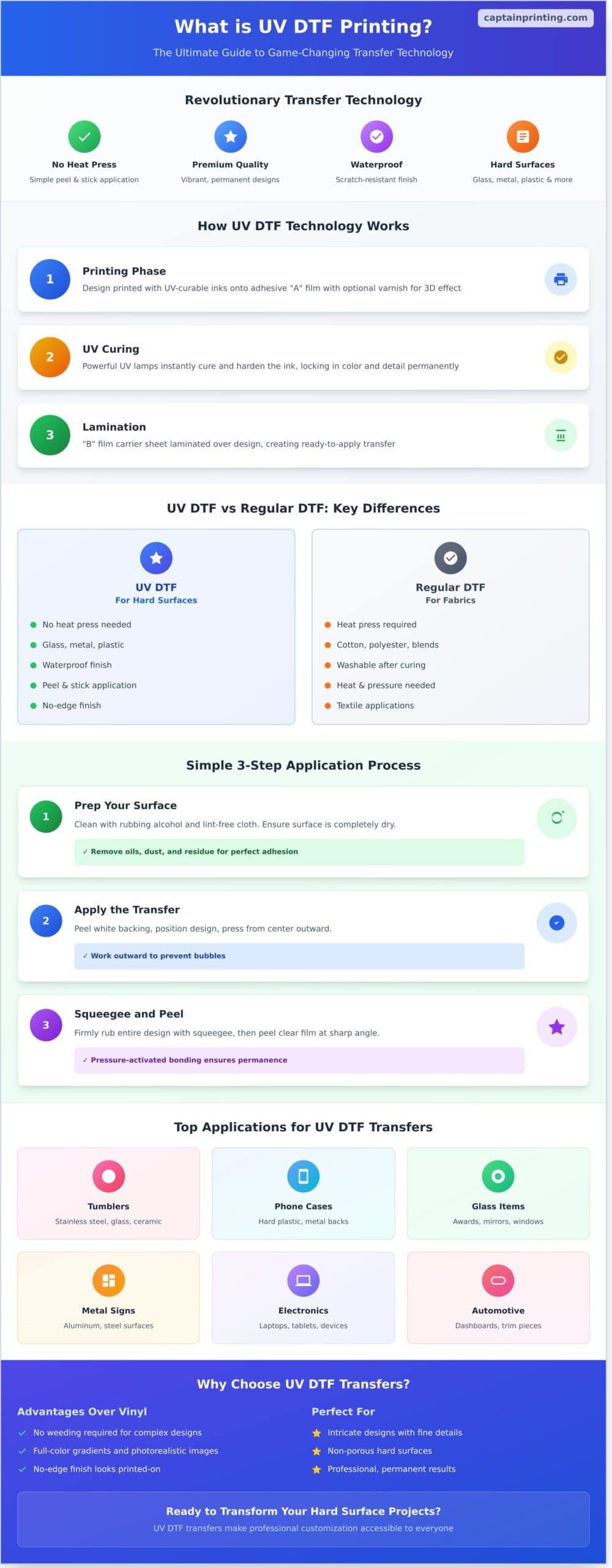
- Printing: Your design is printed with specialized UV-curable inks onto an adhesive “A” film. A layer of varnish is often added to create a glossy, slightly raised 3D effect.
- Curing: As the design is printed, powerful UV lamps pass over the ink, curing (or hardening) it instantly. This locks in the color and detail.
- Lamination: A “B” film, or carrier sheet, is then laminated over the printed design. This sheet holds everything together, making the decal ready for a simple peel-and-stick application.
What Makes It Different from a Vinyl Decal?
While both are used for decoration, UV DTF transfers offer significant advantages over traditional vinyl decals, especially for complex or detailed graphics. If you’re deciding what is best for your project, understanding these differences is key.
- No Weeding Required: Intricate designs with fine lines or floating text are notoriously difficult to “weed” with vinyl. UV DTF prints the design as a single piece, eliminating this time-consuming step entirely.
- Full-Color & Gradients: Achieve photorealistic images, complex color gradients, and tiny details that are impossible with layered or printed vinyl.
- A “No-Edge” Finish: Once applied, the design looks and feels like it was printed directly onto the surface. There is no clear background or vinyl edge, creating a premium, professional look that is both scratch-resistant and waterproof.
How to Apply UV DTF Transfers: A Simple Step-by-Step Guide
One of the biggest advantages of UV DTF printing is the application process. It’s fast, simple, and requires no special equipment. Forget the heat press. This direct application method is a core part of what is uv dtf printing and what makes it so powerful for customizing everything from mugs and phone cases to metal signs and glass awards. Your custom transfers arrive ready to apply to any hard, non-porous surface. All you need to get a professional, permanent result are a few basic tools:
- A squeegee or a firm plastic card (like a credit card)
- A clean, lint-free cloth
- Rubbing alcohol
Step 1: Prep Your Surface
A perfect application starts with a perfect surface. This is the most important step for ensuring a professional, long-lasting result. A clean surface allows the UV-cured adhesive to create a permanent bond, so don’t skip it. First, clean your object thoroughly with rubbing alcohol on a lint-free cloth to remove any oils, dust, or residue. Ensure the surface is completely dry before moving on to the next step.
Step 2: Apply the Transfer
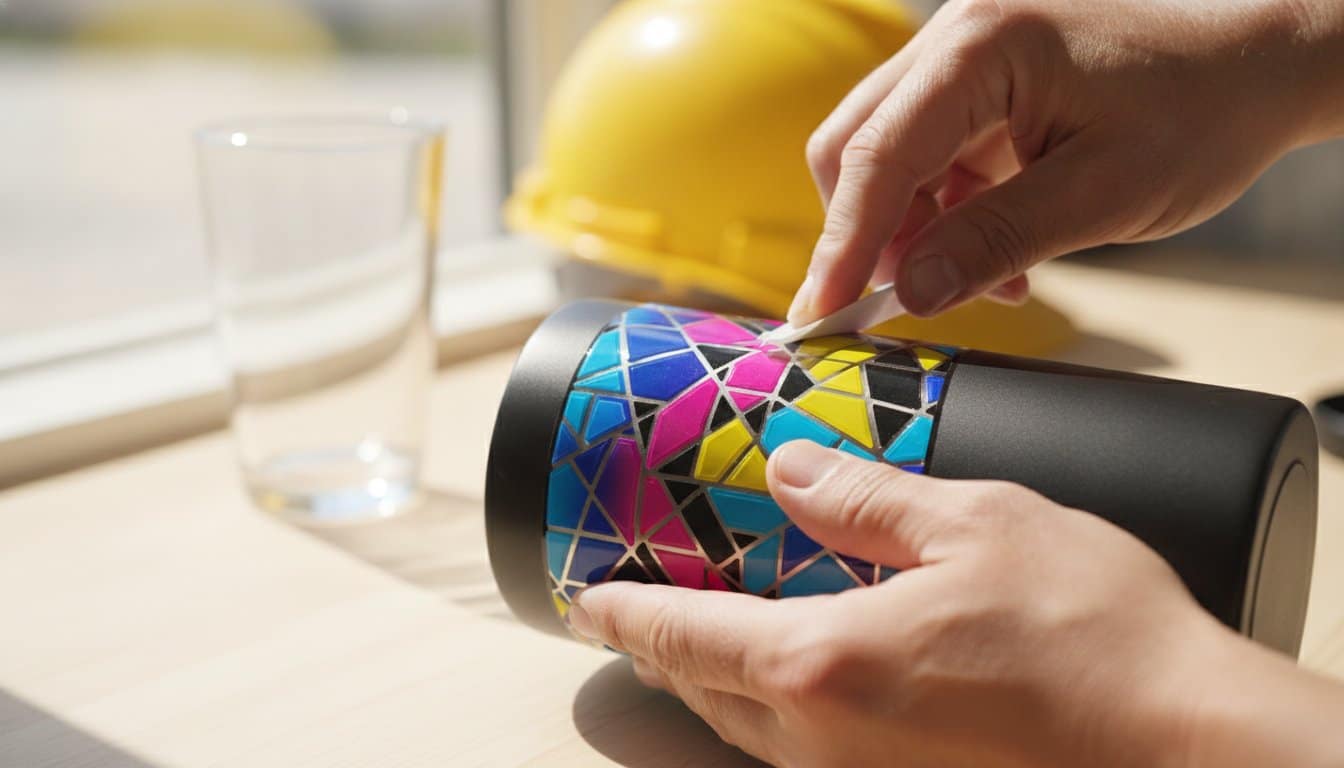
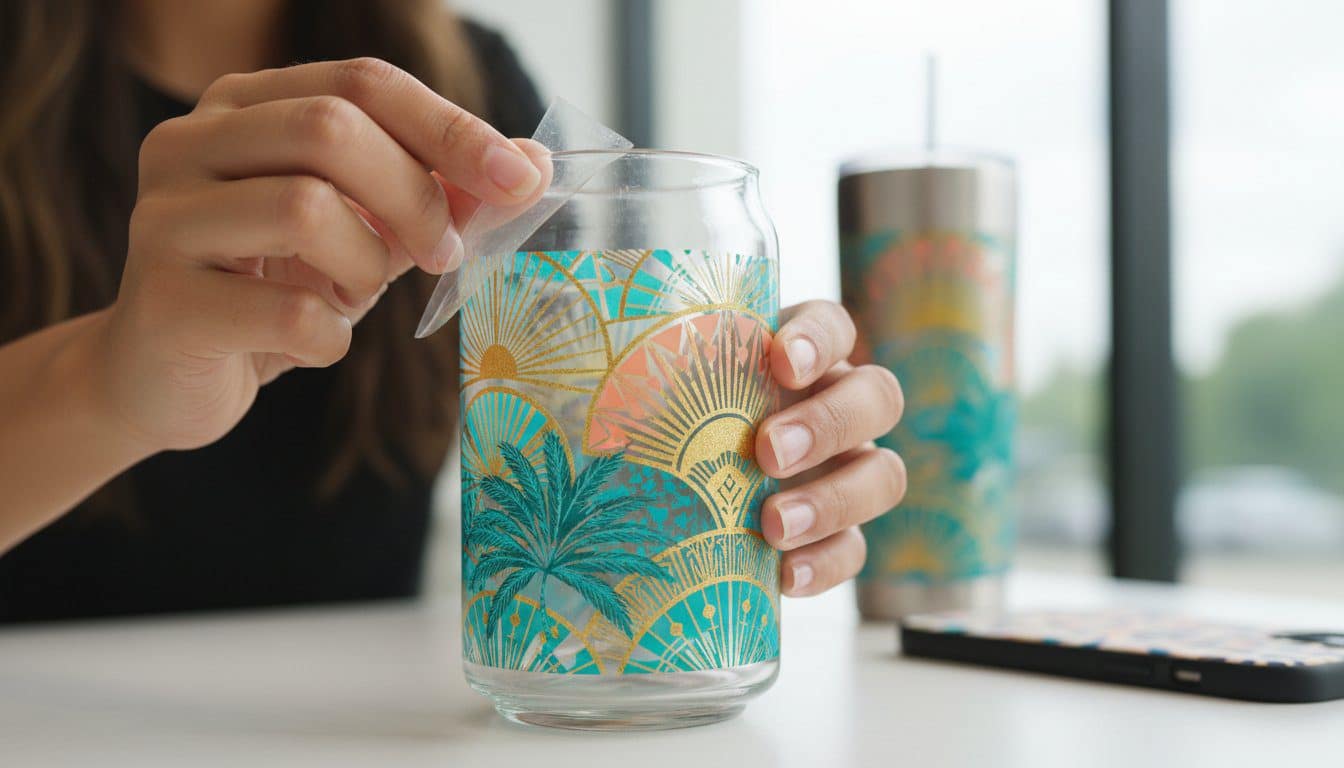
Now for the easy part. Gently peel the white paper backing away from the clear film, revealing the adhesive side of your vibrant design. Be careful not to touch the adhesive with your fingers. Carefully position the transfer onto your prepared surface. Once you’re happy with the placement, press down firmly from the center and work your way outwards to smooth it down. Pro-Tip: For larger designs, you can peel back a small portion of the backing, apply that edge first, and then slowly remove the rest as you smooth it down to prevent bubbles.
Step 3: Squeegee and Peel
With the transfer in place, use a squeegee to firmly rub over the entire design through the clear carrier film. Apply consistent pressure to ensure every part of the adhesive makes strong contact. This pressure-activated bonding is fundamental to the technology, and various industry analyses from SGIA confirm its effectiveness on hard goods. Once you’ve thoroughly rubbed the entire design, slowly and carefully peel the clear film away at a sharp angle. For maximum durability and a scratch-resistant finish, let the design cure for at least 24 hours before heavy use or washing.
UV DTF vs. Regular DTF: Which One Do You Need?
While they share a name, UV DTF and regular DTF (Direct to Film) are two completely different technologies built for different jobs. The biggest mistake is choosing the wrong transfer for your surface. Understanding this distinction is central to answering what is uv dtf printing and how it can benefit your project. Let’s break down the key differences so you can order the right transfer every time.
The primary difference is the material you are decorating. It’s that simple.
- Regular DTF is designed exclusively for textiles. Think t-shirts, hoodies, tote bags, and hats made from cotton, polyester, and blends.
- UV DTF is engineered for hard, non-porous goods. This includes glass, metal, plastic, wood, acrylic, and ceramic. The growing demand for personalized items like tumblers and phone cases has driven major innovation, with some market analysis by Smithers Pira highlighting its rapid adoption for custom cup wraps and other promotional products.
Application Method
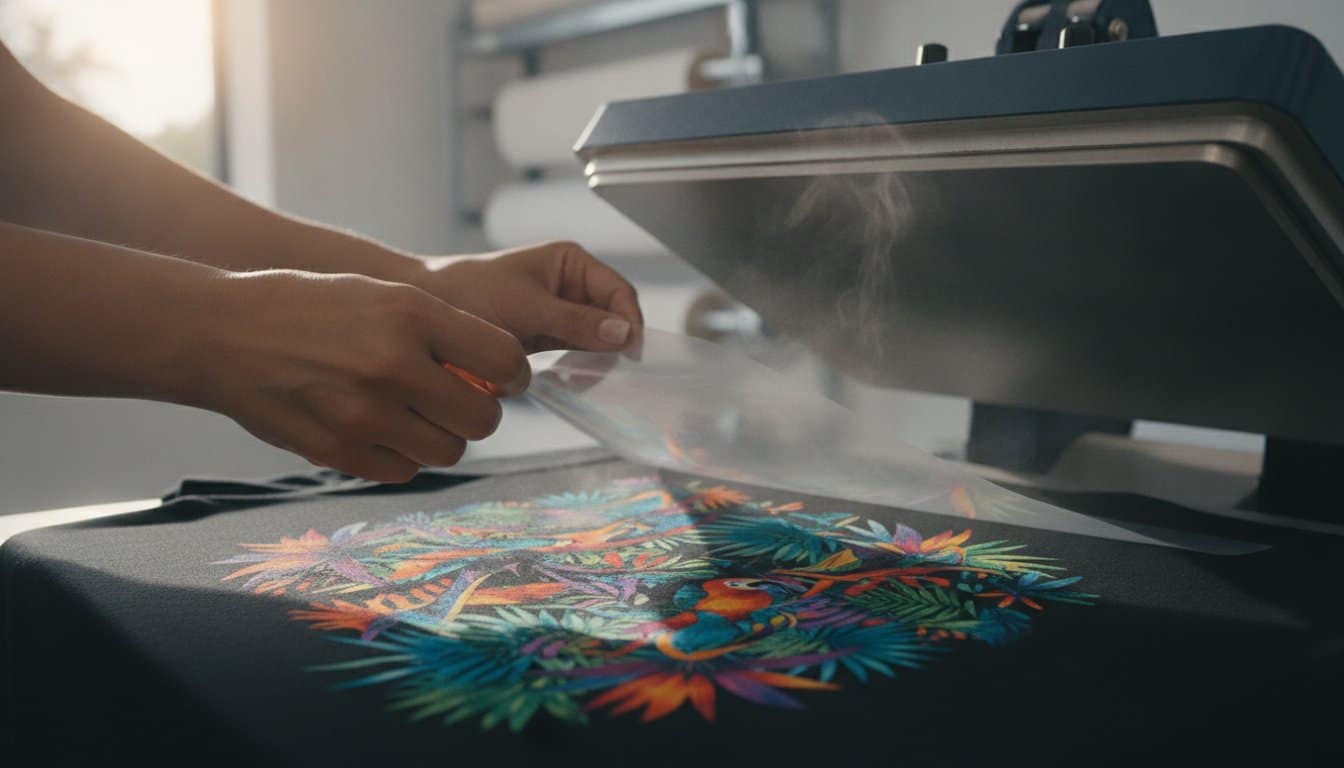
Regular DTF transfers require a heat press. The design is transferred from the film to the fabric using a specific time, temperature, and pressure. This process bonds the ink directly into the textile fibers for a permanent, flexible finish.
In contrast, UV DTF is a “peel and stick” application. No heat is needed. You simply peel the backing, apply the transfer to your hard good, press it down firmly, and then remove the top carrier film. This simple, pressure-sensitive process makes it perfect for quick jobs and at-home applications without special equipment.
Durability and Feel
A properly pressed regular DTF transfer feels soft and flexible, stretching with the fabric without cracking. It becomes a seamless part of the garment.
UV DTF creates a durable, slightly raised layer on top of the surface, similar to a high-quality decal but far more permanent. The UV-cured ink results in a vibrant, scratch-resistant, and waterproof finish that stands up to handling and washing. This ruggedness is a key part of what is uv dtf printing‘s appeal for long-lasting branding.
Comparison Table: UV DTF vs. Regular DTF
| Feature | UV DTF | Regular DTF |
|---|---|---|
| Best For | Hard, non-porous surfaces | Fabrics and textiles |
| Heat Required | No (Cold Peel) | Yes (Heat Press) |
| Feel | Slightly raised, hard, glossy | Soft, flexible, integrated |
| Common Products | Mugs, tumblers, phone cases, keychains | T-shirts, hoodies, hats, bags |
This table makes the choice clear. If you’re decorating apparel, regular DTF is your solution. Need transfers for t-shirts? Check out our custom DTF transfers and build your gang sheet today for super-fast shipping.
Top Uses for UV DTF Transfers (Get Inspired!)
Now that you know the technical side of what is UV DTF printing, let’s get to the exciting part: putting it to use. The real power of this technology is its unmatched versatility, allowing you to apply vibrant, durable, and textured designs to almost any hard, non-porous surface you can imagine. No heat press required.
From growing your business to creating the perfect gift, here are some of the most popular applications to get you started.
For Your Business and Brand
UV DTF transfers are a game-changer for creating professional, durable branding that stands out. Elevate your marketing and operational assets with logos that look and feel premium.
- Promotional Products: Apply crisp, detailed logos to pens, keychains, phone cases, and USB drives. The designs are scratch-resistant and won’t peel, ensuring your brand looks great for longer.
- Equipment & Safety Gear: Brand company assets like toolboxes, machinery, and even hard hats with weather-resistant logos that can withstand tough conditions.
- High-Quality Product Labels: Create stunning, waterproof labels for products in glass jars, plastic bottles, or metal tins. The slightly raised effect gives your items a professional, high-end finish.
Ready to make your brand unforgettable? Explore our full range of custom products for your brand and see the quality for yourself.
For Personal and Creative Projects
Beyond business, UV DTF is the perfect tool for creators, hobbyists, and anyone looking to make one-of-a-kind items. The simple “peel and stick” application makes it easy for anyone to achieve professional results on personal projects.
- Custom Drinkware: Easily decorate mugs, glass tumblers, water bottles, and wine glasses. The transfers are waterproof and durable, making them perfect for items that are frequently handled and washed (hand-wash recommended).
- Personalized Tech: Add custom graphics to your laptop, phone chargers, gaming controllers, or headphones for a completely unique look that reflects your style.
- Unique Home Goods: Transform everyday items like coasters, storage boxes, picture frames, and vases into personalized pieces of art or decor.
The applications are nearly endless, making it the ideal solution for creating memorable, personalized gifts for any occasion. When you know what is UV DTF printing, you can bring almost any hard-surface customization idea to life. Get your designs ready and start creating at captainprinting.com.
UV DTF Printing: Your Next Project Starts Here
You came here asking, what is uv dtf printing, and now you have the answer. This powerful technology is more than just a sticker-it’s a permanent, vibrant solution for branding almost any hard surface. With a simple peel-and-stick application, you can customize everything from tumblers to tech accessories in minutes. The creative possibilities are truly limitless.
Don’t just read about it. Make it happen. As Experts in Custom Printing, we’re here to get your project off the ground. We combine the efficiency of Super Fast Shipping with the reliability of a Local Miami Store & Nationwide Service. We get your orders right and delivered on time. It’s kinda our thing.
Ready to create? Order Your Custom UV DTF Transfers Now! Your best designs are waiting to become reality.
Frequently Asked Questions About UV DTF Printing
Is UV DTF printing permanent and durable?
Yes, UV DTF transfers are designed for permanence and exceptional durability. The process uses UV light to instantly cure the ink, creating a hard, resilient layer. Combined with a powerful industrial-grade adhesive, the final transfer strongly bonds to hard surfaces. This makes them highly resistant to scratches, fading from sunlight, and general wear and tear, ensuring your designs look vibrant and professional for years. They are built for long-lasting applications on a wide range of products.
Can you put UV DTF transfers on shirts or fabric?
No, UV DTF transfers are not suitable for shirts or any type of fabric. They are specifically engineered for hard, rigid, non-porous surfaces like glass, metal, plastic, and treated wood. The adhesive is too strong and the cured ink is not flexible enough for textiles. For apparel decoration, you need standard DTF (Direct-to-Film) transfers, which are designed to bond with fabric fibers and withstand stretching and washing. Get your DTF transfers for apparel here.
Are UV DTF transfers waterproof and dishwasher safe?
UV DTF transfers are completely waterproof once applied correctly, making them perfect for items like water bottles and outdoor signage. While they can withstand some cycles in a dishwasher, we recommend handwashing for maximum longevity. The combination of high heat, high-pressure water jets, and harsh detergents in some dishwashers can potentially weaken the adhesive over time. For best results and a lasting bond, gentle handwashing is the safest option for decorated drinkware.
Do I need to buy a special printer to use UV DTF?
No, you do not need a special printer to use our UV DTF transfers. We handle the complex printing process for you using specialized commercial-grade equipment. You simply order the finished transfers from us. This allows you to get vibrant, durable, and professional-quality results without investing thousands of dollars in a UV DTF printer, inks, and film. You just focus on the easy part: peeling and sticking the design onto your products.
How is a UV DTF transfer different from a vinyl sticker?
A key part of understanding what is UV DTF printing is knowing it’s not a vinyl sticker. A vinyl sticker is a single piece of material with adhesive on the back, often with a clear or white background. In contrast, a UV DTF transfer has no background. Only the ink and a layer of varnish are transferred, giving it a premium, “painted-on” look. UV DTF is also more durable, offering superior scratch and UV resistance compared to most vinyl.
Can UV DTF be applied to curved surfaces like a tumbler?
Yes, UV DTF transfers are an excellent choice for decorating tumblers, mugs, and other curved items. The transfer is flexible enough to conform smoothly to cylindrical and moderately curved surfaces. For best results, start by applying pressure to the center of the design and slowly work your way outwards. This technique helps push out any air bubbles and ensures the adhesive makes full contact with the item, creating a seamless and durable bond.