Blog
DTF Transfer Durability Test: How Long Do They Really Last? (2026 Guide)

A peeling logo or cracked design after one wash is more than an inconvenience-it’s a direct hit to your brand’s reputation and your budget. For businesses across Miami, from Wynwood to Doral, inconsistent quality from DTF providers is a major risk. The critical step often missed is a professional dtf transfer durability test, leaving you to guess if your custom apparel will survive a single dryer cycle, let alone the demanding Miami heat.
This guide provides the solution. We will detail the rigorous wash and stretch testing standards that define a truly durable DTF transfer. You will learn a clear, repeatable method to test your own garments and understand how professional production ensures your designs survive 50+ washes. Get the facts you need to find a reliable Miami-based printer and stop wasting money on prints that fail.
Key Takeaways
- Understand the industry benchmark for quality DTF, which is the ability to withstand a 50-wash cycle while maintaining color vibrancy and structural integrity.
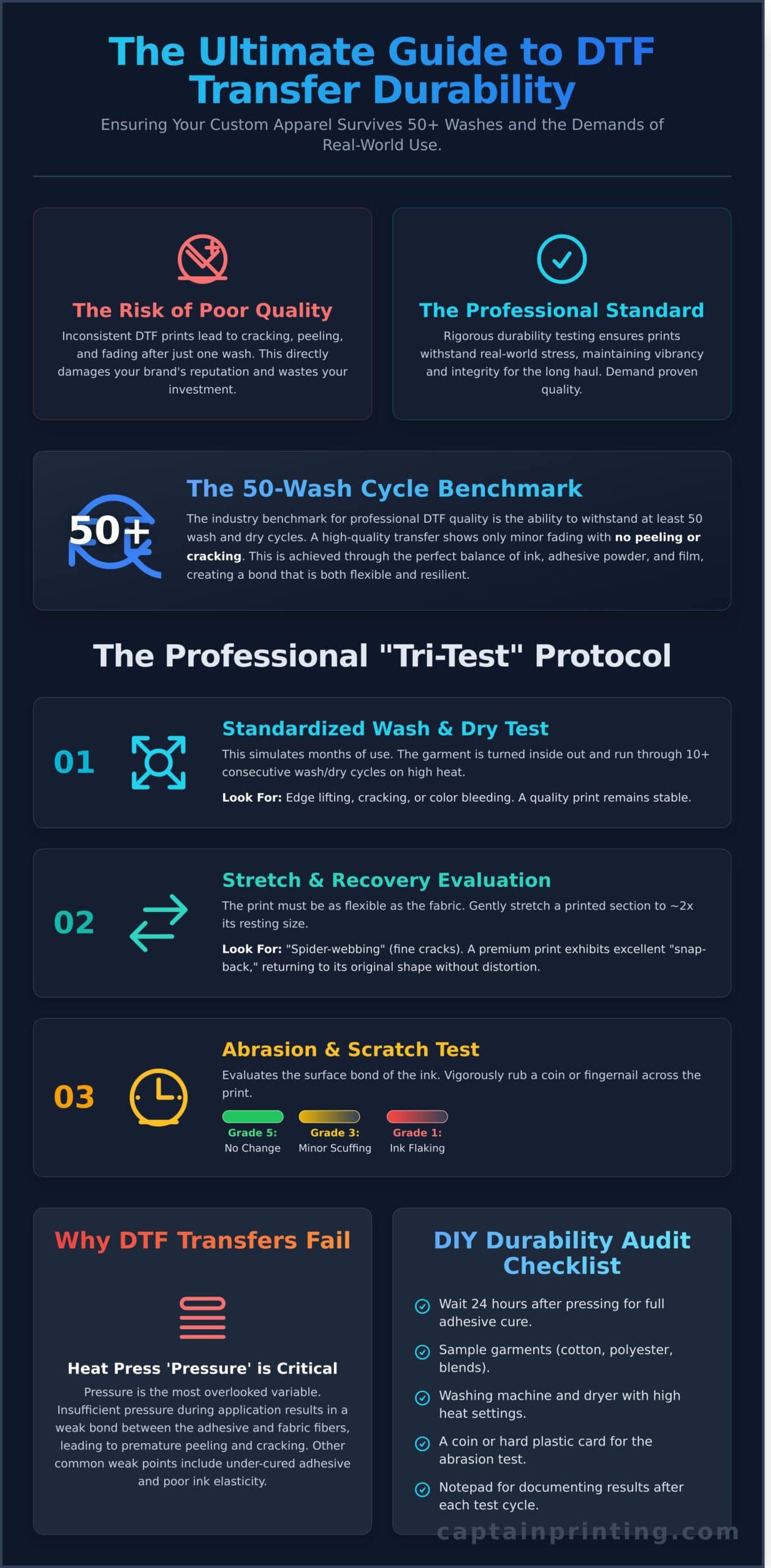
- Learn the professional “Tri-Test” protocol (Wash, Stretch, and Abrasion) used to validate a transfer’s resilience against real-world mechanical stress.
- Discover why some prints crack prematurely by analyzing the results of a proper dtf transfer durability test, which identifies weak points in the application process.
- Find out why heat press ‘Pressure’ is the most critical and often overlooked variable for achieving maximum transfer longevity on custom apparel in Miami.
What Defines DTF Transfer Durability?
DTF transfer durability is the measure of a print’s ability to maintain its original color vibrancy and structural integrity through repeated mechanical and chemical stress. For businesses in Miami needing custom apparel that lasts, a proper dtf transfer durability test shows which prints will withstand the demands of work environments from Doral to Downtown Miami. The quality of the final bond is determined by the ink-powder-film trifecta: the specific ink formulation, the quality of the thermoplastic adhesive powder, and the release characteristics of the film.
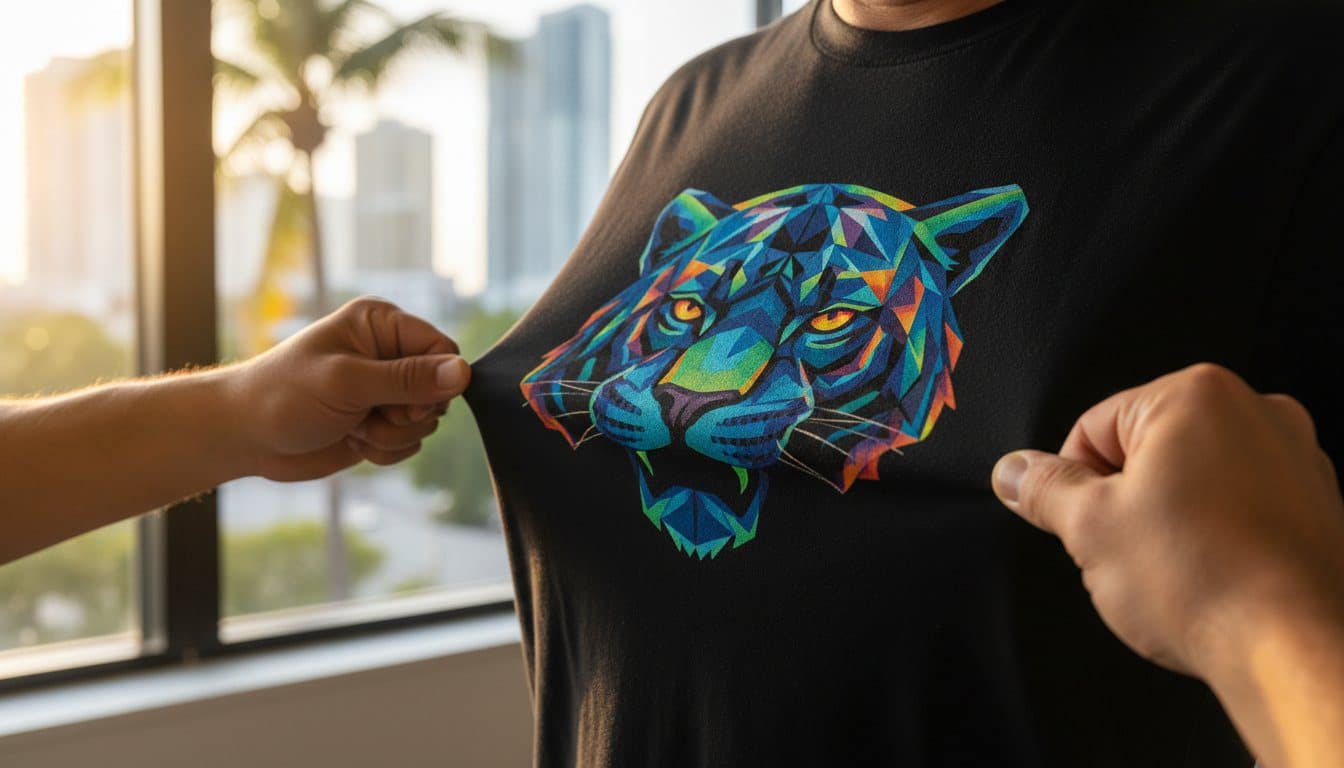
To see how these transfers hold up under stress, this visual test provides clear evidence:
The 50-Wash Cycle Benchmark
The industry benchmark for professional DTF transfers is the ’50-wash cycle’. This standardized test simulates long-term wear by washing the garment at 40°C (104°F) with standard detergent, followed by tumble drying. After 50 cycles, a high-quality transfer shows only minor fading, with no catastrophic failure like peeling or cracking. This longevity is why businesses across Miami Dade choose DTF over traditional heat transfer vinyl (HTV). DTF’s ink-based bond is more flexible and resilient than HTV’s layered adhesive, ensuring a longer-lasting design.
Soft Hand vs. Structural Integrity
Premium DTF transfers must balance a ‘soft hand’ feel with structural integrity. The soft hand is achieved with thin, yet highly pigmented ink layers that integrate into the fabric. The integrity comes from Thermoplastic Polyurethane (TPU) adhesive powder, which melts to create a flexible, tough bond that stretches with the garment. This core principle of What is DTF Printing technology avoids the thick, plastic-like feel of low-quality transfers, resulting in a breathable and professional finish suitable for any uniform.
Ultimately, DTF durability is a direct measure of the polymer cross-linking achieved between the ink and adhesive powder during the final curing process.
Conducting a Rigorous DTF Durability Test
To verify the longevity of a DTF transfer, a structured testing process is non-negotiable. A print that looks vibrant on 100% cotton may perform differently on the polyester blends often used for custom uniforms here in Miami. Before starting any dtf transfer durability test, it is critical to wait at least 24 hours after pressing. This allows the adhesive to fully cure and bond with the fabric fibers, ensuring an accurate assessment.
We use a ‘Tri-Test’ protocol to simulate real-world wear and tear. You can conduct a similar DIY audit with a few basic tools.
- DIY Durability Audit Checklist:
- Sample garments (cotton, polyester, and blends)
- Washing machine and dryer with high heat settings
- A ruler or measuring tape
- A coin or hard plastic card
- A notepad for documenting results
The Standardized Wash and Dry Test
This aggressive test simulates months of use in just a few hours. First, turn the garment inside out to protect the design from direct mechanical friction. Run the garment through 10 consecutive wash and dry cycles using high heat settings. While our method is a practical audit for businesses, professional labs use formal industry-standard wash durability tests to certify materials. After each cycle, inspect the print for any signs of edge lifting, cracking, or color migration (bleeding).
The Stretch and Recovery Evaluation
A quality DTF transfer must be as flexible as the fabric it’s on. To perform a stretch test, gently pull a printed section of the fabric to approximately twice its resting size-be careful not to permanently damage the garment’s fibers. Look closely for ‘spider-webbing,’ which are fine cracks that indicate an under-cured adhesive or poor ink elasticity. A high-quality print will exhibit excellent ‘snap-back,’ returning to its original shape without any distortion or wrinkling once the tension is released.
The Abrasion and Scratch Test
This final part of a dtf transfer durability test evaluates the surface bond of the ink layer. Vigorously rub a coin or your fingernail across a small section of the cured print. If the ink flakes or scratches off easily, it often points to a failure in the film-to-ink release during the peeling stage or improper curing. Use a simple grading scale to document the transfer’s resistance.
- Grade 5: No visible change.
- Grade 3: Minor surface scuffing.
- Grade 1: Significant ink flaking and removal.
Why DTF Transfers Fail: Analyzing Common Weak Points
The primary reason for inconsistent DTF transfer durability lies in the production process and materials. A professionally produced transfer can last over 50 washes, while a poorly made one may crack or peel after just a few. The difference is not random; it stems from specific, preventable failures in curing, adhesive application, and environmental factors.
Garment choice also plays a critical role. Polyester fabrics with moisture-wicking or water-resistant coatings can repel the DTF adhesive, preventing a strong bond. Similarly, the application method matters. ‘Cold peel’ transfers, if peeled too soon, can lift ink from the fabric, while ‘hot peel’ transfers applied at incorrect temperatures can result in a plastic-like feel prone to cracking. A comprehensive dtf transfer durability test will always expose failures rooted in these initial application errors.
Under-curing and Adhesive Powder Issues
The most common point of failure is improper curing of the adhesive powder. If the powder is not melted correctly, it creates a bumpy, ‘orange peel’ texture, which signifies a weak bond. In humid climates like Miami, moisture can get trapped in the powder before application, preventing it from melting evenly. This leads to a chemical failure where the ink layer and the adhesive never fully ‘marry,’ causing the entire design to delaminate from the garment over time.
Environmental Impact: Miami’s Humidity and UV Heat
For businesses in South Florida, from Doral to Wynwood, the environment presents unique challenges. The high UV index can accelerate ink fading on garments exposed to direct sunlight. Furthermore, the local ‘sweat factor’-the combination of high humidity and body salts-can slowly degrade the transfer’s adhesive bond. To combat this, local businesses in Hialeah and Downtown Miami should store their unused transfer films in climate-controlled, low-humidity environments to prevent the adhesive from spoiling. Sourcing high-quality, professionally cured custom DTF transfers is the first step in creating a product that can withstand a rigorous dtf transfer durability test and the demanding Miami climate.
Best Practices for Maximum Transfer Longevity
Achieving a DTF transfer that outlasts the garment itself is not a matter of chance-it’s the result of a precise, repeatable process. While many focus solely on time and temperature, true durability comes from mastering three key areas: calibration, materials, and pressure. Following a proven protocol ensures every print meets professional standards, from custom uniforms for a Doral construction crew to event apparel in Downtown Miami.
Pressure is the most overlooked variable in the durability equation. While temperature melts the adhesive powder, it is heavy, even pressure that mechanically forces the ink and melted adhesive deep into the fabric’s fibers. Insufficient pressure (below 60 PSI) is the leading cause of peeling and cracking, as the transfer only sits on top of the material instead of becoming part of it.
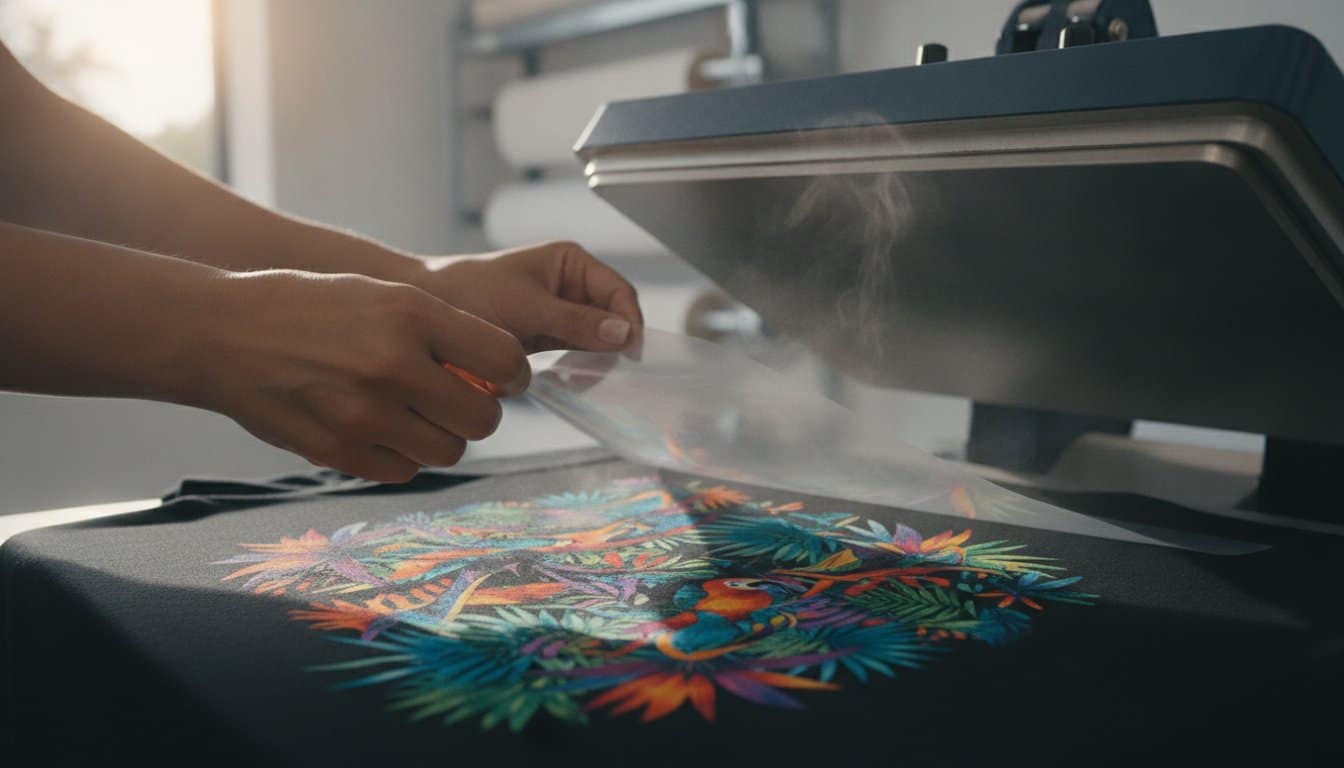
To fully secure the design, always perform a second press, also known as a finishing press. After the cold peel, cover the design with parchment paper or a Teflon sheet and press again for 5-7 seconds. This final step removes any residual gloss from the film, creates a soft, matte finish, and locks the ink into the garment, significantly boosting wash resistance.
Precise Heat Press Calibration
Your heat press is the most critical tool in your workflow. To ensure consistent results, start with a baseline and test from there. We recommend the following settings, known as the Captain’s Protocol, for modern pneumatic or high-quality manual presses:
- Temperature: 300°F – 320°F (149°C – 160°C)
- Time: 12-15 seconds
- Pressure: Heavy (60-80 PSI on an automatic press; 8-9 on a manual scale)
Use an infrared thermometer to check your platen for cold spots, which cause uneven adhesion. For the finishing press, parchment paper is often superior to a Teflon sheet as it helps create a softer, more integrated matte finish, which enhances perceived quality and durability.
Selecting Professional-Grade Materials
The quality of your consumables directly impacts the final product’s longevity. For businesses offering same-day DTF printing in Miami, using high-stability films that resist warping under heat is essential for efficiency and quality. Look for films that remain flat and release cleanly. High-pigment density inks are crucial for preventing fading after exposure to the South Florida sun and numerous wash cycles. Finally, identify premium TPU powder by its fine, consistent granular size and bright white color; inferior powders can appear yellowish and result in a weaker bond.
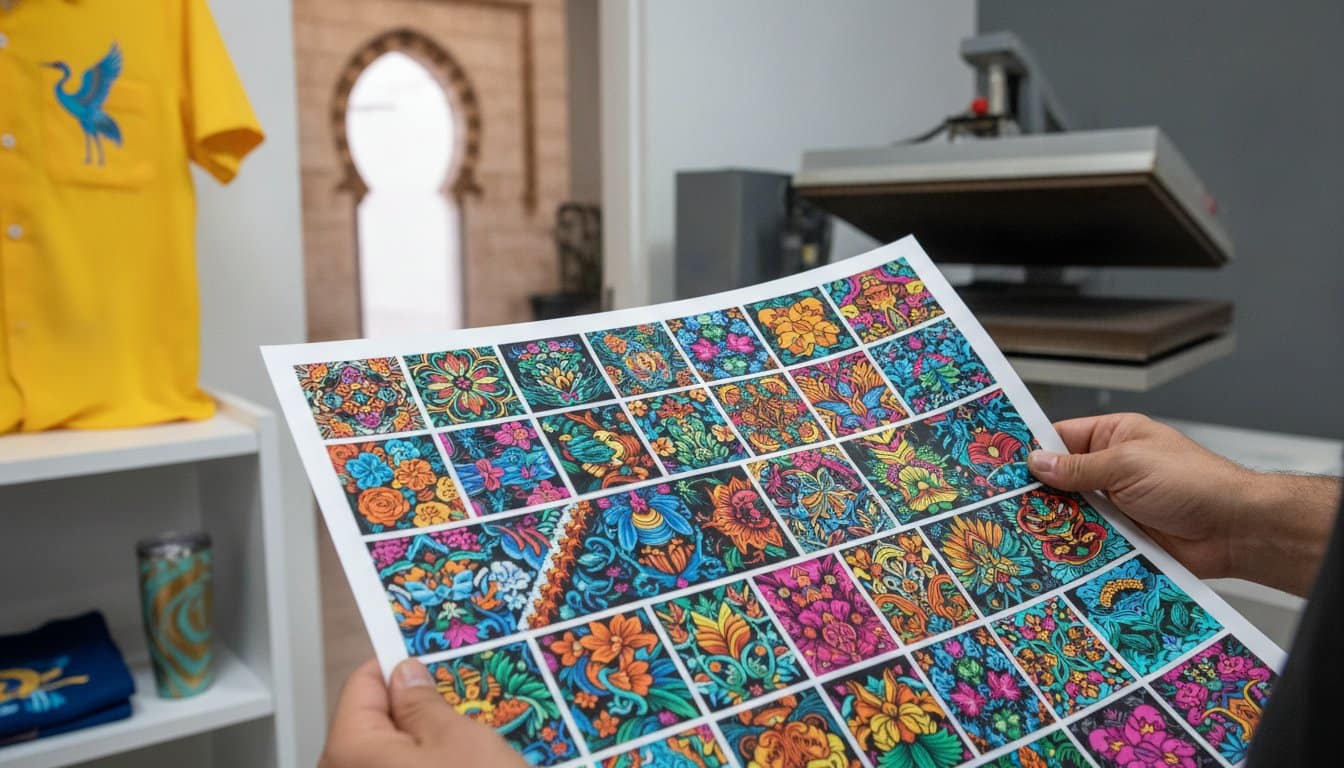
The best way to validate your process is to conduct your own dtf transfer durability test. By using the DTF Gang Sheet Builder, you can place several small logos on a single sheet and press them onto scrap fabric using slightly different settings. This allows you to efficiently find the perfect combination of time, temperature, and pressure for your specific equipment and garments.
Reliable DTF Printing Services in Miami, FL
Understanding the theory behind DTF transfer durability is one thing; seeing it withstand Miami’s demanding climate is another. For businesses in Miami-Dade County, Captain Printing offers a direct solution for high-durability custom apparel and promotional materials. We provide tangible proof of quality, inviting local business owners to visit our Miami store to see physical samples and witness the results of a dtf transfer durability test firsthand. This local presence ensures you get products built to last, not just promises from an out-of-state website.
Same-Day Production for Miami Businesses
When deadlines are tight, waiting for shipments is not an option. Captain Printing eliminates this risk with same-day DTF printing in Miami. Our local production facility and efficient delivery routes across Hialeah, Doral, and the greater Miami area mean you get your orders faster. This local approach not only prevents shipping delays but also removes the risk of damage in transit. Every order is backed by the Captain’s Guarantee, ensuring the print durability on all products meets our rigorous standards.
Custom Uniforms and Corporate Apparel
For local industries, durability is the key factor for return on investment. Consider the demands placed on uniforms for construction crews working in the intense Florida sun or for hospitality staff in the bustling hotels of Downtown Miami. Faded logos and peeling graphics reflect poorly on a brand. We specialize in producing custom uniforms that hold up to daily wear, frequent washing, and sun exposure. Send us your design on WhatsApp for a quick durability assessment and quote for your team’s apparel.
Choosing the right printing partner is critical for your brand’s image and budget. At Captain Printing, our process includes a stringent dtf transfer durability test to ensure every transfer we produce is ready for real-world use in South Florida. To discuss your project or see our quality for yourself, contact our Miami team directly.
Contact Captain Printing Miami:
- Phone: (305) 930-4700
- Email: [email protected]
- Address: 13680 NW 19th Ave, Unit 1B, Opa-locka, FL 33054
The Final Verdict: DTF Transfers That Endure
The durability of a DTF transfer is not a matter of chance-it is the direct result of premium materials, precise application, and proper aftercare. A successful dtf transfer durability test begins long before the first wash; it starts with a reliable print partner who understands the technology. By choosing professional-grade transfers and following the best practices outlined in this guide, you ensure your custom apparel maintains its vibrant, crack-free appearance for the long haul.
Stop guessing and start printing with confidence. At Captain Printing, we provide businesses across Miami, from Hialeah to Downtown Miami, with transfers that are 50+ wash-tested for proven durability. Trusted by local Florida contractors and brands, we offer same-day printing to meet your tight deadlines. Ready to order transfers that actually last? Build your gang sheet online now or visit our Miami shop today.
Frequently Asked Questions About DTF Transfer Durability
How many washes do DTF transfers last?
A high-quality DTF transfer, like those we produce for businesses across Miami, is rated to last for 50 to 100 washes. Ultimate durability depends on the quality of the ink and adhesive powder used, as well as a proper application process. For custom uniforms and event apparel, using premium materials is key to maximizing lifespan. Following correct washing procedures, such as turning the garment inside out and using cold water, also significantly extends the transfer’s life.
Do DTF transfers crack over time?
DTF transfers are known for their superior flexibility and resistance to cracking. Unlike some older print methods, the water-based inks used in our DTF printing Miami service create a durable, stretchable layer that moves with the fabric. Cracking is typically a sign of a low-quality transfer or an improper curing process. With professional application and care, our DTF prints maintain their smooth finish, even on flexible garments used by businesses from Wynwood to Doral.
Can you put DTF transfers in the dryer?
While you can put garments with DTF transfers in a dryer, we recommend using a low-heat or tumble-dry setting. High heat is the primary enemy of any garment print, as it can weaken the adhesive bond over time. For the best results and maximum longevity, hang drying is always the safest option. If you must use a dryer, turn the apparel inside out to minimize direct heat exposure and friction on the design.
Why is my DTF transfer peeling after the first wash?
Peeling after a single wash is almost always caused by an incorrect application process. The most common issues are insufficient heat, inadequate pressure, or pressing for too short a time, which creates a weak bond with the fabric fibers. Using low-grade adhesive powder can also cause premature failure. This is why professional application with calibrated equipment is critical for creating durable custom apparel for any Miami business or event.
Is DTF more durable than screen printing?
Both DTF and screen printing offer excellent durability when done correctly. Screen printing ink soaks into the fabric for a permanent bond, while DTF uses a powerful adhesive to sit on top of the fabric with great flexibility. For designs with many colors or fine details, DTF often provides superior durability against cracking. For large, single-color runs common for events in Miami Dade, screen printing remains a highly durable and cost-effective choice.
How do I test the quality of a DTF transfer myself?
The most effective dtf transfer durability test involves a few simple actions. First, perform a stretch test by gently stretching the printed area; a quality transfer will stretch with the fabric without cracking. Next, a light scratch test with your fingernail can check adhesion, as the print should not flake off. Finally, the ultimate test is a standard wash-and-dry cycle. A well-applied transfer will show no signs of peeling, cracking, or fading.
Does the type of fabric affect DTF durability?
Yes, the fabric type plays a role, but DTF technology is exceptionally versatile. It adheres well to cotton, polyester, blends, and even some treated materials. Smooth, tightly-woven fabrics like cotton and poly-blends provide an ideal surface for the adhesive to create a strong, lasting bond. For businesses in Hialeah or Downtown Miami needing custom uniforms on various materials, DTF offers a reliable solution across different garment types, from t-shirts to workwear.
What temperature should I use to ensure a durable DTF bond?
The ideal temperature for a durable DTF bond typically ranges from 300-325°F (150-163°C). However, this can vary based on the specific transfer powder and the fabric type. For example, polyester and other heat-sensitive blends require lower temperatures to prevent scorching. Always follow the manufacturer’s guidelines for a successful press. A proper dtf transfer durability test begins with using the correct temperature, time, and pressure settings for your specific materials.