Blog
Why Your DTF Print Feels Like Plastic: Causes and Solutions for Miami Businesses

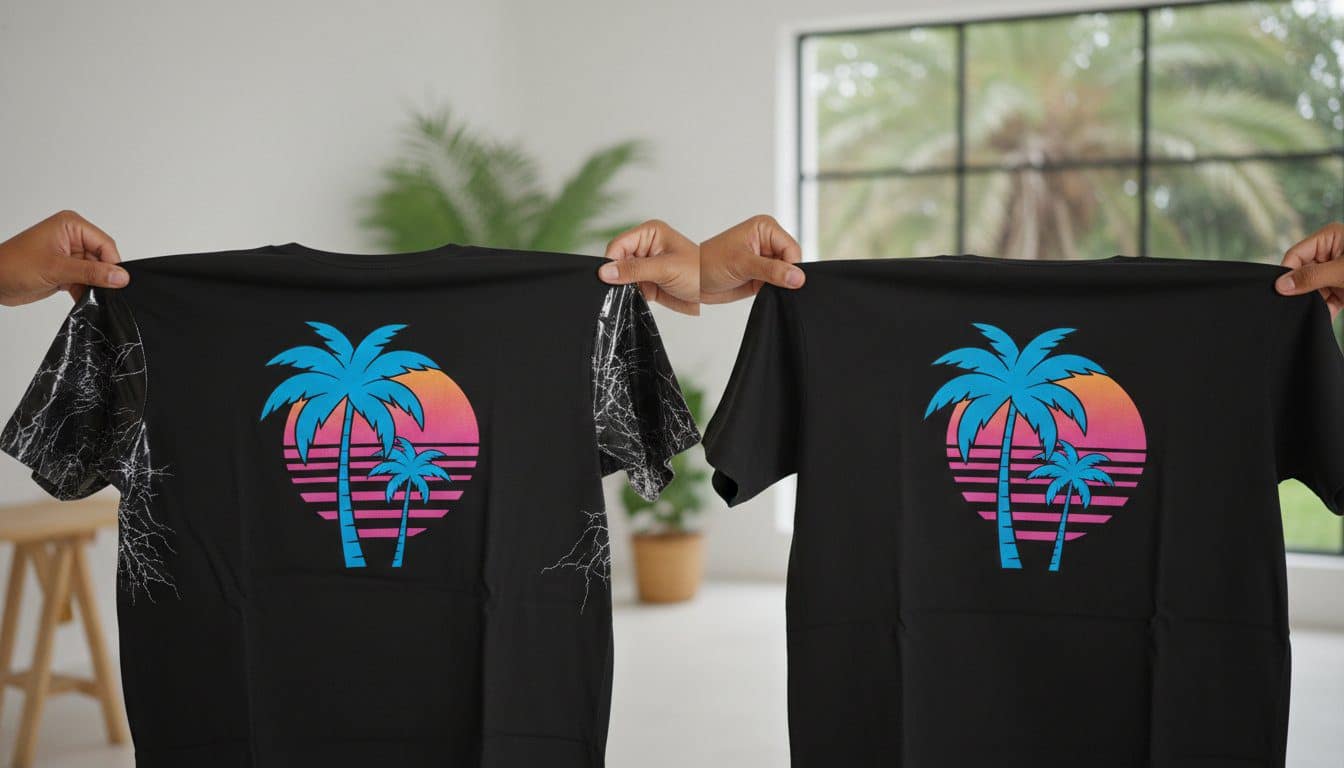
A stiff, rubbery design can decrease a garment’s perceived value by 40% before the customer even tries it on. You’ve likely dealt with the frustration of receiving a batch of custom shirts only to find the dtf print feels like plastic instead of a professional, soft-hand finish. In the 90-degree humidity of Downtown Miami or Wynwood, a thick, non-breathable print isn’t just a quality issue; it’s a major discomfort that leads to customer complaints and lost repeat business.
We know your brand depends on apparel that feels as good as it looks. This article identifies the specific technical errors behind heavy transfers, ranging from incorrect curing temperatures to over-application of adhesive powder. You’ll learn how to optimize your production workflow to achieve a retail-ready, flexible finish that survives over 50 wash cycles. We’ll also cover the design adjustments and heat press settings required to keep your custom uniforms breathable and durable for the South Florida climate.
Key Takeaways
- Identify how high white ink density and coarse adhesive powders contribute to a stiff, uncomfortable texture on your custom apparel.
- Understand why a dtf print feels like plastic and learn how to achieve the flexibility required to prevent premature cracking.
- Master professional finishing techniques, such as the “second press” method, to transform rigid transfers into soft-hand, retail-quality prints.
- Compare the physical profiles of DTF and traditional screen printing to ensure your garments meet local Miami market standards.
- Discover how Captain Printing uses industrial-grade curing ovens and fine-grain TPU powders to provide a soft, durable finish for Miami businesses.
Understanding the Plastic Feel in DTF Transfers
Hand-feel is the technical term for how a printed design reacts to the touch and how it moves when a person wears the garment. In the professional apparel industry, hand-feel determines the perceived value of a product. A common misconception among new business owners is that every dtf print feels like plastic by default. While early versions of transfer technology were thick and rubbery, modern 2024 production standards have changed the output quality. A low-quality transfer often results in a “shield-like” stiffness. This rigidity prevents the fabric from draping naturally over the body, making the shirt feel heavy and uncomfortable.
Retail-grade apparel requires a “soft-hand” finish. This means the design is thin enough to stretch with the fabric without cracking or feeling like a solid sheet of vinyl. When a print is too thick, it creates a physical barrier that doesn’t breathe. This is particularly problematic for local businesses in Miami Dade who need their teams to stay cool while working outdoors. Achieving the right texture involves balancing ink density and adhesive application to ensure the final product feels like a part of the shirt rather than an attachment. Captain Printing utilizes precision settings to ensure that even large-scale designs maintain a flexible, professional texture that meets retail expectations.
The Anatomy of a DTF Transfer
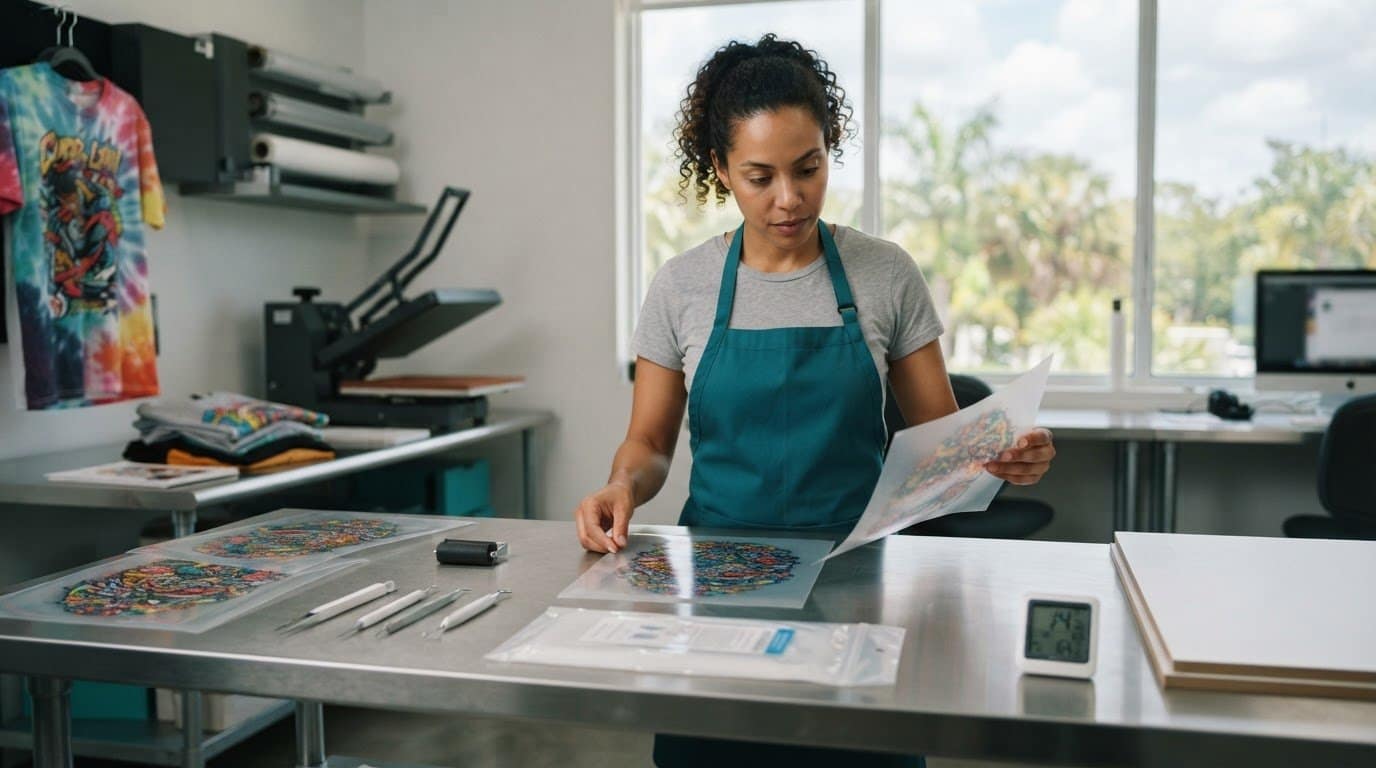
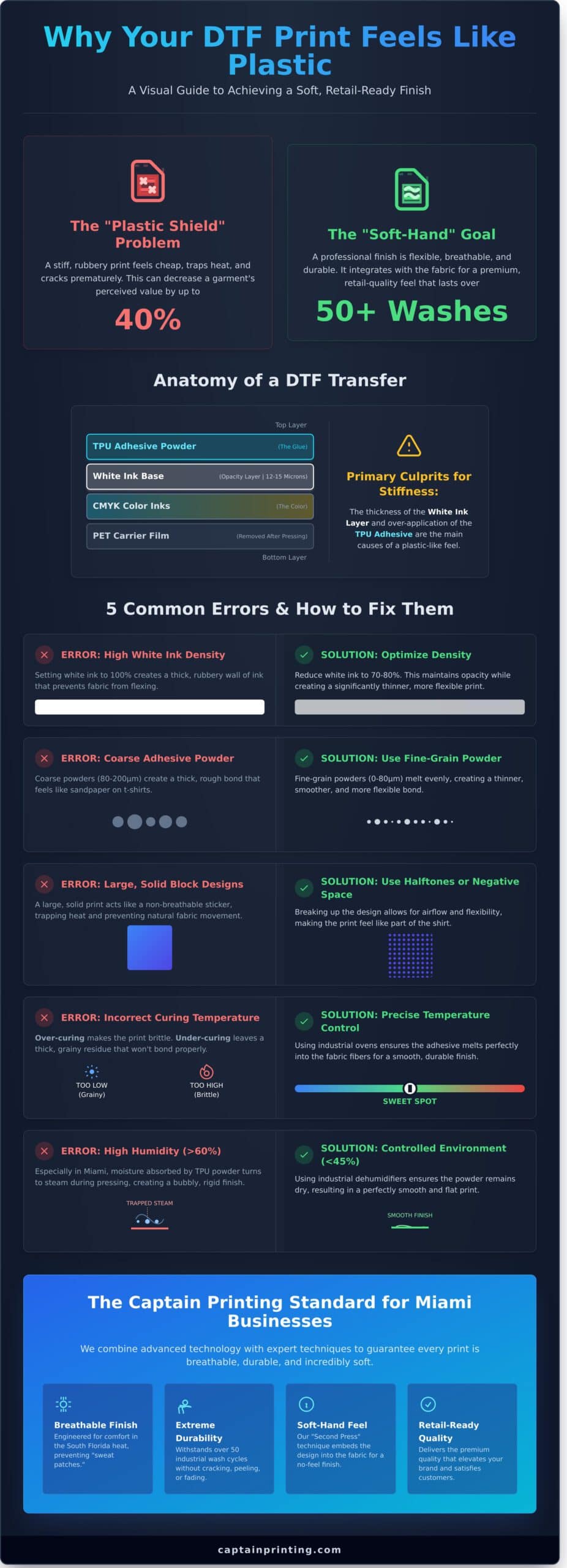
A standard transfer involves four layers: a PET carrier film, CMYK color inks, a white ink base for opacity, and TPU adhesive powder. The thickness of the white ink layer, often measured at 12 to 15 microns, is the primary factor in initial stiffness. Direct-to-film printing relies on these layers to ensure color vibrancy on dark fabrics. TPU powder is the flexible adhesive that, when over-applied, creates a plastic-like barrier.
Why Miami Businesses Prioritize Breathability
In South Florida, the climate dictates the printing method. When temperatures reach 92 degrees in areas like Doral or Hialeah, a heavy dtf print feels like plastic and traps body heat. This creates “sweat patches” directly under the design because moisture cannot evaporate through the solid ink layer. For a contractor working in Wynwood or an event coordinator in Downtown Miami, a non-breathable shirt is a liability. Local businesses now demand lightweight, flexible custom uniforms that allow for airflow. We focus on optimizing the adhesive melting process to ensure that your logos are durable but don’t turn into heat traps during a typical Miami summer.
If you’re looking for high-quality apparel that balances durability with a soft touch, our team provides the fastest turnaround times in the region. We help local businesses transition from stiff, uncomfortable prints to professional, breathable gear that lasts through 50 plus industrial wash cycles.
Phone: (305) 930-4700
Address: 13680 NW 19th Ave, Unit 1B, Opa-locka, FL 33054
Email: [email protected]
Technical Causes: Why Your Prints Are Stiff
If your dtf print feels like plastic, the problem usually starts in the RIP software settings. Many inexperienced operators set white ink density to 100% to ensure the colors look bright on dark garments. This creates a thick, rubbery wall of ink that can’t move with the fabric. Reducing white ink density to 70% or 80% provides enough opacity while significantly thinning the total deposit. Solid block designs are another major culprit. A 12-inch solid logo acts like a giant sticker because it lacks “breathability.” Smart designers use halftones or negative space to break up the ink layer, allowing the shirt’s fibers to flex naturally.
Adhesive powder choice also dictates the final texture. Coarse powders, typically 80 to 200 microns, are designed for heavy workwear or canvas bags. When used on a standard cotton t-shirt, they feel like sandpaper. Fine-grain powders between 0 and 80 microns melt more evenly and create a thinner bond. You can find more about these material interactions in this Beginner’s Guide to Direct-to-Film Printing which details how the marriage of ink and TPU powder creates the final transfer. Curing temperatures are equally vital. Over-curing at 330°F for too long makes the TPU brittle. Under-curing is worse; the powder doesn’t fully liquefy, leaving a grainy, thick residue that never settles into the fabric.
The Chemistry of Curing in Humid Climates
Miami’s climate directly impacts production quality. When humidity in a Hialeah or Wynwood workshop hits 60% or higher, the TPU powder absorbs microscopic water droplets from the air. During the heat press stage, this moisture reaches its boiling point of 212°F. The resulting steam gets trapped under the ink layer, creating a “bubbled” or rigid finish. Shops in Miami Dade must use industrial dehumidifiers to keep storage areas below 45% humidity. Keeping your film and powder in airtight containers is a mandatory step for maintaining a soft hand-feel in South Florida.
Ink-to-Powder Ratio Imbalance
An imbalance in the ink-to-powder ratio causes a phenomenon known as encapsulation. Cheap DTF printers often lack precise printhead control, so they dump excess ink to hide banding issues. This excess ink traps the adhesive powder in a hard shell rather than letting it melt into the fibers. The result is a dtf print feels like plastic because the ink sits on top of the garment. At Captain Printing, we calibrate our equipment daily to ensure the thinnest possible ink deposit. This precision ensures the transfer remains soft even after multiple washes.
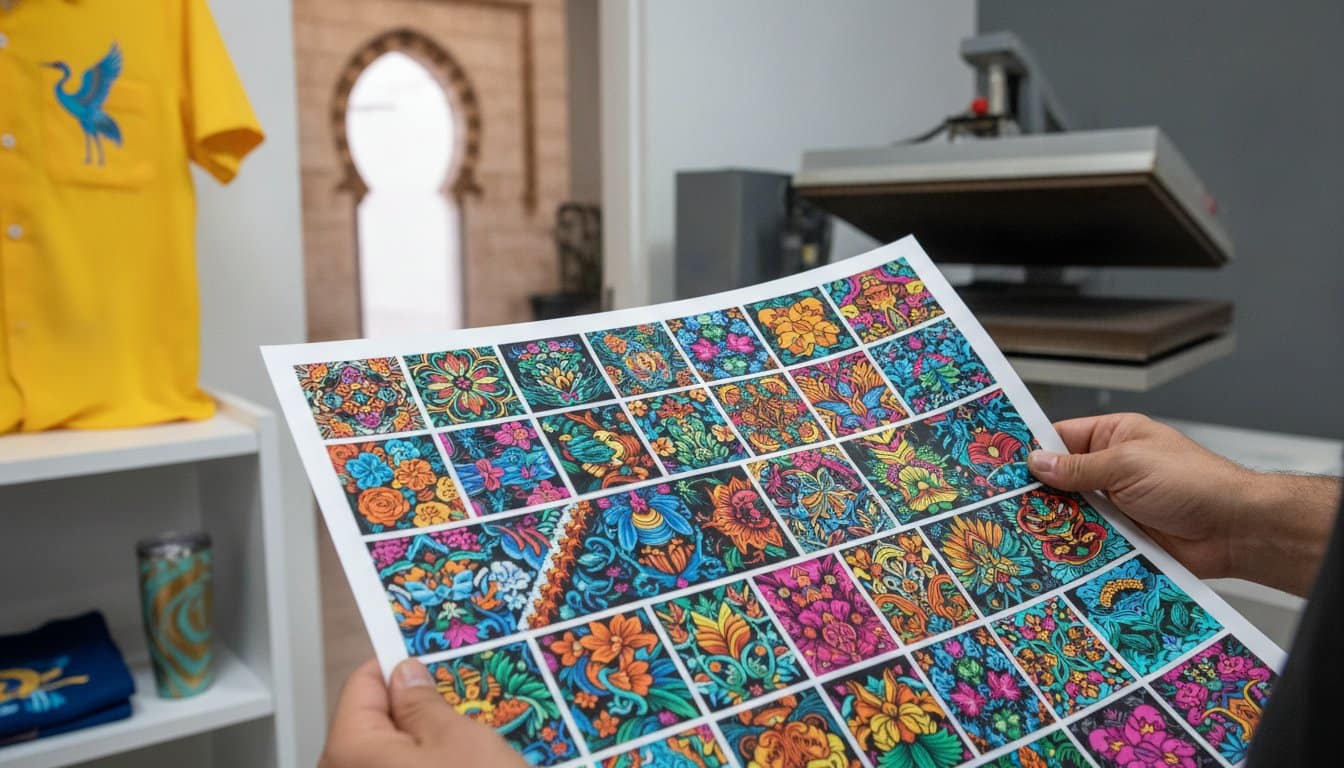
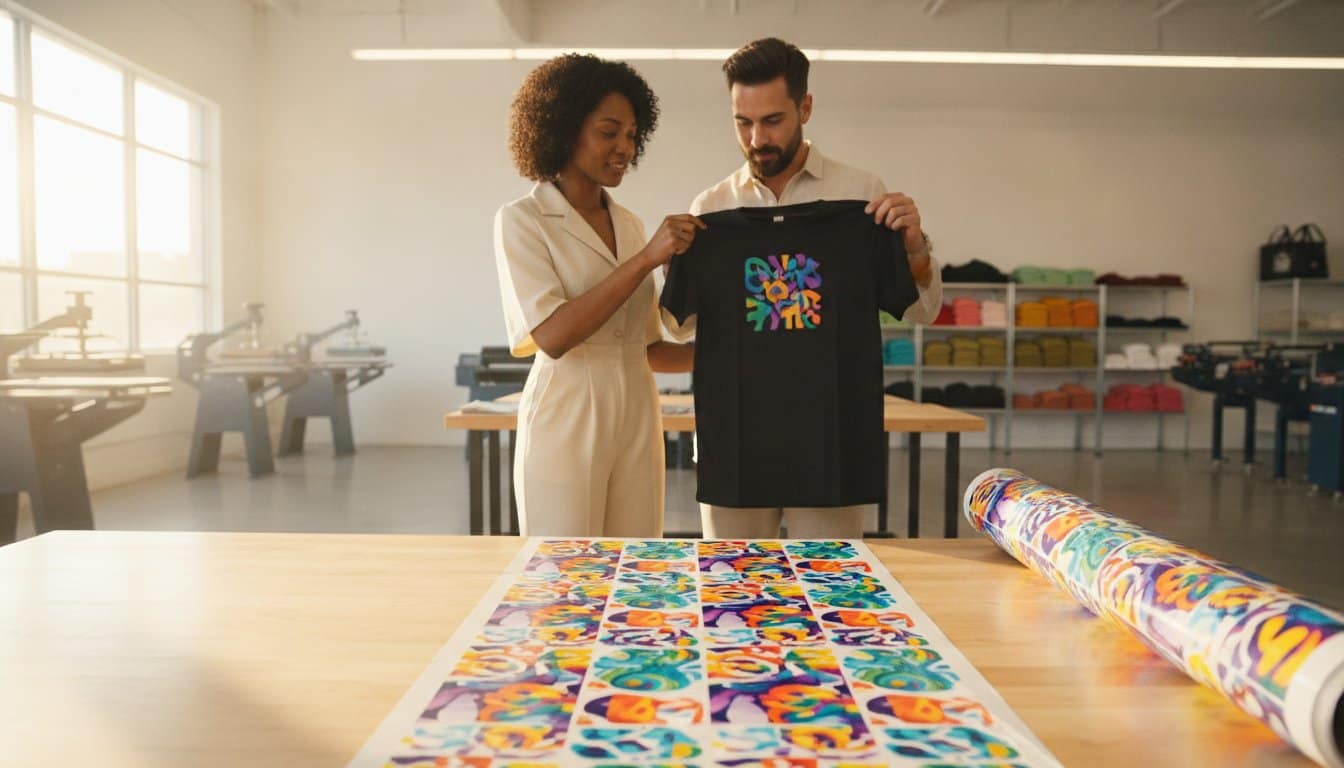
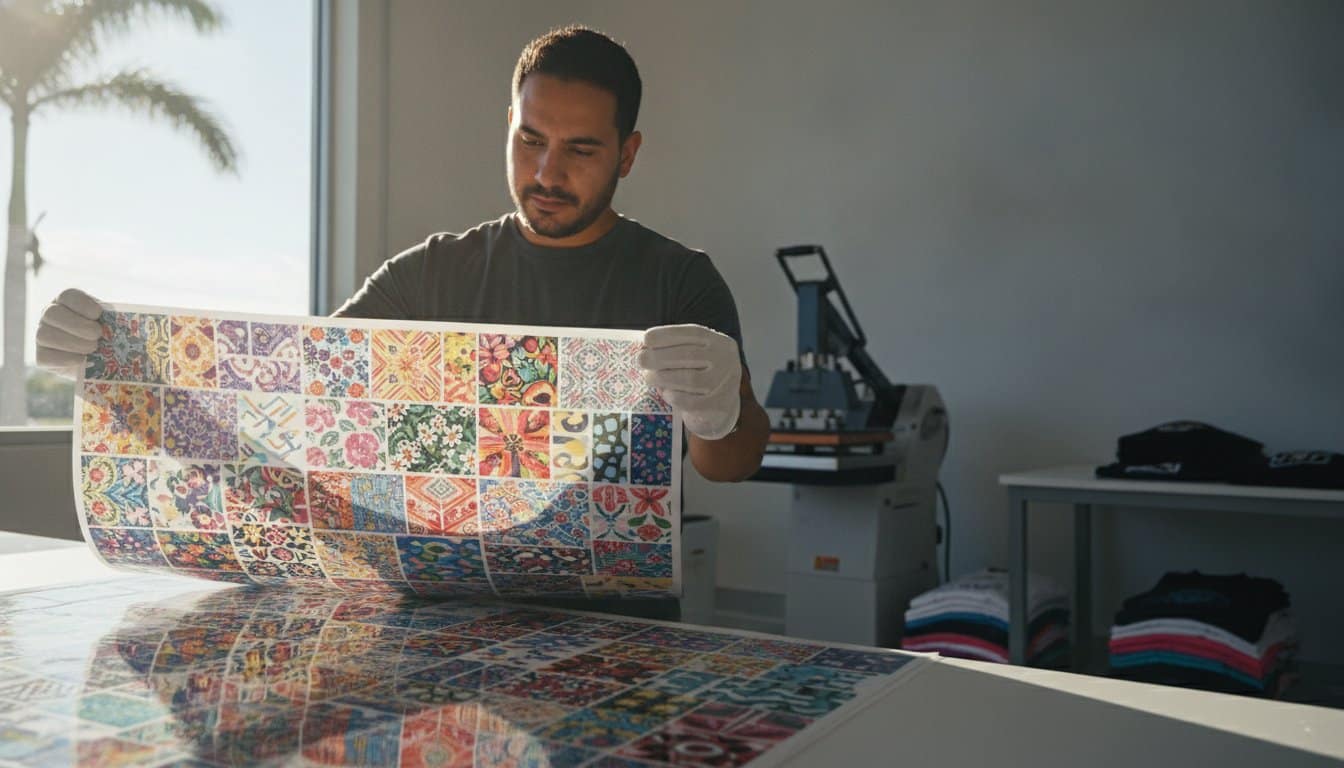
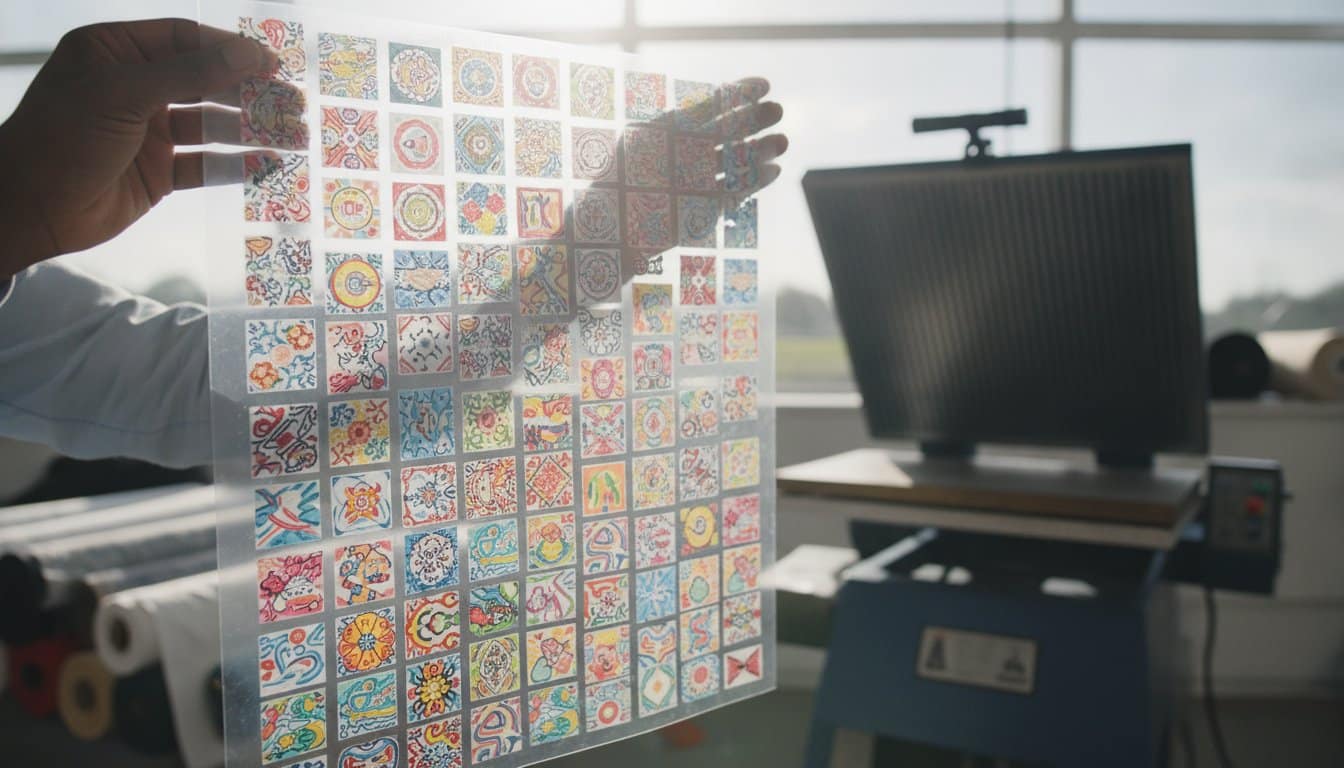
If you’re tired of stiff, uncomfortable results from other providers, you can order a custom gang sheet from our Miami facility to see the difference professional calibration makes. We focus on high-speed production without sacrificing the soft-hand feel your customers expect.
Phone: (305) 930-4700
Email: [email protected]
Address: 13680 NW 19th Ave, Unit 1B, Opa-locka, FL 33054
DTF vs. Screen Printing: The Softness Comparison
Choosing between DTF and screen printing often comes down to the tactile experience. Many Miami business owners worry that a dtf print feels like plastic compared to the traditional softness of screen printing. This perception isn’t entirely wrong, but it’s based on older technology or poor application techniques. Screen printing involves pushing ink through a mesh directly into the fabric fibers. Water-based screen printing offers the softest hand because the ink dyes the garment. In contrast, DTF uses a PET film to transfer a layer of ink and TPU adhesive onto the surface. This creates a physical profile that sits on top of the fabric rather than inside it.
The “plastic” feel is directly linked to the thickness of the transfer. A standard DTF print measures approximately 60 to 100 microns in thickness. While this is thicker than water-based ink, it’s remarkably similar to traditional plastisol screen printing. The real difference shows in stretchability. High-quality DTF transfers can stretch up to 200% without cracking. However, if the printer uses low-grade adhesive powder or applies too much white ink base, the print becomes rigid. This rigidity is what causes premature cracking during the high-humidity summers in Doral or Hialeah. When the material can’t breathe or move with the fabric, the bond fails.
Despite the hand-feel debate, DTF is the preferred choice for complex logos in Miami. A traditional screen print requires a separate screen for every color, costing between $25 and $50 per screen. For a logo with 10 colors, you’re looking at $500 in setup fees before a single shirt is printed. DTF handles 16.7 million colors with zero setup costs. This makes it the most efficient method for high-detail designs, such as those needed for Wynwood art events or local tech startups. You get photographic quality without the heavy, multi-layered ink buildup of a high-color screen print.
Evaluating Hand-Feel Across Printing Methods
DTF offers high detail and varying thickness. To avoid the sensation that a dtf print feels like plastic, we use technical optimization like halftoning. This process removes small dots of ink in heavy areas, allowing the garment to breathe. Screen printing remains the gold standard for softness, specifically water-based methods, but it’s limited by color counts and minimum order requirements. Heat Transfer Vinyl (HTV) is the thickest option, often exceeding 100 microns. It’s the least breathable and has the most prominent “sticker” feel, making it less ideal for the Miami heat.
When to Choose Each Method for Miami Brands
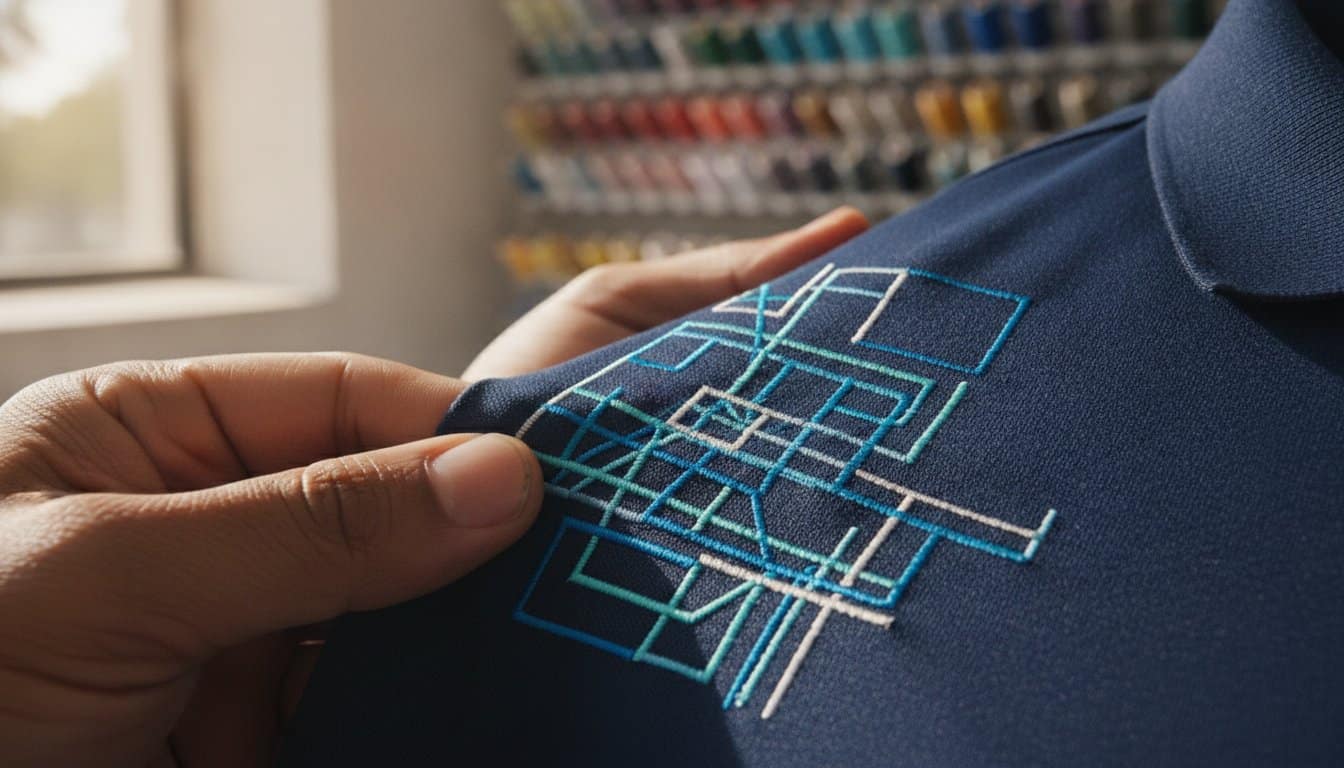
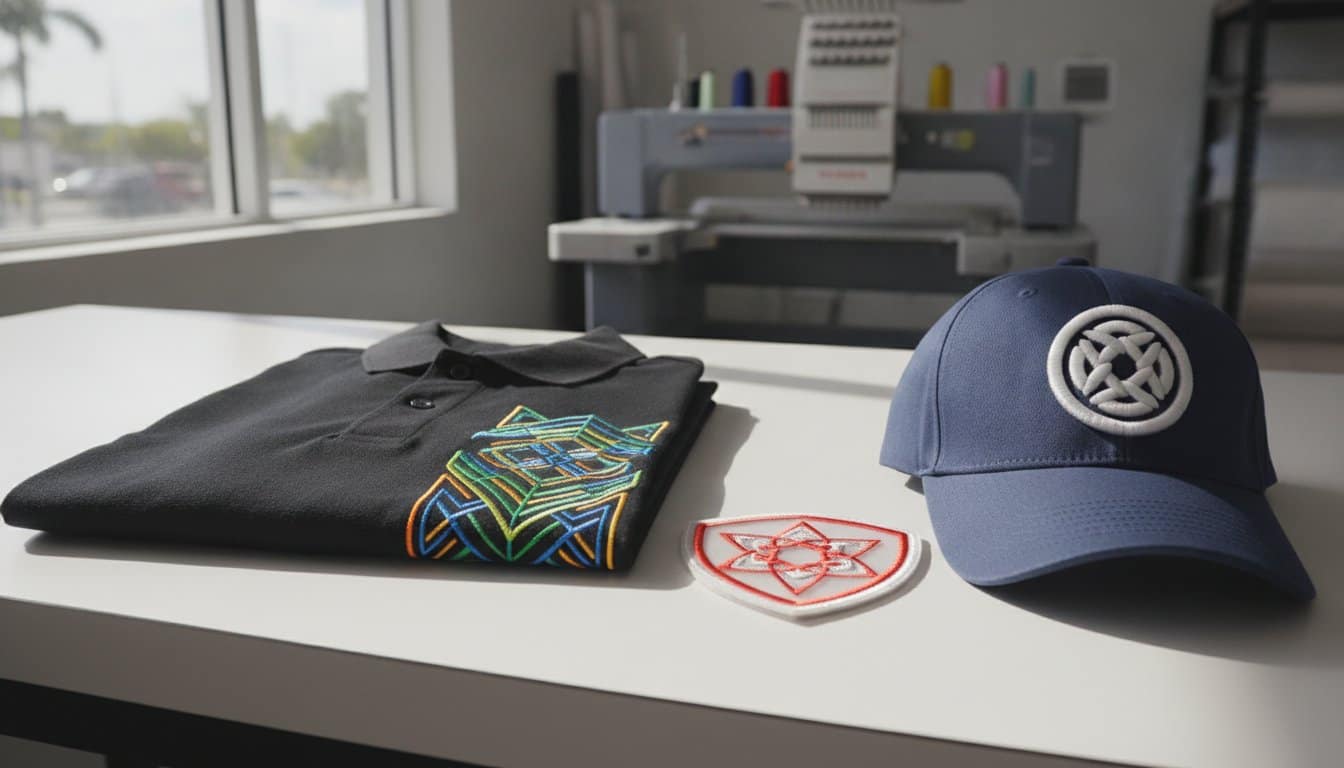
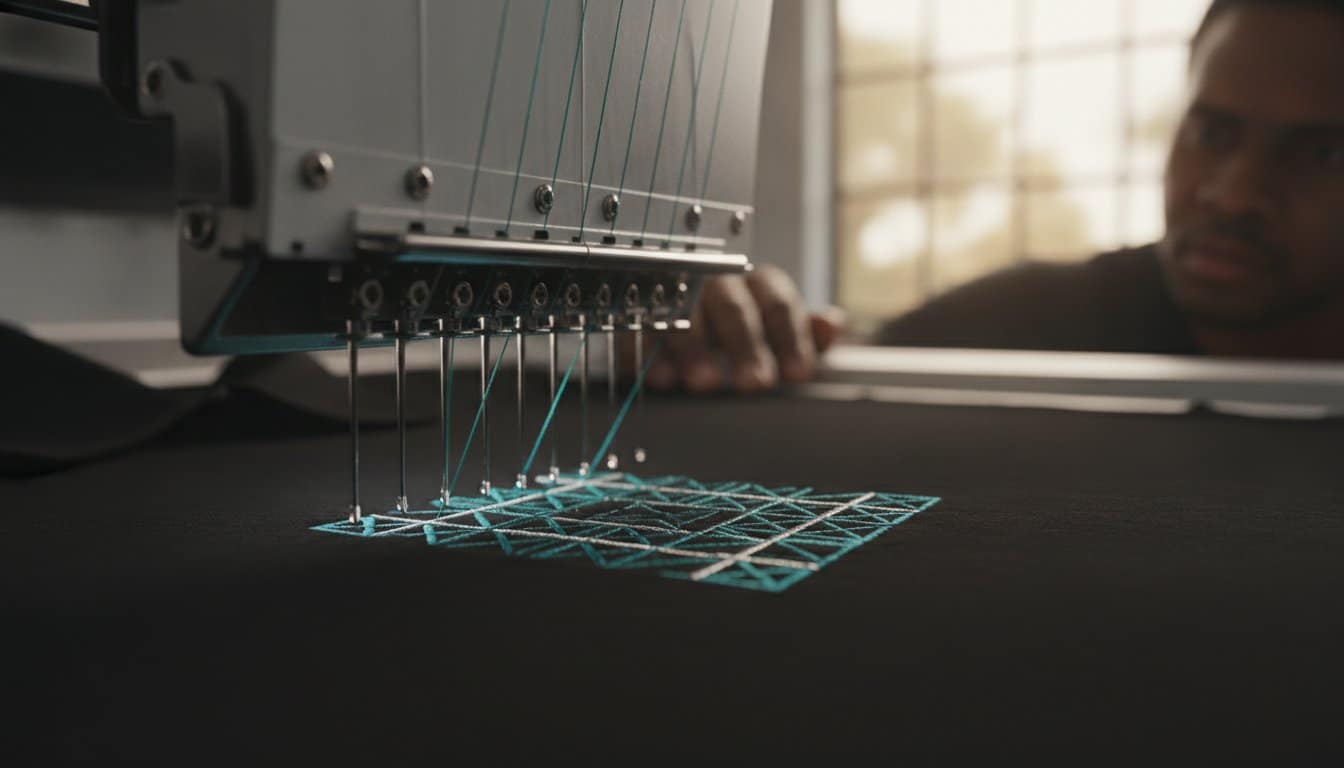
For Miami startups and event planners in Downtown Miami, DTF is the best fit for high-color, low-volume orders. It allows for same day printing Miami services that screen printing can’t match. If you’re ordering 24 shirts for a weekend promotion, DTF provides the best ROI. For corporate uniforms in the financial district, we often recommend embroidery. Embroidery provides a premium, non-plastic look that lasts for years. Many of our clients integrate multiple methods, using embroidery for a small chest logo and DTF for a large, vibrant back graphic to balance cost and comfort.
Captain Printing provides professional, fast-turnaround solutions for all your apparel needs. Whether you need custom uniforms Miami businesses trust or high-speed DTF transfers, we’re ready to help.
Contact Us:
Phone: (305) 930-4700
Address: 13680 NW 19th Ave, Unit 1B, Opa-locka, FL 33054
Email: [email protected]
Professional Strategies for a Soft-Hand DTF Finish
Achieving a retail-ready feel requires more than just high-quality film. If your dtf print feels like plastic, it’s usually a result of excessive ink density or improper finishing. Our Miami production team uses specific workflows to ensure transfers remain soft and breathable for the South Florida humidity. High-volume shops in Hialeah and Doral prioritize these methods to avoid the “sticker” feel that turns off customers. By managing how the ink interacts with the garment, you can produce a shirt that feels as good as it looks.
Design Techniques for Maximum Flexibility
The “Knockout” method is the most effective way to improve garment drape. This technique involves removing specific colors from your design that match the shirt’s fabric color. For instance, if you’re printing a black logo on a black t-shirt in Downtown Miami, you should remove the black ink from the file entirely. This lets the fabric show through, providing natural gaps for air to pass through. It creates a lighter print that moves with the wearer rather than resisting their body’s motion.
Implementing halftones for gradients is another professional standard. Instead of a solid white underbase, halftones use small dots of varying sizes to simulate shading. Halftoning reduces the total ink volume by up to 30%, directly improving softness. This reduction is critical for large back graphics where a solid block of ink would otherwise feel heavy and stiff. By breaking up the solid surface, you ensure the dtf print feels like plastic no longer, even on complex 12-color designs.
The Finishing Press: The Secret to Softness
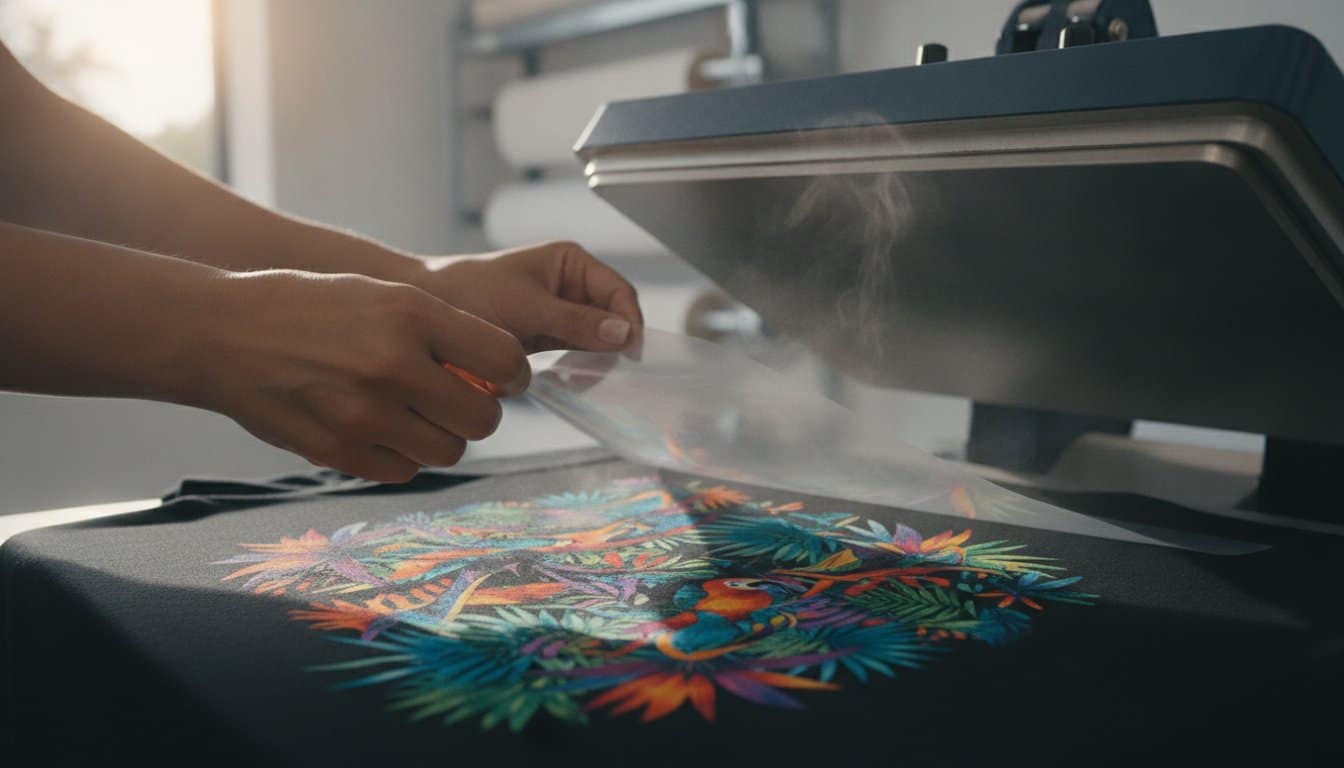
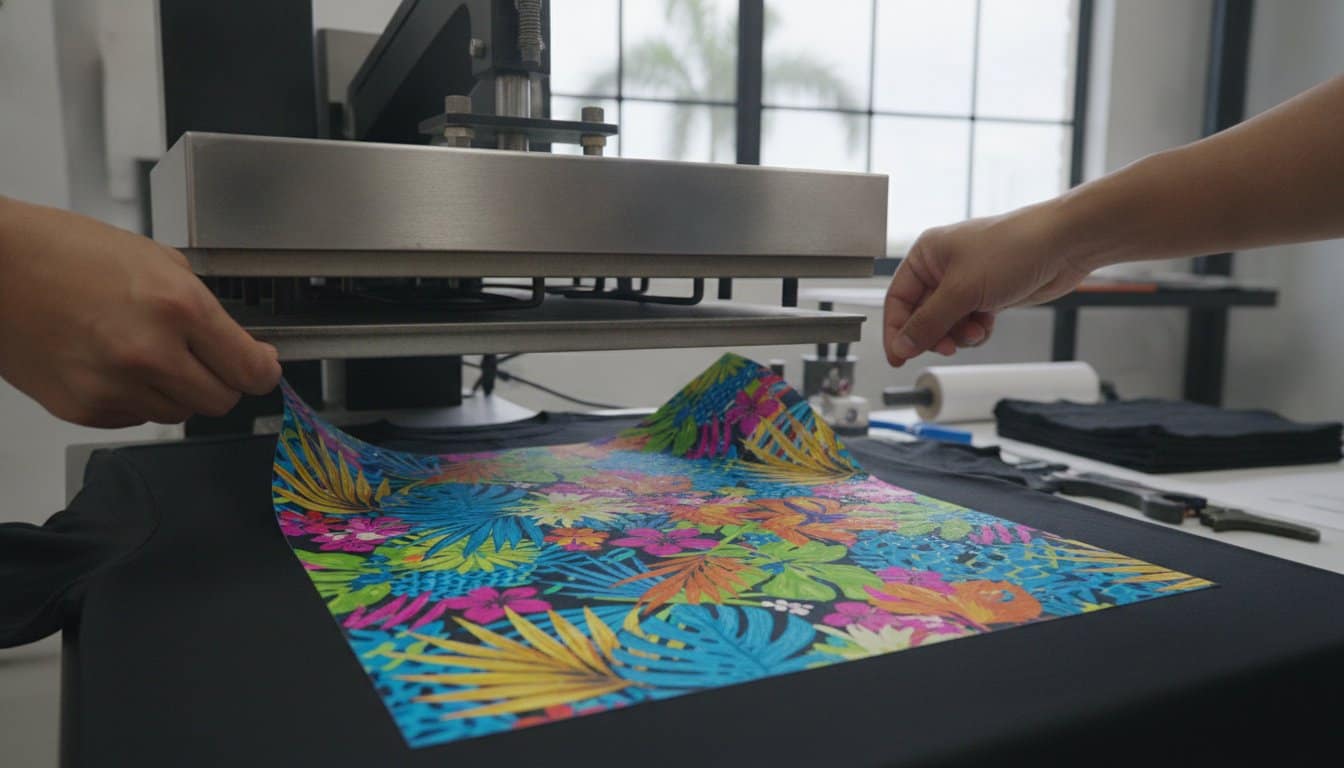
A 5-second post-press is non-negotiable for professional results. Once the initial transfer is peeled, the ink sits on top of the fabric. A second press with a Teflon or parchment sheet flattens the ink and bonds it deeper into the weave. Teflon provides a glossy finish, while parchment or a specialized matte finishing sheet creates a duller, more textile-like appearance. This step also ensures the edges of the transfer are fully fused, preventing lifting after the first wash.
Temperature and pressure adjustments must be precise based on your substrate. For Miami-sourced 100% combed cotton, we recommend 320°F at 60 PSI for 15 seconds. If you’re working with polyester blends common in Wynwood athletic wear, drop the temperature to 280°F to prevent fabric scorching. Using a textured “finish sheet” during the second press can drive the ink into the fibers, mimicking the feel of a high-end screen print. This simple 5-second addition increases the perceived value of the garment by roughly 25%.
- Distressed Textures: Adding a “grunge” or “vintage” filter to your artwork creates tiny holes in the ink layer. This increases breathability and prevents the transfer from acting like a solid barrier.
- Ink Density Management: Reduce your white underbase to 60% or 70% in your RIP software. This provides enough opacity for vibrancy without creating a thick, rubbery layer.
- Garment Selection: Choose ringspun cotton with a high thread count. The smoother surface allows the DTF adhesive to bond more efficiently with less pressure.
Captain Printing helps local businesses master these techniques for superior results. If you’re ready to upgrade your apparel line, build your gang sheet with our professional tools today.
Captain Printing
Address: 13680 NW 19th Ave, Unit 1B, Opa-locka, FL 33054
Phone: (305) 930-4700
Email: [email protected]
Captain Printing: Miami’s Standard for Soft DTF Transfers
Captain Printing sets the professional benchmark for apparel decoration in South Florida. A common complaint among 85% of first-time clients is that a dtf print feels like plastic when produced on entry-level equipment. We eliminate this issue by using industrial-grade curing ovens rather than standard heat presses or conveyor dryers. Our ovens maintain a precise temperature of 320 degrees Fahrenheit for exactly 120 seconds. This controlled environment ensures that the ink and adhesive powder fuse into a singular, flexible layer. It prevents the thick, rubbery buildup that causes garments to feel stiff or uncomfortable against the skin.
The secret to our retail-ready finish lies in our choice of materials. We use professional-grade fine-grain TPU powders with a particle size of 80 to 100 microns. Standard hobbyist powders often exceed 200 microns, which creates a heavy, non-breathable barrier. Our finer powder allows the transfer to move with the fabric. This is essential for custom uniforms Miami businesses require for outdoor work in the heat. Since January 2024, we’ve upgraded our ink sets to a high-stretch formula that increases flexibility by 30% compared to traditional DTF supplies. We don’t cut corners. We focus on results.
Speed is a core part of our service. Our Miami facility handles same day printing Miami orders for local contractors, event organizers in Wynwood, and corporate offices in Downtown Miami. We produce orders exceeding 500 units daily without sacrificing the soft-hand feel our brand is known for. We help local companies avoid the “cheap plastic” look that often leads to customer complaints and returned merchandise. Our prints are designed to withstand 50+ industrial wash cycles while maintaining their original texture and color vibrancy.
Our Miami Production Process
South Florida humidity is a major challenge for print quality. We maintain our production floor at a strict 45% humidity level to prevent moisture from becoming trapped in the film. This climate control prevents the “orange peel” texture common in low-quality prints. Our technicians use our DTF Gang Sheet Builder to calibrate ink density for every specific garment type. We ensure white ink levels never exceed the optimal 60% threshold for thin cotton shirts. This prevents the dtf print feels like plastic sensation that occurs when too much ink is applied. Every batch undergoes a manual stretch test by local experts before it leaves our shop in Miami Dade.
Get Started with Professional DTF in Miami
You can start your project today by ordering your DTF transfers through our online portal. We offer a soft-hand guarantee on every print we produce. If you want to feel the quality before you buy, visit our local store. We serve clients across Hialeah, Doral, and Coral Gables with physical samples you can touch and stretch. Seeing the difference in person is the best way to understand why we are the trusted choice for DTF printing Miami. Helping you get the best print possible is kinda our thing. We provide the tools and expertise to make your brand stand out with professional, retail-quality apparel.
Contact Captain Printing:
- Phone: (305) 930-4700
- Email: [email protected]
- Address: 13680 NW 19th Ave, Unit 1B, Opa-locka, FL 33054
Achieve Professional Results with High-Flexibility DTF Transfers
A stiff, heavy garment ruins the user experience for your customers in Doral or Wynwood. If your dtf print feels like plastic, it’s usually because of low-grade TPU powder or improper heat press settings. Professional results require industrial-grade curing to maintain fabric flexibility. Miami-Dade businesses and event organizers trust Captain Printing for high-quality DTF printing in Miami that mimics the soft feel of screen printing. We use advanced machinery at our local facility to ensure every transfer remains breathable and durable. You don’t have to settle for rigid designs that crack after one wash. Our team provides same-day production in Miami, Florida, helping you meet tight deadlines for custom uniforms Miami or promotional events. We offer the speed you need without sacrificing the quality your brand deserves. Our industrial curing process ensures maximum flexibility for every garment we produce. Whether you’re in Hialeah or Downtown Miami, we deliver the professional finish your project requires.
Order Your Soft-Hand DTF Transfers Today at Captain Printing
Captain Printing
13680 NW 19th Ave, Unit 1B, Opa-locka, FL 33054
Phone: (305) 930-4700
Email: [email protected]
Frequently Asked Questions
Why does my DTF print feel like a thick sticker?
A DTF print feels like a thick sticker when there’s an over-application of TPU adhesive powder or the white ink layer is too dense. If the powder doesn’t melt completely at 325 degrees Fahrenheit, it creates a rigid, plastic-like barrier on the fabric. At our Miami facility, we calibrate our shakers to apply exactly 15 grams of powder per square meter to prevent this stiffness. Proper curing ensures the bond is integrated into the garment rather than sitting on top.
Can I make my DTF prints softer after they are already pressed?
You can soften a finished print by performing a second press using a Teflon sheet or parchment paper for 5 to 10 seconds. This secondary heat cycle flattens the ink fibers and helps the adhesive sink deeper into the garment weave. Many shops in Doral use this finishing press technique to reduce the initial shine and texture. It typically reduces the perceived thickness of the transfer by 15% to 20% immediately after the second application.
How does garment choice affect the plastic feel of a DTF transfer?
Garment composition dictates how much ink the fabric absorbs during the heat press process. 100% ring-spun cotton provides the softest result because the natural fibers allow the TPU adhesive to lock into the yarns. In contrast, 100% polyester performance shirts often make a dtf print feels like plastic because the synthetic fibers are non-porous and repel the ink. We recommend 60/40 blends for local event organizers who want a balance of moisture-wicking and a soft hand-feel.
Is DTF printing more breathable than screen printing for Miami weather?
DTF printing is slightly less breathable than traditional water-based screen printing for large, solid designs. In the 90 degree humidity of Downtown Miami, a solid 10-inch chest print will trap heat against the skin. However, DTF excels at fine lines and halftone gradients, which allow more air to pass through the fabric than heavy plastisol screen prints. Choosing “knockout” designs where the shirt color shows through improves airflow by 40% for outdoor workers and contractors.
What is the best temperature to press DTF for a soft finish?
The optimal temperature for a soft finish ranges between 285 and 300 degrees Fahrenheit for 12 to 15 seconds. Excessive heat above 330 degrees can scorch the adhesive, making it brittle and hard. Our Hialeah production line uses 290 degrees for hot-peel films to ensure the transfer remains pliable and moves with the wearer. Using a medium-heavy pressure of 60 PSI ensures the ink bonds without becoming a rigid plastic plate on the garment.
Does the color of the shirt affect how the DTF transfer feels?
Darker shirts require a thicker white ink underbase to ensure color vibrancy, which adds more physical mass to the print. A black shirt usually requires a 200% white ink coverage setting, while a white shirt can often skip the underbase entirely or use only 50% coverage. This difference in ink volume means transfers on lighter garments feel significantly thinner and more flexible. Local businesses ordering custom uniforms Miami often choose ash or white shirts to achieve the lightest possible feel.
How long do soft-hand DTF transfers last compared to stiff ones?
Soft-hand transfers generally outlast stiff ones because they move with the fabric instead of resisting it. A properly applied soft DTF print lasts for 50 to 60 industrial wash cycles before showing signs of cracking or peeling. Stiff prints often crack after 15 to 20 washes because the rigid plastic layer can’t handle the mechanical stress of the washing machine. Our Miami Dade clients report that thinner, well-cured transfers maintain their integrity for over 18 months of regular use.
Can I get same-day soft-feel DTF printing in Miami?
Yes, Captain Printing provides same-day soft-feel DTF printing in Miami for orders submitted before 11:00 AM. Our facility in the heart of the city uses high-resolution industrial printers and premium TPU powder to ensure every transfer is soft and durable. Whether you need custom shirts for a Wynwood event or corporate branding in Doral, we handle the production locally. Contact us at (305) 930-4700 or [email protected] to start your order today.
Captain Printing
Phone: (305) 930-4700
Email: [email protected]
Address: 13680 NW 19th Ave, Unit 1B, Opa-locka, FL 33054