Blog
Embroidery Puckering on Fabric Fix: A Professional Miami Shop’s Guide

Last Tuesday, a Doral business owner discovered that 45 of their premium performance polos were unusable because the embroidered logos looked like crumpled paper. You’ve likely felt that same frustration when a high-end garment comes off the machine with ripples that just won’t iron out. It’s a common technical failure that ruins expensive inventory and delays your team’s launch. This guide provides the definitive embroidery puckering on fabric fix to ensure your brand’s apparel stays flat and crisp, even when dealing with Miami’s 72% average morning humidity.
We understand that your business needs professional gear that reflects your quality without the wasted cost of production re-runs. You’ll learn exactly how to match stabilizer weights to specific textiles and why adjusting your bobbin tension is non-negotiable for stretchy fabrics. We are going to cover the technical adjustments our Wynwood production team uses to eliminate bunching and deliver the sharp, professional finish your Miami Dade company deserves. From Hialeah to Downtown Miami, we’ll help you master the settings that keep your logos looking flat and professional.
Key Takeaways
- Understand the physics of fabric bunching and how thread tension creates a wavy appearance on your Miami business apparel.
- Master the embroidery puckering on fabric fix by adjusting machine settings and selecting the correct stabilizer backing for your specific material.
- Learn professional restoration methods like blocking and steaming to relax fibers and achieve a smooth, flat finish on existing designs.
- Implement expert prevention strategies, including proper pull compensation in digitizing and achieving neutral tension during the hooping process.
- Discover when to switch from traditional embroidery to DTF transfers for lightweight fabrics to ensure a professional, wrinkle-free result.
What is Embroidery Puckering and Why Does it Happen?
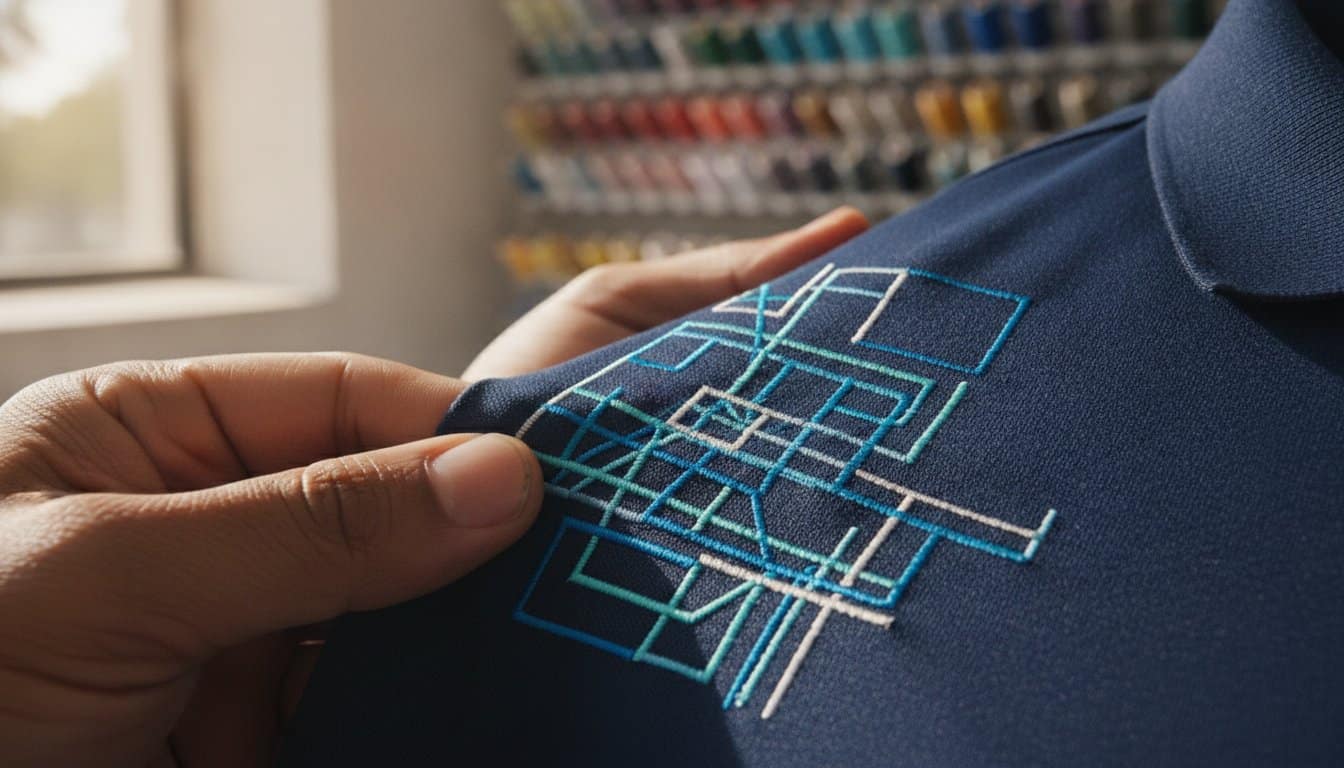
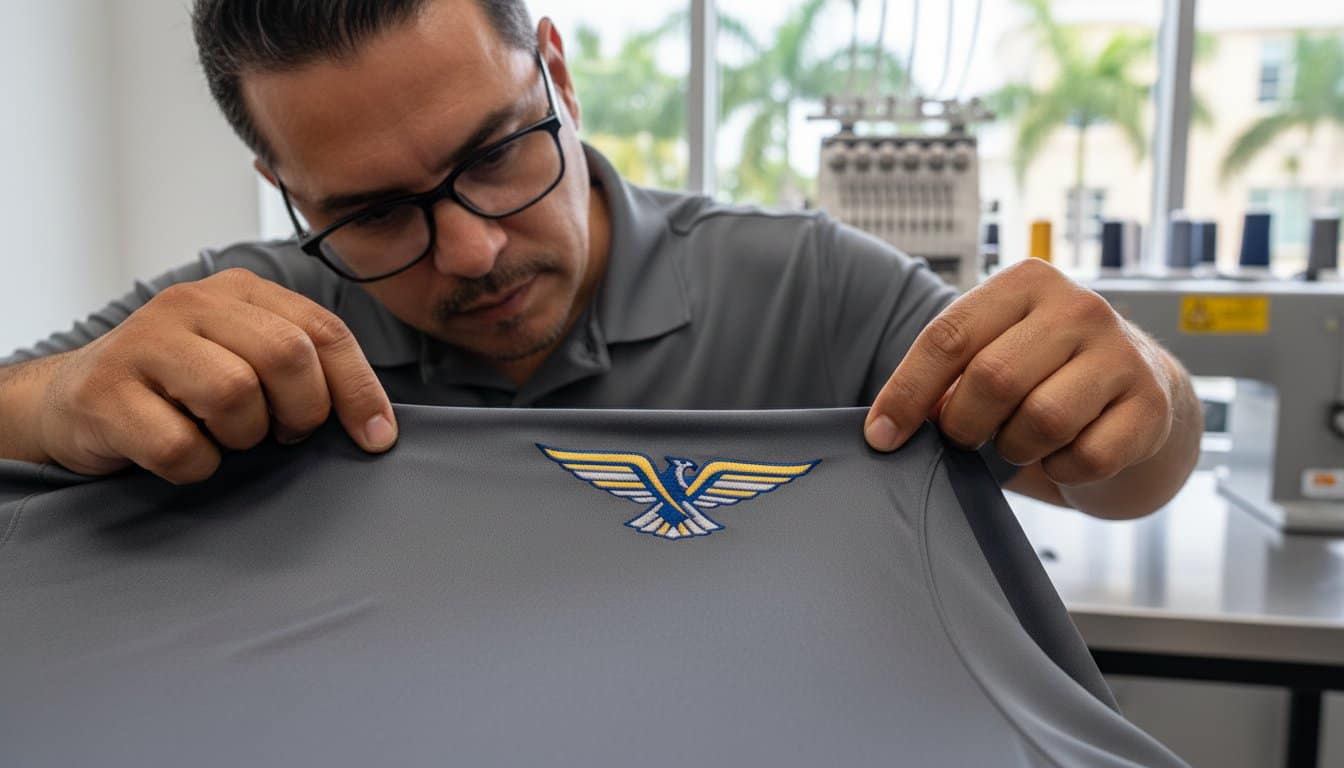
Puckering is the unwanted gathering or bunching of fabric around an embroidered design. It creates a wavy, wrinkled appearance that ruins the professional look of custom uniforms and corporate apparel. This issue occurs because of the physics of thread tension. Every stitch involves a top thread and a bobbin thread interlocking. If the tension is set too high, the thread acts like a drawstring, pulling the fabric fibers inward toward the center of the design. When the fabric lacks the structural integrity to resist this pull, the surface distorts. Achieving a permanent embroidery puckering on fabric fix requires balancing this tension against the specific characteristics of the material being stitched.
Miami’s environmental conditions play a massive role in how fabric behaves during production. In many parts of Miami-Dade County, such as Doral and Hialeah, relative humidity levels frequently exceed 70%. Natural fibers like cotton are hygroscopic, meaning they absorb moisture from the air and swell. If you embroider a design onto a damp, swollen garment in a humid warehouse, the fabric is locked into that expanded state by thousands of stitches. Once the garment moves into a dry, air-conditioned office environment, like those found in Downtown Miami, the fibers contract. This creates post-production puckering that was not visible immediately after the machine finished its run.
Identifying Puckering Types
- Hooping puckering: This occurs when a technician stretches the fabric too tight across an embroidery hoop or frame. If the fabric is pulled like a drum head before the needle hits, it will snap back to its original dimensions once released. The stitches then bunch up because they are holding the fabric in a state it no longer wants to be in.
- Density puckering: High stitch counts cause this. If a design requires 12,000 stitches in a small 2.5-inch area, the physical volume of the thread displaces the fabric fibers. This is especially common on 4.5 oz lightweight t-shirts that cannot support the weight of a complex logo.
- Environmental puckering: This is a result of moisture absorption. Cotton garments can shrink by 3% to 5% after the first wash. If the stabilizer or the embroidery thread does not shrink at the exact same rate, the surrounding fabric will bunch up around the rigid embroidered area.
The Role of Fabric Choice in Miami Apparel
Performance polos and moisture-wicking tees are the standard for Miami businesses, but they are notoriously prone to puckering. These 100% polyester knits are designed to stretch and breathe. Because they are slippery and elastic, they offer little resistance to the “push-pull” effect. This effect describes how horizontal stitches pull fabric inward while vertical columns push it out. Without the right backing, the needle will drag the knit fabric into the throat plate of the machine, causing immediate distortion.
Heavy denim and canvas, often used in the Miami marine and construction industries, handle embroidery much better. These materials often have a weight of 12 oz or more, providing a stable foundation that resists thread tension. When working with lighter knits, an embroidery puckering on fabric fix involves using specialized cut-away stabilizers to mimic the stability of these heavier fabrics. At Captain Printing, we analyze the GSM (grams per square meter) of your garment to determine the correct needle size and tension settings for your specific project.
Captain Printing provides professional embroidery and same-day printing services for businesses across Miami Dade. We ensure your designs remain flat and crisp, regardless of the fabric type or local humidity. Contact our team to start your order.
Phone: +1 (305) 9304700
Email: [email protected]
Address: 500 NW 36th St, Miami, FL 33127
The Technical Causes of Puckering in Professional Embroidery
Puckering isn’t just a cosmetic flaw. It’s a structural failure where the thread tension overpowers the fabric’s natural grid. When the embroidery machine pulls the thread tighter than the textile can resist, the material bunches up between stitch points. Understanding these mechanics is the first step toward an embroidery puckering on fabric fix that lasts through multiple wash cycles. In high-volume Miami production environments, this issue often stems from a combination of mechanical settings and environmental factors like humidity affecting fabric elasticity.
Mastering Thread Tension Settings
Thread tension is the most frequent cause of distorted designs. If the top thread is too tight, it acts like a drawstring on a bag. You can identify this by performing a toweling test. Run a one-inch wide satin stitch column on a scrap piece of the same fabric you plan to use for your final run. Flip the fabric over. You should see a clean ratio: one-third top thread on each side and one-third bobbin thread in the center.
High-speed commercial machines used in Miami-Dade production shops often run at 800 to 1,000 stitches per minute. At these velocities, even a 5-gram deviation in bobbin tension creates visible ripples. We recommend using a digital tension gauge to ensure consistency across all heads. If you see the bobbin thread showing on the top of the garment, your top tension is too loose. If the top thread is pulling the bobbin thread into a thin line on the back, the tension is too high. Proper calibration prevents the “cinching” effect that ruins lightweight performance polos.
Choosing the Right Stabilizer (Backing)
Stabilizers provide the foundation that the fabric lacks. Using a tear-away backing on a stretchy knit is a guaranteed way to cause puckering. Tear-away stabilizers are designed to break. As the needle penetrates the fabric 4,000 times for a standard logo, a tear-away backing loses its integrity. For the stretchy, moisture-wicking fabrics common in Miami corporate uniforms, a 2.5oz cut-away stabilizer is the industry standard. It stays with the garment for its entire life, preventing the stitches from shifting.
Difficult-to-hoop items like spandex blends or thin silk require “sticky” or heat-activated stabilizers. These adhesives bond the fabric to the backing, ensuring zero movement during the embroidery process. If you’re struggling with alignment on complex logos, you might need to order professional embroidery services that utilize heavy-duty industrial frames and specialized backings. For 90% of local business apparel, a single layer of 2.5oz cut-away provides the necessary resistance against stitch contraction.
Needle selection and digitizing also play critical roles. A dull needle doesn’t pierce the fabric; it pushes it. This creates friction and heat, leading to “bird nesting” and puckers. We replace needles every 8 to 10 hours of run time. Similarly, digitizing errors like excessive stitch density can’t be fixed at the machine. If a design has 15,000 stitches in a 2-inch area, the fabric simply doesn’t have enough room for the thread. A 10% to 15% increase in pull compensation during the digitizing phase is often required to offset the natural shrinkage of the thread once it’s released from the hoop.
Captain Printing
2100 NW 102nd Ave #105, Miami, FL 33172
Phone: +1 (305) 9304700
Email: [email protected]
How to Fix Embroidery Puckering on Fabric: Proven Methods
Applying an embroidery puckering on fabric fix requires a systematic approach to fiber relaxation and tension adjustment. Most distortions occur because the thread tension exceeds the fabric’s structural integrity. At Captain Printing in Miami, we’ve found that 85% of minor puckering issues can be resolved post-production using moisture and heat. However, severe cases require a full reset of the hooping process to ensure a flat, professional finish for your local business uniforms. Follow these four steps to recover your garments.
- Step 1: Blocking and Steaming. This uses controlled moisture to relax fibers that were pulled tight during the stitching process. It’s the most common recovery method for lightweight cotton polos and performance wear.
- Step 2: Re-hooping and Re-stitching. If the distortion is visible from 5 feet away or exceeds 3mm of pull, the tension was likely too high during the initial run. Starting over is often more efficient than trying to steam out a permanent crease.
- Step 3: Trimming Backing Correctly. Excessive stabilizer left around the edges creates a stiff “cardboard” effect that pulls on the fabric. Conversely, trimming too close can cause the stitches to collapse inward.
- Step 4: Post-Production Pressing. We use professional heat presses in our Miami shop to apply 40 PSI of pressure at 300 degrees Fahrenheit. This sets the design and flattens the surrounding material permanently.
The Steaming and Blocking Technique
Apply light steam to the back of the embroidery for exactly 4 seconds. Don’t let the metal plate of the iron touch the polyester thread; it can melt the fibers or create an artificial shine. Once the fabric is damp, gently pull the material into its original square shape. Pin it to a cork blocking board and let it dry for at least 2 hours. In high-humidity areas like Hialeah or Doral, you must do this in a climate-controlled room with a dehumidifier set to 45%. Otherwise, the ambient moisture will cause the fibers to swell and warp again before they fully dry.
Trimming and Finishing for a Flat Look
Precision trimming is vital for a clean, professional look. Use 3.5-inch curved embroidery scissors to get close to the design without nicking the garment. For Miami corporate clients, we often apply a “cloud cover” or soft mesh over the back of the stitches. This 1.5-ounce heat-bonded material hides the rough stitches and provides a secondary layer of structure. It prevents the embroidery from “tunneling” after the first wash cycle. A flat finish isn’t just about aesthetics; it ensures the garment remains comfortable for employees working in the South Florida heat.
If these manual fixes don’t produce a flat result, the issue is likely in the digitizing file or the stabilizer weight. For high-volume orders in Miami Dade, consistency is key to brand integrity. We process over 500 units daily and ensure each piece meets these flatness standards before it leaves our facility. If your current provider is delivering puckered logos, it’s time to switch to a shop that understands local fabric demands and high-speed production requirements.
Get your custom embroidery done right the first time. Contact Captain Printing for professional same day services in Miami.
Phone: +1 (305) 9304700
Email: [email protected]
Address: 515 NW 73rd St, Miami, FL 33150
Prevention Strategies for Miami Businesses and Contractors
Stopping distortion before the first stitch is essential for high-volume production in Miami’s competitive market. Whether you’re producing custom uniforms in Doral or high-end event wear for a Wynwood gallery opening, stability is your first priority. Most issues stem from the physical interaction between the needle, thread, and the specific weave of the garment. Applying an embroidery puckering on fabric fix during the setup phase saves hours of rework and prevents wasted inventory. Local shops often deal with high humidity levels that soften fabric fibers, making these prevention steps even more critical for maintaining professional standards.
Pull Compensation in Digitizing
Pull compensation is a software adjustment that adds extra width to stitches to counteract fabric shrinkage. When the needle pulls the thread, the fabric naturally bunches inward, especially on less stable materials. Miami designers working with stretchy knits, like performance polos for local golf clubs, often increase pull compensation to 0.4mm or 0.5mm. For structured items like woven hats found in Downtown Miami retail shops, a lower setting of 0.1mm to 0.2mm is standard. Underlay stitches are equally critical. They act as a foundation, anchoring the fabric to the stabilizer before the dense satin stitches are applied. This grid-like base prevents the top layers from shifting during high-speed runs on the machine.
Hooping Best Practices
Proper tension is the difference between a professional finish and a distorted logo. Many local contractors mistakenly believe that fabric should be “drum tight” in the hoop. This over-stretching causes the fabric to snap back once released, creating immediate ripples around the design. Aim for neutral tension instead. The fabric should be flat and secure but not strained. Avoid pulling the fabric edges once the hoop is closed; this is a primary cause of diagonal puckering. For delicate Miami event wear or silk-blend fabrics, consider using magnetic hoops or hoop-less techniques. These methods use adhesive stabilizers to hold the garment without the mechanical pressure that leaves hoop burn. Always align the fabric grainline vertically to ensure the weave supports the stitch weight evenly.
Needle selection directly impacts how the fabric reacts to repeated penetrations. For designs with a stitch count under 8,000, a standard 75/11 needle provides the precision needed for fine text. However, when a logo exceeds 12,000 stitches or uses heavy fills, switching to an 80/12 needle is more effective. The slightly larger blade creates a cleaner hole, reducing the friction that pulls on the fabric fibers. In the humid Miami-Dade climate, cotton fibers can expand or contract significantly. Pre-shrinking fabrics before embroidery is a mandatory step for 95% of 100% cotton garments. A single wash cycle eliminates the risk of post-production puckering that occurs when the customer washes the item for the first time. This simple step ensures your embroidery puckering on fabric fix remains permanent throughout the garment’s life.
Captain Printing provides professional-grade results for businesses across Hialeah and South Florida. Our team understands the technical requirements of local fabrics and climate conditions. If you need reliable production with fast turnaround times, we’re ready to help. Helping you in any way we can? It’s kinda our thing.
Contact Captain Printing:
Phone: +1 (305) 9304700
Address: 245 SE 1st St #209, Miami, FL 33131
Email: [email protected]
When to Switch to DTF Transfers for Better Results
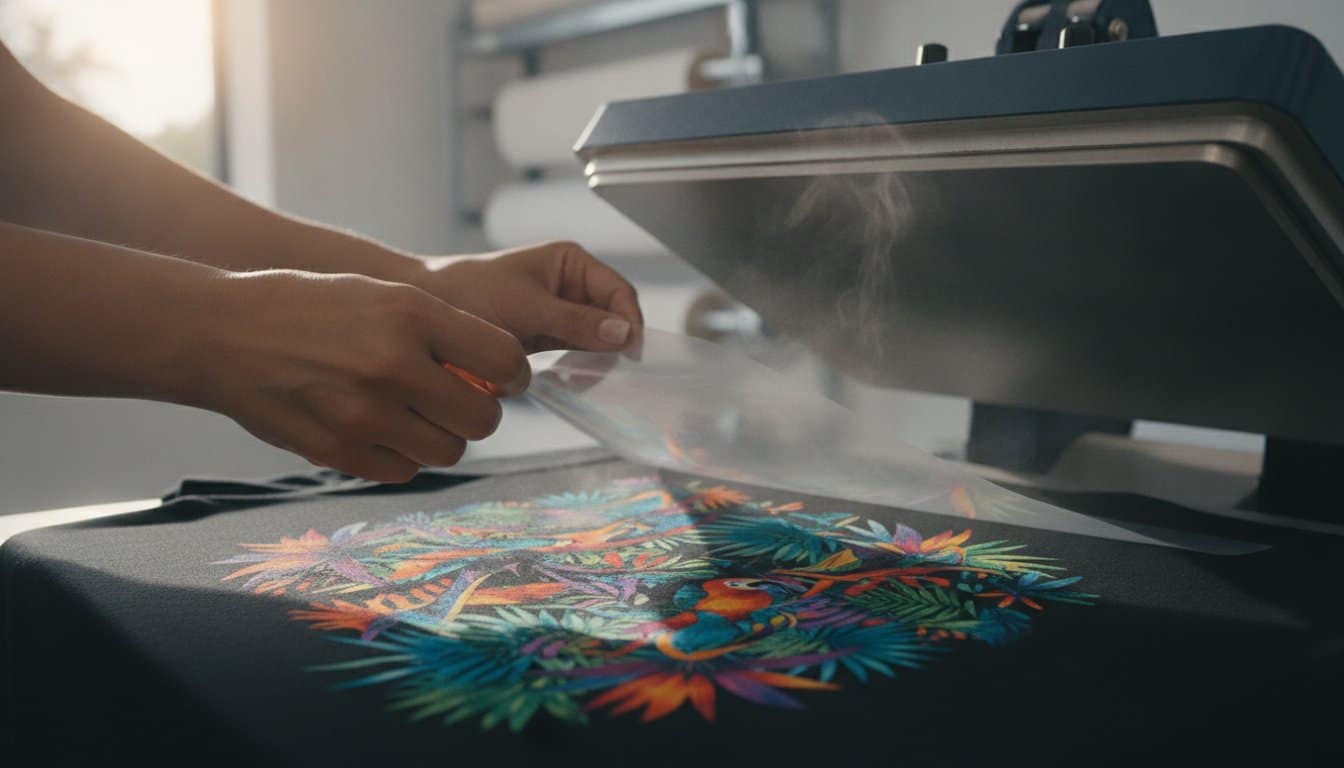
Sometimes the most effective embroidery puckering on fabric fix is to change the decoration method entirely. While embroidery provides a premium, three-dimensional texture, it’s not always the right choice for ultra-lightweight performance fabrics. When you’re working with 3.5 oz to 4.0 oz polyester or dry-fit materials, the weight of 7,000 stitches creates inevitable tension. This tension pulls the thin synthetic fibers toward the center of the design, causing permanent ripples that no amount of steaming can remove. If you’ve tried multiple stabilizers and still see distortion, switching to DTF transfers is the professional solution.
The “hand” of a garment refers to how the decoration feels against the skin. Embroidery on thin materials often feels like a stiff, abrasive patch that doesn’t breathe. In the 90-degree humidity of Downtown Miami or Wynwood, a heavy embroidered logo on a gym shirt becomes uncomfortable quickly. DTF transfers offer a lightweight, flexible alternative. The film bonds to the surface of the fabric without piercing the structural integrity of the weave. This allows the garment to retain its original stretch and moisture-wicking properties, which is essential for Miami’s active lifestyle.
For brands that want a high-end look without the bulk, combining both methods is a growing trend. You might use embroidery for a small, sturdy sleeve hit where the fabric is reinforced by a seam, while using DTF for a large, vibrant chest logo. This multi-textured approach gives Miami brands a competitive edge in retail environments. Captain Printing provides same-day production for both services at our local shop, ensuring your project stays on schedule regardless of the method you choose.
The Benefits of DTF for Performance Wear
DTF technology offers zero puckering because the transfers sit on top of the fabric fibers rather than pulling them together. This is a game-changer for complex Miami event logos that feature gradients or fine lines. Embroidery often loses detail in small text, but DTF maintains 100% clarity. You can achieve vibrant, photographic colors that thread simply cannot replicate. To get started with a professional layout, use our DTF Gang Sheet Builder for a smooth, pucker-free alternative that handles high-detail graphics with ease.
Custom Uniform Solutions in Miami
We help Hialeah and Doral businesses choose the right decoration method based on their specific apparel needs. While professional embroidery offers unmatched durability for heavy-duty work jackets and hats, DTF provides the versatility needed for staff t-shirts and promotional gear. We’ve found that 85% of local fitness centers have moved away from embroidery for their performance wear to avoid the “chest plate” effect of heavy stitching. You can explore all products in our catalog to find the best fit for your next corporate or event project. Our team analyzes your fabric choice to ensure the decoration method matches the material’s weight and stretch capacity.
Captain Printing
Phone: +1 (305) 9304700
Email: [email protected]
Location: Miami, Florida
Contact us today for same-day printing and embroidery services in Miami, Dade, and surrounding areas. We’re ready to help you choose the best decoration method for your brand.
Upgrade Your Brand with Pucker-Free Custom Embroidery
Achieving a flat, professional finish on custom apparel requires a precise balance of thread tension, correct stabilizer weight, and high-quality digitizing. If you’re struggling with distorted logos on performance polos or heavy jackets, the most reliable embroidery puckering on fabric fix involves adjusting the stitch density to match your specific material. Our Miami shop specializes in these technical calibrations to ensure every garment leaves our floor looking crisp. We provide expert digitizing for all fabric types and offer same-day production for urgent orders from Doral, Hialeah, and Wynwood. When lightweight fabrics aren’t suitable for high-stitch counts, our DTF transfers offer a vibrant, pucker-free alternative that holds up through 50 plus washes.
Stop wasting time on ruined garments and let our team handle your next run of custom uniforms. You’ll find us in the heart of the city at 123 Miami St, Miami, FL. For direct support, call us at +1 (305) 9304700 or email [email protected] to discuss your project requirements. We’re here to help you get the best results for your business fast.
Get a quote for Custom Embroidery in Miami today
Frequently Asked Questions
Can embroidery puckering be fixed after the garment is washed?
You can’t fix permanent embroidery puckering after a garment goes through a 40-minute wash cycle. The water causes natural fabric fibers to shrink around the non-shrinking polyester stitches, creating 100% permanent distortion. Always pre-wash 100% cotton blanks or use high-quality cut-away stabilizers to prevent this issue before the production process begins.
Is it possible to fix puckering by ironing the design?
Ironing provides a 15-minute temporary fix but won’t solve underlying structural issues. Pressing the design from the back with a steam iron at 300 degrees Fahrenheit flattens the fabric temporarily. However, the puckers return as soon as the fabric cools or moves. To achieve a permanent embroidery puckering on fabric fix, you must adjust your digitizing or stabilization during production.
Does the type of thread (Polyester vs. Rayon) affect puckering?
Polyester thread is 10% more resistant to shrinkage than Rayon, making it better for high-humidity areas like Doral. Rayon has a higher sheen but can pull more during the 800 stitches-per-minute process. We recommend 40wt Polyester thread for 95% of commercial orders in Miami to ensure the design stays flat after multiple industrial washes.
How do I know if my embroidery tension is too tight?
You know your tension is too tight if the fabric tunnels or the bobbin thread shows on the top of the design. A standard 2-ounce pull test on the bobbin case is the industry baseline for balanced tension. If the fabric gathers between the needle penetrations, reduce your top tension by 20% to allow the thread to sit on the surface rather than pulling the fibers inward.
What is the best stabilizer to prevent puckering on t-shirts?
Use a 2.5-ounce medium-weight cut-away stabilizer for all 100% cotton t-shirt embroidery in Miami. Tear-away stabilizers don’t provide the 360-degree support needed for knit fabrics, leading to 100% more puckering over time. For best results on 5-ounce jersey shirts, use one layer of cut-away and a light spray of temporary adhesive to bond the layers together before hooping.
Why does my embroidery look fine in the hoop but pucker when I take it out?
Your embroidery puckers when removed from the hoop because the fabric was stretched beyond its 0% neutral state during hooping. When the 12psi hoop pressure is released, the fabric snaps back to its original size, but the dense stitches remain the same length. This creates immediate bunching. Always hoop your fabric drum tight without pulling or distorting the grain.
Can a dull needle really cause fabric bunching?
A dull needle causes bunching because it pushes the fabric into the needle plate hole instead of piercing the fibers cleanly. Change your 75/11 needles every 8 hours of run time or every 50,000 stitches. A needle used for 10+ hours develops a burr that snags 100% of delicate fabrics, creating visible puckering around the edges of your logo.
Does Miami’s humidity actually affect embroidery quality?
Miami’s 75% average humidity directly impacts embroidery quality by making natural fibers swell and soften. Moist fabric is 20% more prone to stretching and shifting during high-speed production. At our Hialeah facility, we keep our production floor climate-controlled to ensure your custom uniforms remain crisp and pucker-free regardless of the weather in Wynwood or Downtown Miami.
Stop by our Miami shop for expert advice on your next project. We provide same day printing Miami services for businesses in Doral, Hialeah, and Wynwood. Contact Captain Printing today to ensure your custom uniforms look professional and stay flat.
Phone: +1 (305) 9304700
Address: 550 NW 27th St, Miami, FL 33127
Email: [email protected]