Blog
Cold Peel vs Hot Peel DTF: The Captain’s Guide for Miami Businesses

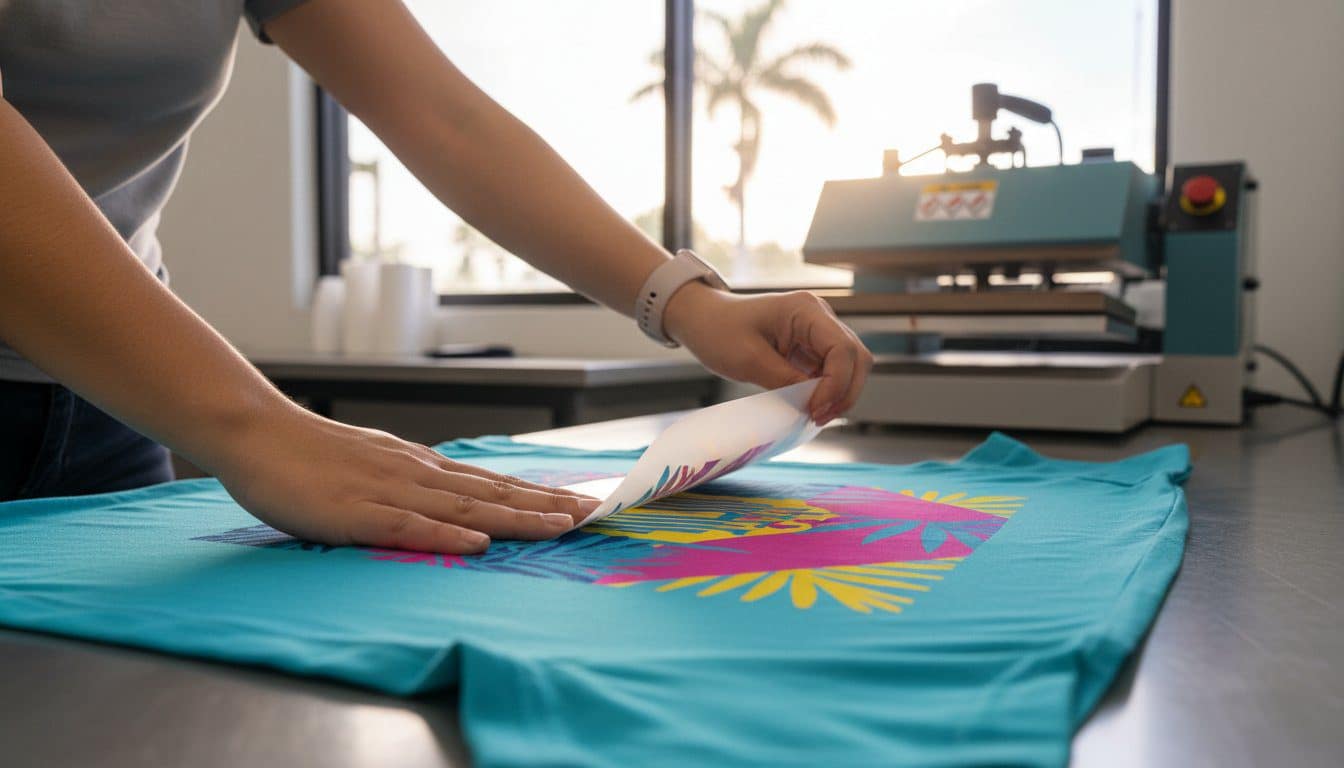
Choosing the wrong film for your Miami production run can spike your failure rate by 30% before the first shirt even leaves the heat press. You’ve likely felt the frustration of a design lifting or leaving sticky residue on an expensive garment while rushing a same day printing Miami order for a March 2024 Wynwood event. It’s a bottleneck that kills your profit margins. This guide settles the technical cold peel vs hot peel dtf debate so you can achieve a zero-fail transfer rate and slash your production time.
Efficiency is everything when you’re managing high-volume apparel for contractors in Doral or corporate clients in Downtown Miami. You’ll learn exactly how local humidity levels affect adhesive curing and which technique ensures your prints withstand 50 plus industrial washes. We’re going to break down the technical settings you need to master for flawless DTF printing in Miami. From Hialeah to Opa locka, your shop needs reliability to stay ahead. Let’s get your production line moving at full speed.
Key Takeaways
- Identify the specific timing requirements for cold peel vs hot peel dtf to balance production speed with design precision.
- Master the technical relationship between TPU powder chemistry and film thickness to achieve professional-grade bonding on every press.
- Implement climate-control strategies to protect your DTF transfers from Miami’s high humidity and moisture-related printing failures.
- Select the optimal peel method based on garment material, ensuring high-quality results for both polyester performance wear and cotton blends.
- Streamline your local Miami-Dade workflow using the Gang Sheet Builder to combine designs for efficient, same-day apparel production.
What is the Difference Between Cold Peel and Hot Peel DTF?
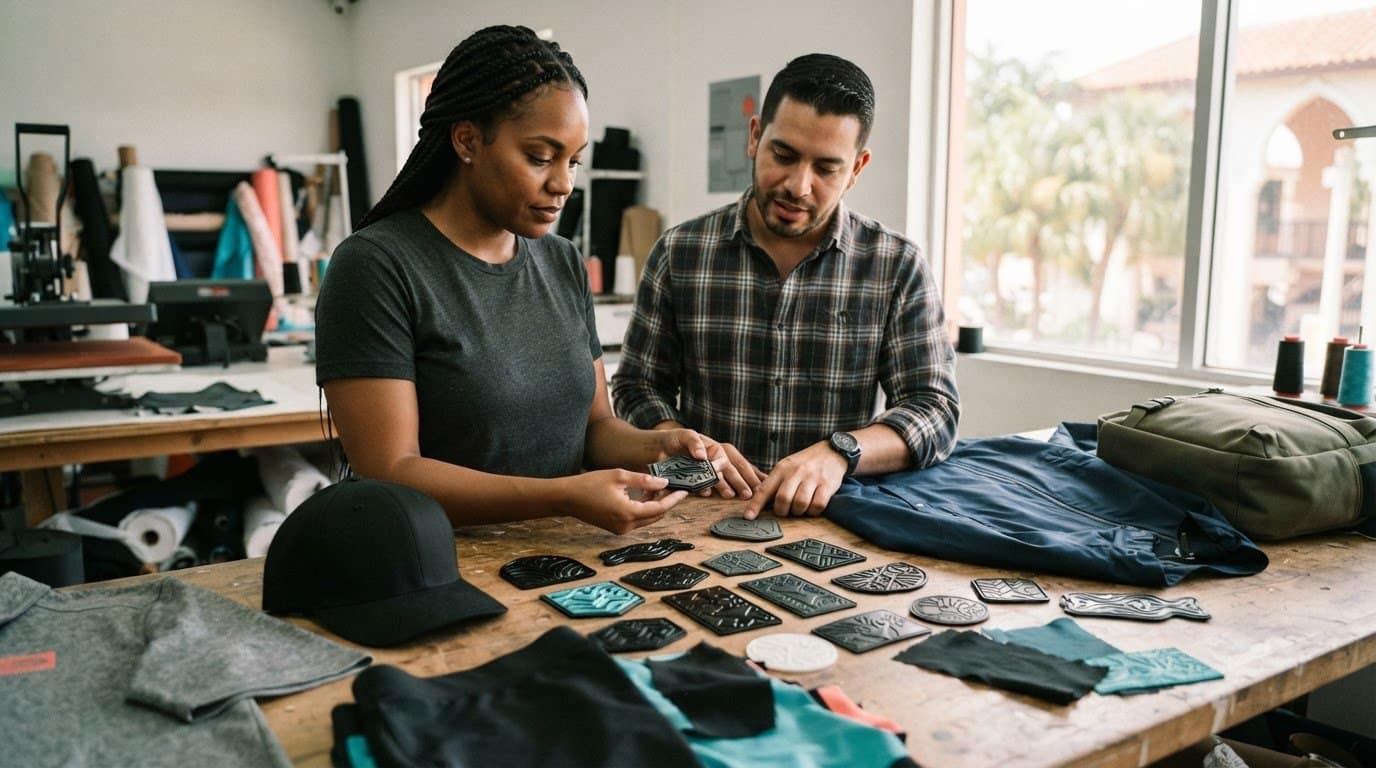
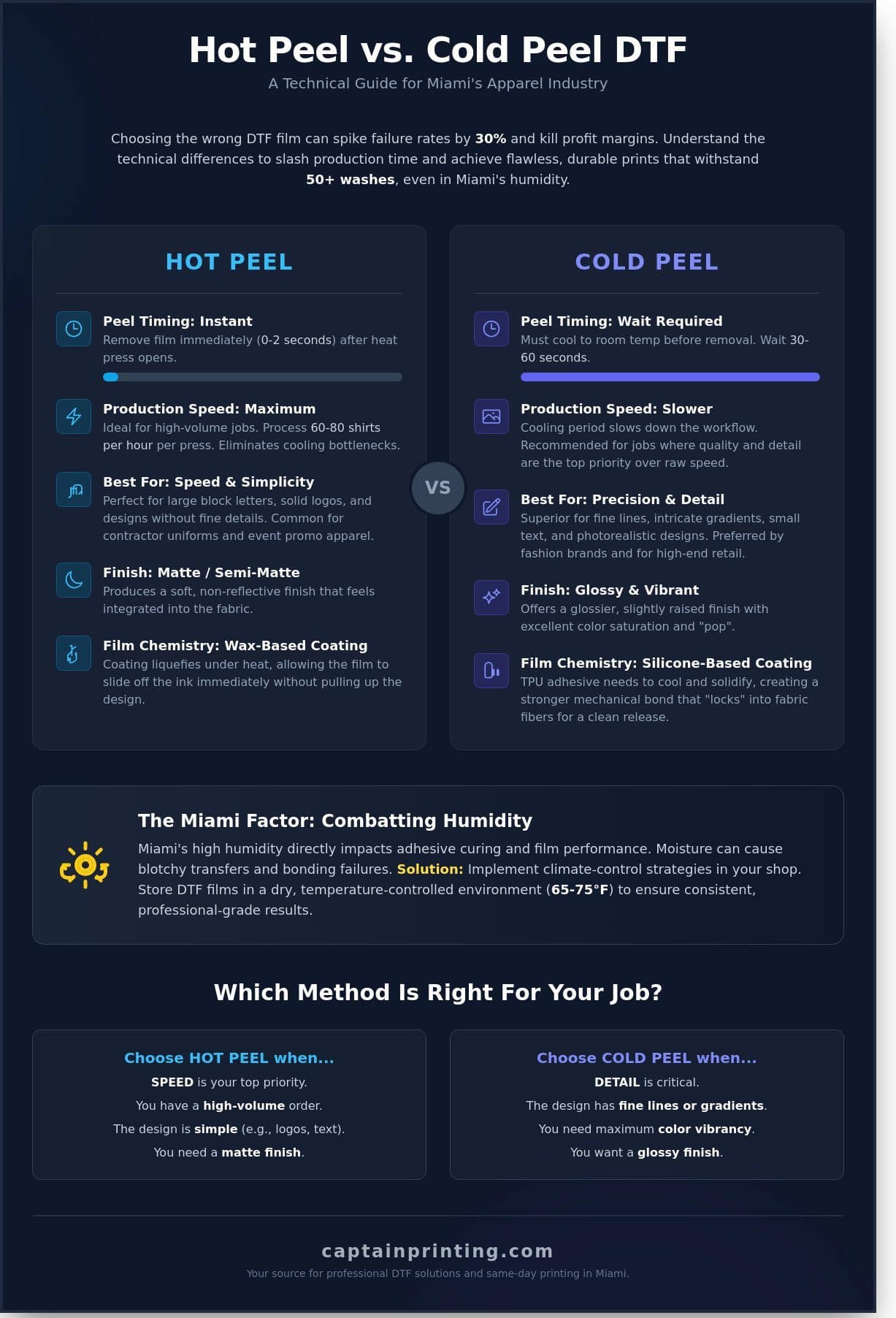
The primary distinction between these two methods lies in the release timing and the chemical composition of the PET film coating. Hot peel transfers are engineered for immediate removal. You pull the film away within 0 to 2 seconds of the heat press cycle ending. In contrast, cold peel transfers require the film to reach room temperature before removal, a process that typically takes 30 to 60 seconds. This timing isn’t a matter of preference; it’s dictated by how the ink and adhesive interact with the film’s release layer during the Direct-to-Film (DTF) printing process.
Choosing the wrong release type for your specific film leads to common production failures like ink splitting or adhesive ghosting. Ink splitting occurs when the ink hasn’t fully bonded to the adhesive or the garment, causing part of the design to remain on the film. Adhesive ghosting leaves a sticky, visible residue around the design edges. For high-volume shops in Hialeah or Doral, understanding cold peel vs hot peel dtf is the difference between a clean 100-shirt run and a bin full of ruined garments.
To better understand the practical application of these two methods, watch this helpful video:
The Mechanics of Hot Peel DTF
Hot peel films utilize a wax-based coating that liquefies under heat. This allows the film to slide off the ink immediately without pulling the design back up. It’s the standard choice for 85% of high-volume commercial orders in Miami Dade because it eliminates the cooling bottleneck. Since you don’t wait for the garment to cool, you can process 60 to 80 shirts per hour on a single press. The result is usually a matte or semi-matte finish that feels integrated into the fabric. This method is perfect for large block letters or solid graphics often seen on construction uniforms in Opa locka.
The Mechanics of Cold Peel DTF
Cold peel films rely on silicone-based coatings. The cooling period of 30 to 60 seconds is mandatory because the TPU (Thermoplastic Polyurethane) powder needs to solidify and “lock” into the fabric fibers. As the adhesive cools, it creates a stronger mechanical bond than hot peel. This provides a cleaner release for fine details, 2-point lines, and intricate gradients used by Wynwood fashion brands. While it takes longer, the final output typically offers a glossier finish and more vibrant color saturation. It’s the preferred method for high-end retail apparel where the “pop” of the color is more critical than the speed of the press.
Captain Printing provides professional DTF solutions and same day printing Miami services to ensure your projects are completed with the right technical specifications. Whether you’re a contractor in Downtown Miami or an event coordinator in Miami Beach, we deliver reliable results every time.
Contact Information:
Phone: (305) 930-4700
Address: 13680 NW 19th Ave, Unit 1B, Opa-locka, FL 33054
Email: [email protected]
Technical Analysis: Adhesive Bonding and Film Coatings
Thermoplastic Polyurethane (TPU) powder serves as the chemical bridge between digital ink and textile fibers. This polymer is a linear segmental block copolymer that transitions from a solid state to a viscous liquid when exposed to temperatures between 225°F and 320°F. When evaluating cold peel vs hot peel dtf, the physical properties of the TPU powder dictate the success of the bond. The process of <a href="https://www.science.gov/topicpages/h/hot+melt+
Comparing Hot vs. Cold Peel for Miami Business Needs
Choosing between cold peel vs hot peel dtf depends on your production speed and the specific fabric used by your Miami business. Hot peel allows for immediate removal of the carrier sheet, saving roughly 30 to 45 seconds per garment during the pressing stage. Cold peel requires the film to reach room temperature before removal, ensuring the ink bonds perfectly to complex fibers. For Hialeah and Doral contractors handling same day printing, these seconds add up quickly. A shop processing 200 shirts daily saves over two hours of labor by switching to hot peel when the design allows it.
The DTF printing technology used in our Miami facility relies on a specialized polyurethane resin adhesive. This powder reacts differently depending on the cooling time. Hot peel works best on 100% polyester activewear, which is a staple for Doral sports leagues and Miami-Dade landscaping crews. Cold peel is the preferred choice for the heavy cotton blends used in Opa-locka industrial workwear. It provides a deeper mechanical bond that survives the rigorous industrial washing required for Miami uniforms. Testing shows cold peel transfers maintain 15% better edge integrity after 50 high-heat wash cycles compared to standard hot peel applications.
Best for High-Volume Events and Promotions
Hot peel is the standard for 500+ shirt runs for Wynwood festivals and large-scale Miami promotions. It eliminates the “cooling station” bottleneck in your production line. You peel the film within 2 to 3 seconds of the press opening, allowing the next garment to load immediately. This method produces the matte look preferred by modern streetwear brands. It reduces labor costs by approximately 20% on bulk orders because one operator can manage the entire heat press cycle without waiting for stacks of shirts to cool down.
Best for Fine Details and Luxury Apparel
Cold peel is superior for small text and intricate corporate logos required by businesses in Downtown Miami. The “clean edge” advantage prevents jagged borders on high-end polos and delicate fabrics. Because the adhesive fully sets before the film is removed, there’s zero risk of “lifting” small design elements. This precision is vital for professional branding where every millimeter counts. You can view all our custom printing products to see which film type fits your specific luxury garment needs.
When deciding on cold peel vs hot peel dtf for your next project, consider the environment. Miami’s high humidity can affect film release. Our local shop optimizes press settings specifically for the South Florida climate to ensure consistent results. Whether you’re printing for a tech startup in Brickell or a construction firm in Medley, selecting the right peel method ensures your transfers don’t crack or peel prematurely.
Contact Captain Printing:
Phone: (305) 930-4700
Address: 13680 NW 19th Ave, Unit 1B, Opa-locka, FL 33054
Email: [email protected]
Managing the Miami Factor: Humidity and Temperature Control
Miami’s average humidity stays above 72% throughout the year, creating a volatile environment for garment decorators. This moisture is the primary enemy of DTF powder. When the adhesive powder absorbs moisture from the air, it fails to liquify properly during the curing process. Determining the winner in cold peel vs hot peel dtf often comes down to how well your shop manages this local climate. If your powder is compromised by humidity, a hot-peel film will likely tear the ink, while a cold-peel film may fail to bond with the fabric fibers entirely.
Local printers often encounter what we call the ‘Opa-locka Effect.’ In unconditioned warehouses across Opa-locka and Doral, transfers frequently feel gummy or tacky to the touch. This stickiness isn’t a product defect; it’s a sign that the film has reached its moisture saturation point. When you press a gummy transfer, the steam generated during the heat cycle creates micro-bubbles in the adhesive. This leads to premature cracking after just two or three washes. To avoid this, we recommend keeping your production floor between 40% and 50% humidity at all times.
Ambient conditions also dictate your press settings. A standard 15-second press in a climate-controlled Downtown Miami office might require 18 or 20 seconds in a Hialeah shop where the bay doors stay open. The extra time is necessary to drive out the moisture trapped in the garment before the adhesive can reach its melting point. You can’t rely on the manufacturer’s “out of the box” settings when the Miami dew point is sitting at 75 degrees. Precision requires local adjustment.
Humidity Troubleshooting for Local Shops
Signs of moisture contamination are easy to spot if you know what to look for. Bubbling, spotting, or an uneven release during the peel are 90% likely to be humidity-related. If your hot-peel film is sticking in some spots but releasing in others, your curing area is too damp. We suggest running a 50-pint industrial dehumidifier directly next to your curing oven to ensure a consistent release. Always use the ‘pre-press’ trick: clamp your garment in the heat press for 5 seconds before laying down your film. This removes the hidden moisture from the cotton that would otherwise interfere with the bond.
Calibration for Miami Heat and Pressure
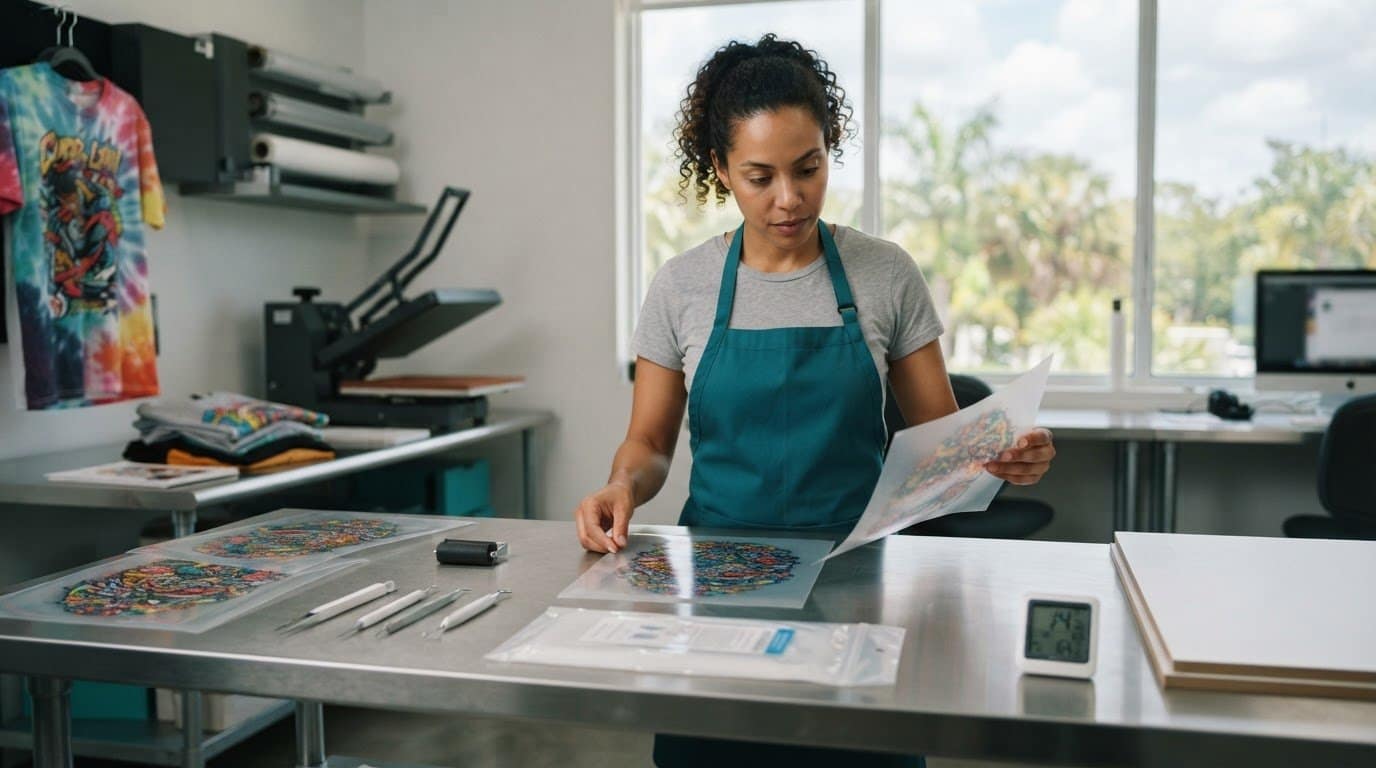
Heat presses in South Florida work harder than those in drier climates. Over time, heating elements can warp or develop ‘cold spots’ that cause localized peeling failure. Use a digital pyrometer to test your platen’s temperature at all four corners and the center. If you find a variance of more than 5 degrees, your transfers won’t cure evenly. Heavy pressure is non-negotiable for cold peel transfers on thick 14oz hoodies often used for local brand launches. Without maximum pressure, the adhesive won’t penetrate the dense fleece. Miami shops must calibrate equipment weekly to account for fluctuating ambient shop temperatures.
Effective storage is your last line of defense. Never leave your DTF transfers on an open shelf. Use airtight plastic bins with silica gel desiccant packs to prevent film ‘sweating.’ This prevents moisture beads from forming on the ink surface, which is a common cause of ruinous ‘pinholing’ in large graphic prints. By controlling these variables, you ensure your shop stays productive regardless of the weather outside.
Ready to see the difference professional climate control makes? Order your Miami-made DTF transfers today and get the reliability your business deserves.
Captain Printing
Phone: (305) 930-4700
Address: 13680 NW 19th Ave, Unit 1B, Opa-locka, FL 33054
Email: [email protected]
Optimizing Production with Captain Printing’s Gang Sheets
Efficiency in high-volume textile printing depends on how you manage your materials and press time. Our Gang Sheet Builder changes the game for local Miami shops by allowing you to combine multiple designs on a single roll of film. This tool lets you mix various artwork sizes and types, including both hot and cold peel options, on one continuous sheet. This flexibility is vital when you’re balancing a mix of 100% cotton tees for a Wynwood gallery and heat-sensitive performance gear for a Doral fitness center. Understanding the technical differences of cold peel vs hot peel dtf helps you group your designs logically, which reduces heat press idle time and maximizes your hourly output. By utilizing every inch of the 24-inch film, you ensure that your production line stays moving without wasting expensive consumables.
We’ve designed our workflow to meet the high-pressure demands of the Miami Dade business environment. Whether you’re a local contractor in Hialeah or a corporate coordinator in Downtown Miami, you need transfers that arrive ready to press. Our local production model eliminates the common headaches associated with national suppliers. When you order from us, your transfers haven’t spent 14 to 21 days in a humid shipping container crossing the ocean. This proximity preserves the integrity of the adhesive powder and prevents film warping, ensuring a 100% success rate during the heat application process. You can build your custom DTF gang sheet now and experience a streamlined fulfillment process that keeps your business competitive.
The Gang Sheet Advantage
Maximizing film space is the most effective way to lower your cost-per-print. By filling the entire width of the roll, Miami businesses can reduce material waste by up to 35% compared to ordering individual transfers. We recommend organizing your gang sheet by peel type to simplify the post-press workflow. This allows your team to press all hot peel designs in one session for immediate removal, then switch to cold peel designs that require a dedicated cooling station. Since we print locally in Opa locka, we maintain strict climate control. This prevents the moisture buildup that often ruins DTF transfers during long-distance transit in the Florida heat.
Getting Started with Captain Printing
Our system is built for speed and reliability. Most local orders placed before 11:00 AM are eligible for same-day pickup at our Miami facility, or fast shipping across Florida. Simply upload your high-resolution PNG files at 300 DPI, arrange them in the builder, and submit your order. If you run into technical issues with your layout or file transparency, our professional support team is available to assist local contractors and event planners. Helping you in any way we can? It’s kinda our thing. We provide the expertise you need to ensure your custom uniforms or event merch look professional every time.
To achieve a perfect press, follow this professional checklist:
- Set your heat press to exactly 285-300°F depending on the fabric blend.
- Pre-press the garment for 5 seconds to remove trapped moisture and wrinkles.
- Apply the transfer with medium-high pressure for 10 to 15 seconds.
- Identify your film type; if you are mixing cold peel vs hot peel dtf, wait for the cold peel film to reach room temperature before removal.
- Finish with a 5-second post-press using a protective sheet to lock the design into the fibers.
Captain Printing is your partner for reliable, high-speed DTF production in South Florida. We provide the tools and the local presence to help your business scale without the typical logistics delays.
Captain Printing
13680 NW 19th Ave, Unit 1B, Opa-locka, FL 33054
Phone: (305) 930-4700
Email: [email protected]
Scale Your Miami Production With the Right DTF Film
Choosing between cold peel vs hot peel dtf depends on your specific job requirements and the local climate in South Florida. Hot peel films allow you to strip the carrier immediately after the 15 second press; this is ideal for high-volume shops in Doral or Hialeah that need to move fast. Cold peel options provide a superior matte finish and better detail retention for complex logos used by Wynwood creative agencies. Since Miami’s humidity often exceeds 60 percent, our team monitors every batch to ensure adhesive bonding remains consistent across all custom uniforms and apparel.
We provide same-day printing for orders placed before our daily cutoff, helping local contractors and event organizers in Downtown Miami and Opa locka meet tight deadlines. If you’re unsure which film suits your fabric, our experts are ready to provide immediate support. Order your custom DTF transfers or build a gang sheet today at Captain Printing. You can contact us at (305) 930-4700, email [email protected], or visit our local Miami facility. We’re ready to help you finish your project on time and with unmatched quality.
Frequently Asked Questions
Is hot peel better than cold peel for DTF durability?
Durability remains identical between both types once the adhesive cures properly. Cold peel often provides a matte finish that Miami contractors prefer for rugged workwear in Hialeah. Hot peel saves 30 seconds per garment, making it the standard for high-volume orders in Doral shops. Both methods withstand 50 wash cycles when pressed at 300°F with medium pressure.
Can I peel a hot peel transfer cold if I forget?
You can peel a hot peel film after it cools without ruining the design. The adhesive stays bonded to the fabric, though you might notice more resistance during the pull. If the film feels stuck, repress it for 5 seconds to liquefy the wax and peel it immediately. This flexibility helps local businesses maintain production speed even when distractions occur in a busy shop.
Why is my DTF transfer sticking to the film even after it cools?
This issue usually happens because of insufficient pressure or an incorrect temperature setting on your heat press. In our Miami facility, we see this when users don’t reach the required 300°F for at least 15 seconds. If the ink isn’t fully cured, it won’t release from the PET carrier. Check your heating element for cold spots using an infrared thermometer to ensure even heat distribution.
Does the Miami humidity affect how long I should wait to peel?
Miami’s 65% average humidity level can slow down the cooling process for cold peel films. Moisture in the air acts as an insulator, meaning a cold peel might take 45 seconds instead of 30 to reach room temperature. Always wait until the film is cool to the touch before peeling. This ensures the adhesive has set properly on the garment despite the tropical climate in Wynwood or Downtown Miami.
What temperature should I use for hot peel vs cold peel DTF?
Most cold peel vs hot peel dtf films require a temperature between 285°F and 320°F. Hot peel transfers generally perform best at 300°F for 12 seconds with an immediate pull. Cold peel films often need 15 seconds at 305°F followed by a 30 second cooling period. Always verify settings with your specific film manufacturer to avoid scorching delicate fabrics during the printing process.
How do I know if the film I bought is hot or cold peel?
Check the coating texture because hot peel films often have a smoother, glossier appearance on the back. Most professional suppliers in Miami Dade label their packaging clearly with specific instructions. If you’re unsure, perform a test press on a scrap piece of fabric. Try peeling one corner immediately; if the ink lifts or stretches, it’s a cold peel film that needs time to set.
Which peel type is best for 100% polyester sports jerseys?
Cold peel is the superior choice for polyester jerseys used by Miami soccer leagues and local sports teams. Polyester is sensitive to heat and can scorch or experience dye migration at high temperatures. Cold peel allows the fabric to stabilize before you remove the film, which prevents the design from stretching. Use a lower temperature of 275°F for 15 seconds to protect the synthetic fibers from damage.
Can I use a household iron for cold peel DTF transfers?
We don’t recommend using a household iron for professional DTF results. Irons can’t maintain the consistent 300°F temperature or provide the 40 PSI of pressure needed for a permanent bond. For reliable DTF printing in Miami, use a commercial heat press. This ensures your custom uniforms and shirts don’t peel off after the first wash, providing the professional quality your customers expect.
For professional printing services and same day DTF transfers, contact Captain Printing. We provide reliable solutions for local businesses across Miami, Florida.
Captain Printing
13680 NW 19th Ave, Unit 1B, Opa-locka, FL 33054
Phone: (305) 930-4700
Email: [email protected]