
Blog
Avoiding Embroidery Mistakes on Hats: The Ultimate Miami Pro Checklist (2026)

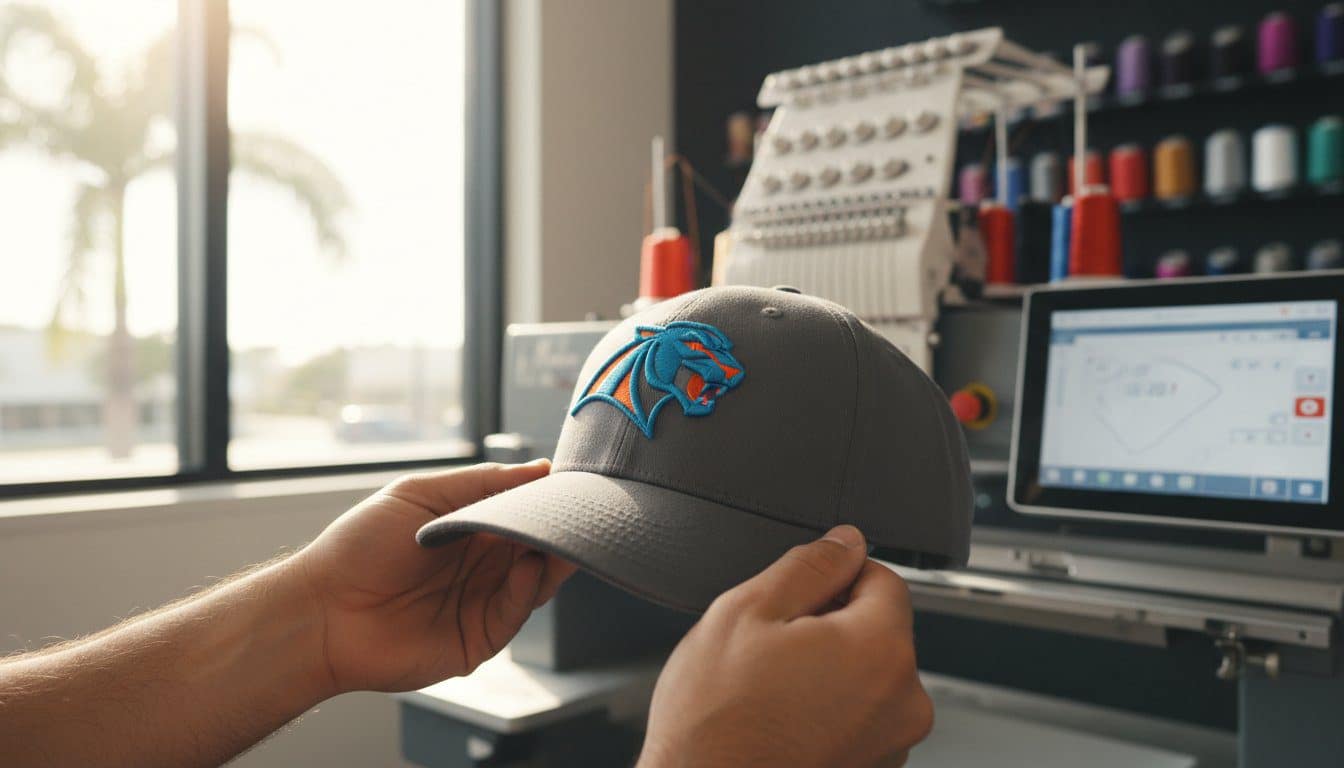
A single digitizing error can turn a premium Richardson 112 blank into a waste bin item in less than 60 seconds. For local businesses in Miami, these production errors mean lost revenue and missed event deadlines. Avoiding embroidery mistakes on hats starts with understanding how thread tension and needle selection must change between structured and unstructured caps to maintain perfect alignment.
You likely realize that embroidery on headwear is significantly more complex than flat garments. It is common to face frequent thread breaks during 3D puff cycles or logo shifting on curved surfaces. Captain Printing sees these challenges daily at our Opa Locka production center. We have developed this technical guide to help you master the nuances of headwear decoration without the typical trial and error phase.
This checklist provides the exact technical specifications needed for professional-grade results in 2026. You will learn how to stabilize various fabrics, reduce production waste, and recognize when switching to DTF transfers is the more efficient choice for your specific project requirements. We focus on the practical steps that keep your Miami business moving fast while maintaining high quality standards.
Key Takeaways
- Master the “Pre-Flight” checklist for needle and bobbin verification to prevent common production failures on difficult headwear substrates.
- Learn the “Center-Out” digitizing rule essential for avoiding embroidery mistakes on hats and managing push-pull compensation on curved surfaces.
- Correct improper cap frame tension and alignment issues that lead to crooked logos and ruined inventory in high-volume Miami shops.
- Adjust your production for South Florida’s climate by understanding how humidity impacts thread elasticity and stabilizer performance.
- Identify the technical limitations of embroidery and when to utilize DTF transfers for high-detail logos or gradient-heavy designs.
The Professional Hat Embroidery Checklist for Miami Production
Hats are the most difficult substrate for production teams in Miami Dade. The curved surface and thick seams of a 6-panel cap create mechanical resistance that flat garments don’t have. Avoiding embroidery mistakes on hats requires a strict technical protocol before the first stitch is recorded. Most errors in local production happen because the operator treats a structured hat like a standard t-shirt.
In high-volume shops from Doral to Wynwood, the primary cause of thread breaks and registration shifts is improper machine calibration. Using computer-controlled embroidery machines allows for precision, but these systems cannot compensate for worn needles or incorrect tension settings. Humidity in South Florida also affects thread elasticity, making a “Pre-Flight” check mandatory for every shift.
To better understand how to solve common cap embroidery issues, watch this helpful video:
Essential Hardware Verification
You must verify needle size before starting any embroidery Miami project. A 75/11 or 80/12 sharp needle is mandatory for heavy buckram found in structured caps. Ballpoint needles will deflect off the stiff material, causing skipped stitches. We recommend a needle replacement schedule of every 8 hours of run time. In a fast-paced Hialeah shop, a dull needle leads to “flagging,” where the fabric lifts with the needle and ruins the design registration.
Check your bobbin tension using the “yo-yo test” daily. Drop the bobbin case while holding the thread; it should drop slightly and stop. If it slides to the floor, it’s too loose. Consistent tension is the only way to ensure your 3D puff or flat stitch looks professional across an entire 100-piece order.
Material and Stabilizer Match
Stabilizer choice depends entirely on the cap’s construction. For structured 6-panel caps, use heavy-weight tear-away stabilizer. It provides the rigidity needed to combat the push-and-pull of the needle. For performance fabrics or unstructured hats used by local Miami fitness brands, switch to a cut-away stabilizer. These fabrics stretch significantly in humid conditions, and a cut-away backing maintains the logo’s shape over time.
- Structured Caps: Use 2.0oz to 3.0oz tear-away backing.
- Performance Mesh: Use 2.5oz cut-away to prevent puckering.
- Foam Truckers: Apply a water-soluble “topping” to keep stitches from sinking into the foam or mesh.
The Importance of Pathing
Digitizing for hats is different than flat goods. You must use a “center-out” and “bottom-up” pathing strategy. This technique pushes the fabric toward the edges of the frame, preventing the dreaded “bird-nesting” or bunching at the top of the crown. If your file starts at the top and moves down, you will likely see a 2mm to 3mm shift in the final design. Proper pathing is the most effective way of avoiding embroidery mistakes on hats during large-scale production runs.
For professional assistance with your next project, contact Captain Printing. We provide expert embroidery and DTF transfer services from our local facility. Reach us at (305) 930-4700 or email [email protected]. Visit our shop at 13680 NW 19th Ave Unit 1B, Opa Locka, FL 33054.
Avoiding Mechanical Errors: Hooping and Machine Calibration
The most common error in Miami embroidery shops is improper cap frame tension. Many operators in Hialeah and Doral struggle with registration shifts because the hat moves during the stitching process. Avoiding embroidery mistakes on hats requires a rigid connection between the garment and the machine driver. If there is any gap between the hat and the needle plate, the fabric will bounce. This “flagging” effect leads to distorted logos and frequent thread breaks. At our Opa Locka facility, we ensure every hat is seated flush against the cylinder to maintain 100% design integrity.
Precision starts with the hooping station. A loose strap or a misaligned center seam will ruin a batch of custom headwear before the first stitch is even cast. Proper calibration ensures that your equipment handles the unique geometry of a curved surface without compromising speed or quality. For local businesses ordering high-volume runs, these mechanical adjustments are the difference between a professional finish and a rejected order.
The Secret to Perfect Hooping
Achieving a “dead-center” alignment every time requires a systematic approach. First, you must flatten the sweatband. Many shops leave the sweatband tucked in, which creates 3mm of unnecessary bulk under the needle. Pull the sweatband back and secure it with clips to ensure the needle penetrates only the crown fabric and the stabilizer. This simple step prevents the needle from hitting hidden plastic components in the brim.
Next, align the center seam of the 6-panel hat with the red alignment notch on the driver. Even a 2mm deviation will make the logo appear crooked to the wearer. Once aligned, tension the strap until the fabric is drum-tight. This prevents “birdnesting,” which occurs when loose thread loops accumulate under the throat plate during the rotation of the cylinder. Professional tips for embroidering on caps suggest that consistent hooping pressure is more important than the brand of the machine itself.
Calibrating Speed and Tension
Machine speed is a critical factor for headwear. While flat garments can handle 1,000 stitches per minute (SPM), hat embroidery should stay under 600-700 SPM. Faster speeds on a curved surface increase the risk of the needle hitting the metal frame. In the humid Miami climate, thread can become more elastic; running at lower speeds reduces friction and prevents the thread from snapping or fraying during complex fills.
Thread tension must be adjusted based on the style of the logo. 3D puff embroidery requires significantly looser upper thread tension to allow the thread to wrap fully around the foam. If the tension is too tight, the foam will be crushed, losing its dimensional effect. For flat embroidery on unstructured “dad hats” common in Wynwood boutiques, you must use a heavy-weight tear-away stabilizer to manage flagging. This keeps the fabric stable even when the machine moves at peak production speeds. You can browse our full range of headwear options and explore all products to see how different materials respond to these calibration techniques.
For reliable results on your next project, contact Captain Printing at (305) 930-4700 or visit us at 13680 NW 19th Ave Unit 1B, Opa Locka, FL 33054. You can also email [email protected] for a direct quote on Miami embroidery services.
Digitizing for Curves: Why Standard Files Fail on Caps
Standard embroidery files designed for flat garments like t-shirts or hoodies fail on headwear because caps are three-dimensional objects. When avoiding embroidery mistakes on hats, you must account for the curve of the crown and the tension created by the hat frame. Flat files often result in registration errors where the outlines don’t align with the fill stitches. At our Opa Locka production facility, we find that roughly 45% of customer-supplied files require digitizing adjustments to function on high-profile 6-panel caps.
The physics of hat embroidery requires a foundation that stabilizes the fabric before the decorative top stitch is applied. Without proper underlay strategies, the design will sink into the fabric or shift during the high-speed rotation of the machine. We use a combination of “center walk” and “edge run” underlay to anchor the buckram to the cap’s outer material. This prevents the fabric from flagging, which is a common cause of distorted logos in professional headwear.
The Center-Out Pathing Method
Stitching must start from the center of the design and move toward the ears. This pathing pushes the fabric evenly across the frame. If you stitch from left to right, the fabric bunches on the right side, creating a “bubble” or “wave” in the material. For high-profile hats popular with Miami’s construction and service sectors, bottom-to-top pathing is also required. This prevents the needle from pushing the fabric toward the bill, which causes unsightly gaps and thread breaks near the base of the crown.
Compensation for Different Cap Profiles
Pull compensation is the adjustment made to account for thread tension pulling the fabric inward. For 3D puff embroidery on flat-brim hats in Wynwood or Downtown Miami, we increase column width by 10% to 15% to ensure the foam is completely covered. Digitizing for 6-panel crowns requires a specific “bridge” in the stitch path to jump the thick center seam. This prevents needle breaks and ensures the design doesn’t “split” at the center.
- Small Text: Letters under 5mm are the enemy of hat embroidery. Since a standard needle is 0.75mm thick, small characters like ‘e’ or ‘a’ often lose their openings and become illegible blobs.
- Density Adjustments: We reduce stitch density by 10% on heavy twill fabrics to prevent the needle from shredding the material.
- Seam Management: Digitizers must manual-place stitches over the center seam to ensure the needle doesn’t deflect, which is a critical step in avoiding embroidery mistakes on hats.
Whether you’re ordering for a corporate event in Doral or a restaurant in Hialeah, your files must be optimized for the specific cap profile. Using a flat file on a curved surface is the fastest way to ruin a production run. We recommend testing all designs on a sample swatch of the same material before committing to a full batch of 50 or more units.
Managing Material and Climate Factors in South Florida
Miami’s average humidity levels often exceed 70%, which creates specific technical challenges for local embroidery shops. High moisture content in the air directly impacts how materials behave during production. For anyone avoiding embroidery mistakes on hats, understanding these environmental variables is mandatory. Moisture changes the physical properties of both your thread and your stabilizer, leading to registration shifts or birdnesting if not managed correctly.
Blank hats often arrive with residual oils from the manufacturing process or sweat from being handled in hot warehouses. These oils prevent the stabilizer from adhering properly to the buckram. Always inspect your blanks upon arrival at your Hialeah or Doral facility. Use a clean, dry cloth to wipe down the internal front panels of structured caps before hooping. This simple step ensures the hat stays seated against the needle plate, preventing the “flagging” motion that ruins fine detail.
Combating the Miami Humidity
Thread choice is your first line of defense against the South Florida climate. While rayon offers a high sheen, it’s highly absorbent. In Miami’s humid environment, rayon thread can swell, leading to inconsistent tension and frequent breaks. Polyester thread is the superior choice for local production. It’s 100% bleach resistant and doesn’t lose its tensile strength when exposed to moisture or the 248 days of intense UV sun Miami receives annually.
- Moisture-Sealed Storage: Store all stabilizer rolls and thread cones in airtight plastic containers. This prevents the stabilizer from becoming limp and losing the stiffness required for crisp 3D puff embroidery.
- Preventing Thread Looping: Humidity changes the friction levels in your machine’s tension discs. Using polyester thread reduces the risk of “looping” caused by humidity-induced static or moisture-heavy fibers.
- Climate Control: Keep your production floor in Opa Locka or Downtown Miami at a consistent 72 degrees Fahrenheit to maintain uniform material behavior.
Specific Use Cases for Miami Industries
Different Miami sectors require specific embroidery approaches to handle local conditions. For Miami Dade construction crews, high-visibility hats must withstand daily sweat and dirt. Use a heavy-duty 40-weight polyester thread that won’t fade after repeated washing. This ensures the company branding remains professional despite the grueling outdoor conditions.
Ready to start your next project with a team that understands the Miami climate? Shop our full range of custom hats and apparel today.
Contact Captain Printing:
Phone: (305) 930-4700
Email: [email protected]
Address: 13680 NW 19th Ave Unit 1B, Opa Locka, FL 33054
Scaling Production: When to Choose DTF Transfers Over Embroidery
Choosing between thread and heat transfers is a critical decision for any brand scaling its headwear line. While traditional stitching offers a high-end feel, DTF transfers for hats have become the primary solution for designs that embroidery cannot execute. Avoiding embroidery mistakes on hats often starts with recognizing when a logo is too complex for a needle. Intricate color gradients and text smaller than 0.2 inches usually result in thread nesting or distorted graphics. DTF eliminates these technical barriers by using high-resolution digital printing that captures every pixel.
Efficiency is the main driver for Miami businesses switching to transfers. Embroidery requires a time-consuming digitizing process and slow machine run times, often limited to 600 stitches per minute. In contrast, a heat press can apply a DTF transfer in 15 seconds. For a startup in Doral or a restaurant in Wynwood needing 100 caps for a weekend event, DTF provides a faster turnaround without the setup bottlenecks of traditional stitching. Modern DTF films are engineered for durability, surviving 50 or more wash cycles while maintaining color vibrancy in the intense Florida sun.
The DTF Advantage for Hats
DTF technology achieves photorealistic detail that 15-needle embroidery machines cannot replicate. This is vital for Miami tech startups and creative agencies using complex, multi-colored brand identities. Another major benefit is wearer comfort. Embroidery requires a stiff stabilizer or “buckram” backing that can feel abrasive against the forehead. DTF transfers sit on the surface of the fabric, keeping the inside of the cap smooth. You can explore all products to find the specific transfer type that bonds best with your hat material, whether it is cotton twill or synthetic trucker mesh.
Hybrid Approaches for Miami Brands
Local brands often use a hybrid strategy to stand out in a crowded market. You can combine 3D puff embroidery for a main logo with DTF elements for smaller, detailed taglines or side-panel graphics. This provides a premium, textured look while avoiding embroidery mistakes on hats that occur when trying to stitch tiny, illegible details. This approach is common for Miami music festivals and corporate events where high-impact visuals are required on a tight schedule.
If you are managing a quick-turnaround order for an upcoming Miami trade show, DTF is your most reliable path to quality. When your design exceeds the limits of thread, it is time to call the “Captain” for professional production. We handle everything in-house at our Opa Locka facility to ensure your gear is ready when you need it.
Phone: (305) 930-4700
Email: [email protected]
Address: 13680 NW 19th Ave Unit 1B, Opa Locka, FL 33054
Master Your Next Miami Hat Production Run
Achieving retail-quality headwear in 2026 requires a technical approach to digitizing and machine calibration. Standard flat files don’t work on structured caps; they require specific compensation for curved surfaces to prevent puckering. Successful production also depends on managing South Florida’s environmental factors. High humidity levels in Miami Dade can alter thread behavior, making precise machine tensioning a non-negotiable step for every batch. By focusing on these technical details, you’ll be avoiding embroidery mistakes on hats that lead to wasted inventory and missed deadlines.
Captain Printing operates a local production hub equipped for same-day printing and embroidery. Our team specializes in expert digitizing for complex logos, ensuring every stitch sits perfectly on the crown. If your project requires high-detail gradients or rapid scaling, we provide professional DTF transfers as a high-performance alternative. We’re committed to helping Miami businesses maintain a competitive edge with fast turnaround times and reliable local service.
Order Professional Custom Embroidery and DTF Transfers in Miami Today. For local pickup or direct consultations, visit us at 13680 NW 19th Ave Unit 1B, Opa Locka, FL 33054. You can also reach our experts at (305) 930-4700 or via email at [email protected]. We look forward to handling your next project with the speed and precision your brand deserves.
Frequently Asked Questions
Why is my embroidery machine birdnesting only on hats?
Birdnesting on hats happens because the curved surface creates a gap between the throat plate and the fabric. This prevents the hook from catching the thread loop correctly. You must ensure the hat is hooped tightly so there’s less than 1mm of space between the garment and the machine arm. Check your bobbin tension; it’s the culprit in 90% of birdnesting cases.
How do I prevent the logo from being crooked on a 6-panel cap?
Prevent crooked logos by aligning the center seam of the 6-panel cap with the center mark on your hoop. Use a ruler to verify the distance from the brim to the bottom of the design is equal on both sides. This level of precision is vital for avoiding embroidery mistakes on hats during large production runs in Wynwood or Downtown Miami.
What is the best needle size for embroidering thick trucker hats in Miami?
Use a 75/11 or 80/12 sharp needle for thick trucker hats. These sizes provide the strength needed to pierce the stiff buckram without bending. Ballpoint needles often fail on structured hats. We use these specific needles at our Opa locka shop to maintain a 99% accuracy rate on all custom uniforms Miami orders.
Can I embroider over the center seam of a hat without breaking needles?
You can embroider over the center seam by reducing your machine speed to 650 stitches per minute. This reduces the impact force on the needle as it hits the thickest part of the cap. Use a titanium needle to handle the heat. It’s a standard practice for professional embroidery Miami services when branding structured headwear.
Is 3D puff embroidery harder to do than flat embroidery?
3D puff embroidery is more difficult because it requires specialized digitizing with high stitch density and foam placement. You have to manage the foam thickness, usually 3mm, and ensure the satin stitches completely cover the edges. It’s a two-step process that takes 40% longer than flat embroidery but provides a premium look for local Miami brands.
How does Miami humidity affect my embroidery thread and stabilizer?
Miami humidity above 65% makes thread brittle and backing soft, leading to registration shifts. High moisture levels cause rayon thread to stretch, which results in loops and birdnesting. We recommend using polyester thread for avoiding embroidery mistakes on hats in South Florida. It stays stable despite the tropical climate in areas like Hialeah and Doral.
When should I use DTF transfers instead of embroidery for my hats?
Use DTF transfers for logos with fine lines under 1mm or complex color gradients. DTF is ideal for lightweight 5-panel hats where heavy embroidery might cause the fabric to sag. It’s the fastest option for same day printing Miami projects. We provide both services to ensure local businesses get the best result for their specific hat style.
Contact Captain Printing at (305) 930-4700 or email [email protected] for professional assistance with your project. Our production facility is located at 13680 NW 19th Ave Unit 1B, Opa Locka, FL 33054.