Blog
How to Choose a Printing Method for T-Shirts in Miami (2026 Guide)

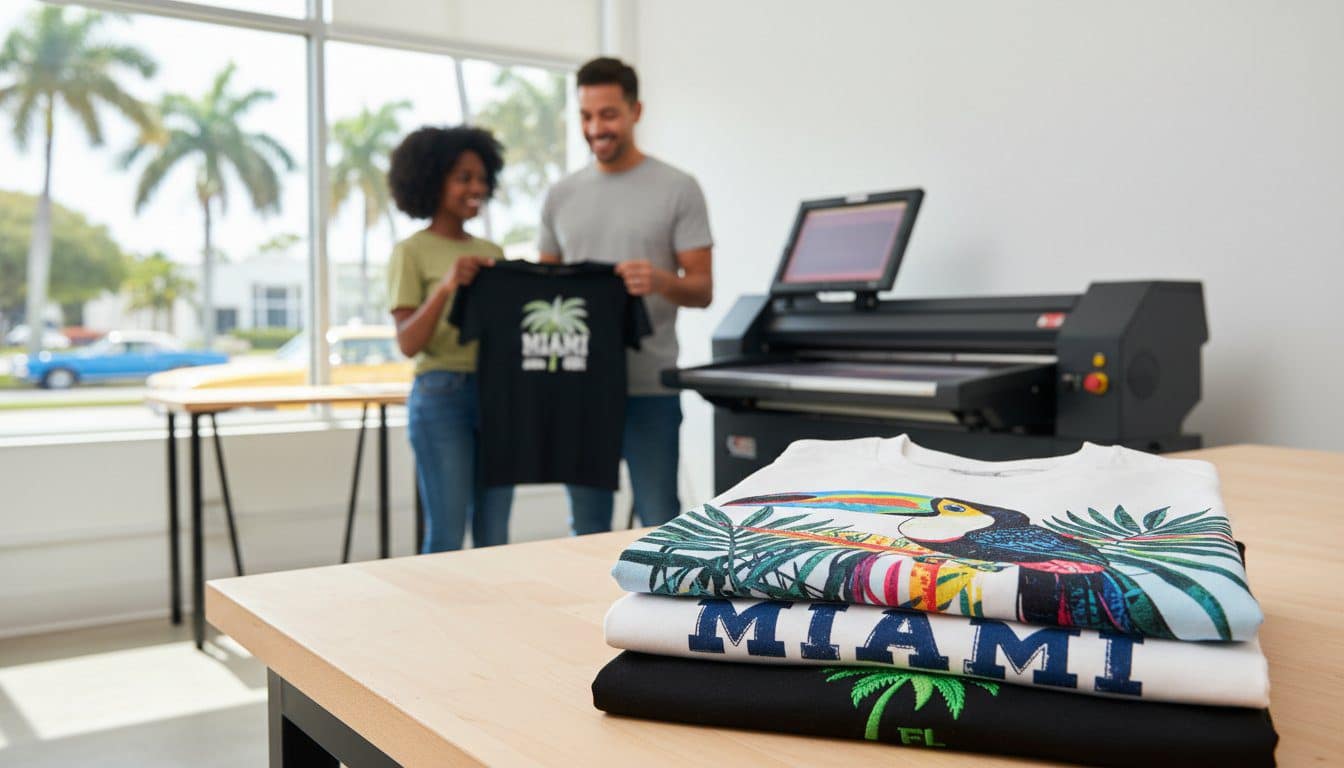
Most custom t-shirt prints that look perfect in a climate-controlled showroom fail within 45 days when exposed to the 90% humidity levels common in Miami Dade. If you’re managing a construction crew in Doral or organizing a high-profile outdoor event in Wynwood, you know that South Florida heat is the ultimate test for apparel. Understanding how to choose a printing method for t-shirts is the only way to ensure your brand’s logo doesn’t peel or crack before the second wash cycle.
It’s frustrating to pay high setup fees only to receive a product that feels heavy and uncomfortable in the sun. You’ve likely worried about whether your order will arrive in time for a local event or if the unit cost fits your strict budget. This guide promises to simplify your decision by matching your specific design needs with the most durable production techniques available in 2026. We’ll compare DTF transfers, screen printing, and embroidery based on their performance in Florida’s climate, their turnaround times for local pickup in Opa Locka, and their professional finish for staff uniforms.
Key Takeaways
- Understand how Miami’s high humidity and heat impact print durability and fabric selection for long-lasting local apparel.
- Learn how to choose a printing method for t-shirts by comparing the high-detail precision of DTF transfers against the cost-efficiency of bulk screen printing.
- Identify when to utilize custom embroidery or UV DTF to achieve a premium texture and professional finish for corporate branding.
- Follow a structured 5-step framework to audit your design complexity, color requirements, and total budget per unit before ordering.
- Discover the same-day advantage of local Opa Locka production for meeting emergency event deadlines in Wynwood and Miami Beach.
Understanding T-Shirt Printing Methods for the Miami Market
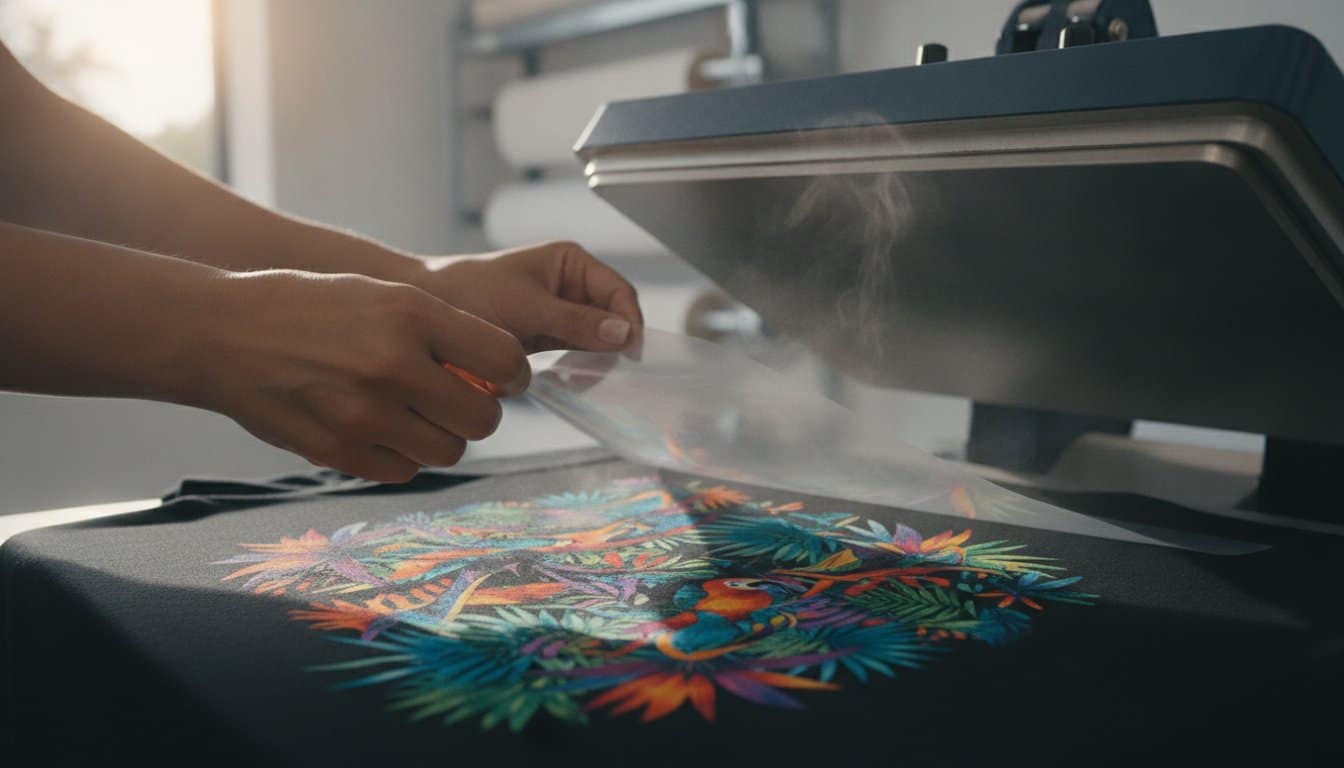
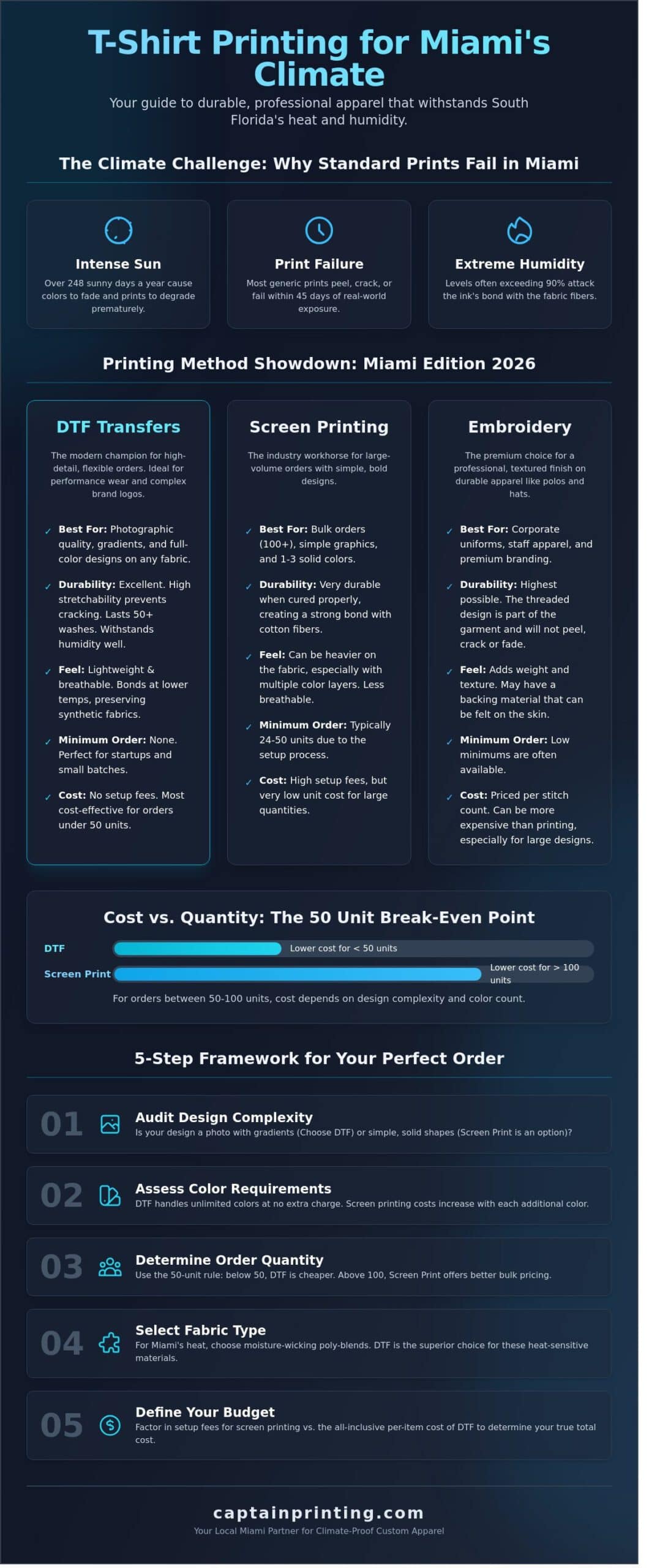
Miami’s unique climate dictates how to choose a printing method for t-shirts. With average humidity levels often exceeding 70% and over 248 sunny days per year, local businesses can’t rely on generic advice. A print that works in a dry climate might crack or peel under the intense South Florida sun. Choosing the right method requires understanding three core terms: substrates (the fabric), transfers (designs moved from a carrier to the garment), and curing (the heat-setting process that ensures a permanent bond).
In Miami-Dade, the “one-size-fits-all” approach fails because a construction crew in Doral needs different durability than a boutique in Wynwood. You must match the printing technique to the intended environment and garment type to avoid wasted inventory. Whether you’re producing 500 shirts for a music festival or 12 uniforms for a local cafe, the chemistry of the ink and the temperature of the cure determine the final quality.
To better understand these technical differences, watch this comparison of modern garment decoration:
The three primary contenders for the local market are Direct-to-Film (DTF), screen printing, and embroidery. While the history and process of screen printing makes it a classic choice for high-volume orders, newer digital methods offer faster turnarounds for complex, multi-color designs. Each method reacts differently to the heat and salt air prevalent in coastal Florida.
Fabric Choice and Florida Humidity
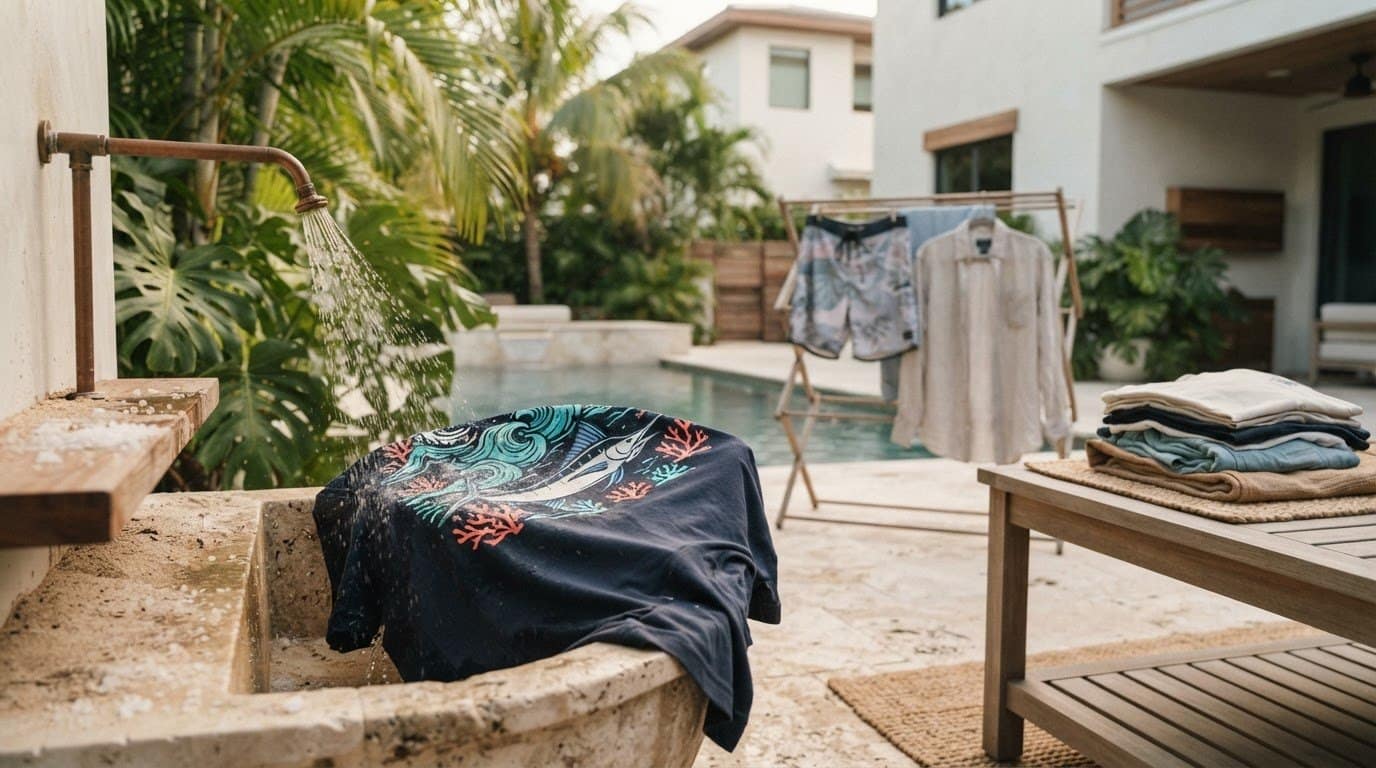
Humidity affects how ink adheres to a substrate. 100% cotton is breathable but heavy when wet, which is why many Miami businesses prefer polyester blends or performance fabrics. These moisture-wicking materials are sensitive to high heat, making DTF transfers the ideal solution. DTF bonds at lower temperatures than traditional methods, protecting the integrity of synthetic fibers. For outdoor workers in Hialeah and Doral, selecting a breathable material paired with a lightweight transfer ensures comfort throughout a 10-hour shift.
Durability Testing in the Florida Sun
DTF Transfers vs. Screen Printing: A Cost and Quality Comparison
Deciding how to choose a printing method for t-shirts depends on your specific order volume and design complexity. Direct-to-Film (DTF) has emerged as the high-detail alternative for 2026, offering photographic quality without the heavy setup costs of traditional methods. Screen printing remains the industry standard for large-scale production where speed and bulk pricing are the priorities.
The financial break-even point between these two methods usually sits at 50 units. For orders under this threshold, DTF provides better value because it bypasses the labor-intensive screen creation process. For orders exceeding 100 units, the efficiency of traditional ink becomes more profitable for the buyer. Visual fidelity also differs; DTF handles 300 DPI photographic gradients with ease, while screen printing excels at vibrant, solid blocks of color.
When DTF Transfers Win for Miami Small Businesses
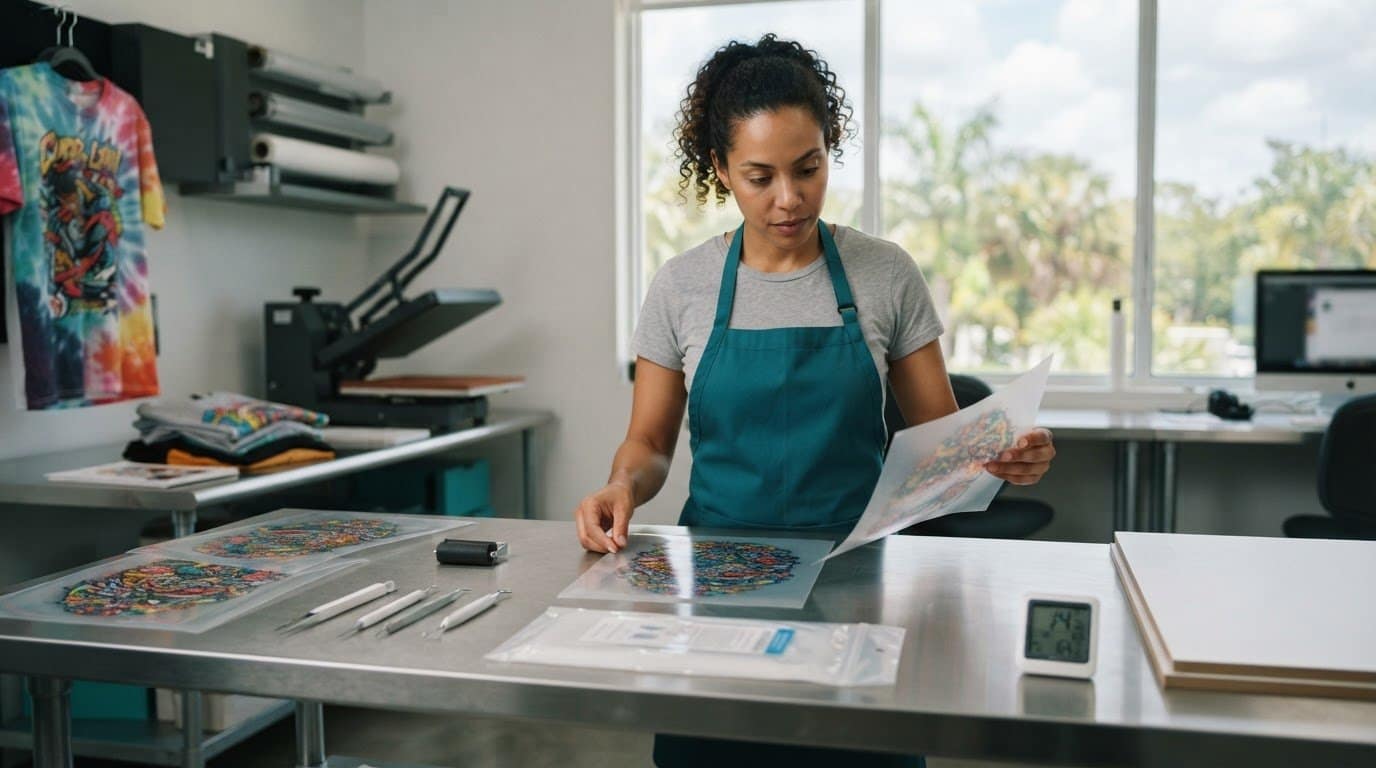
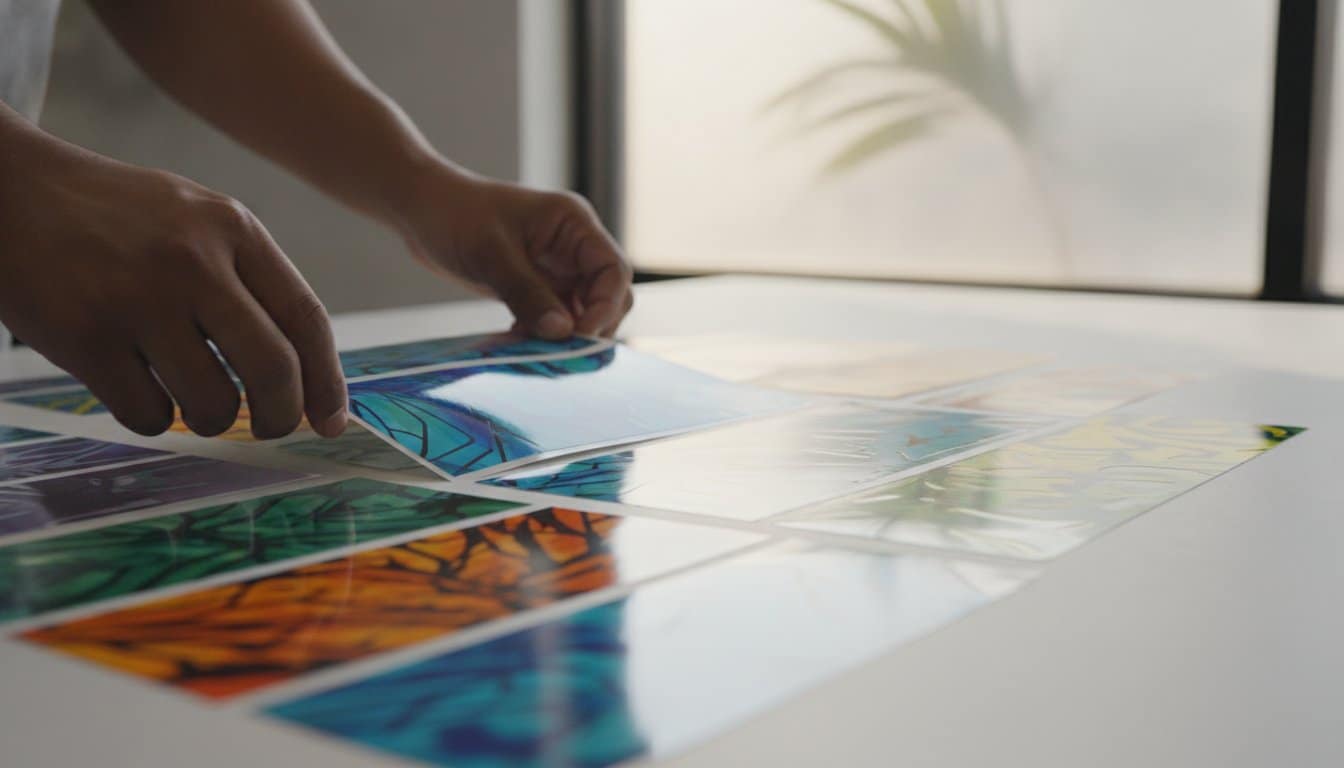
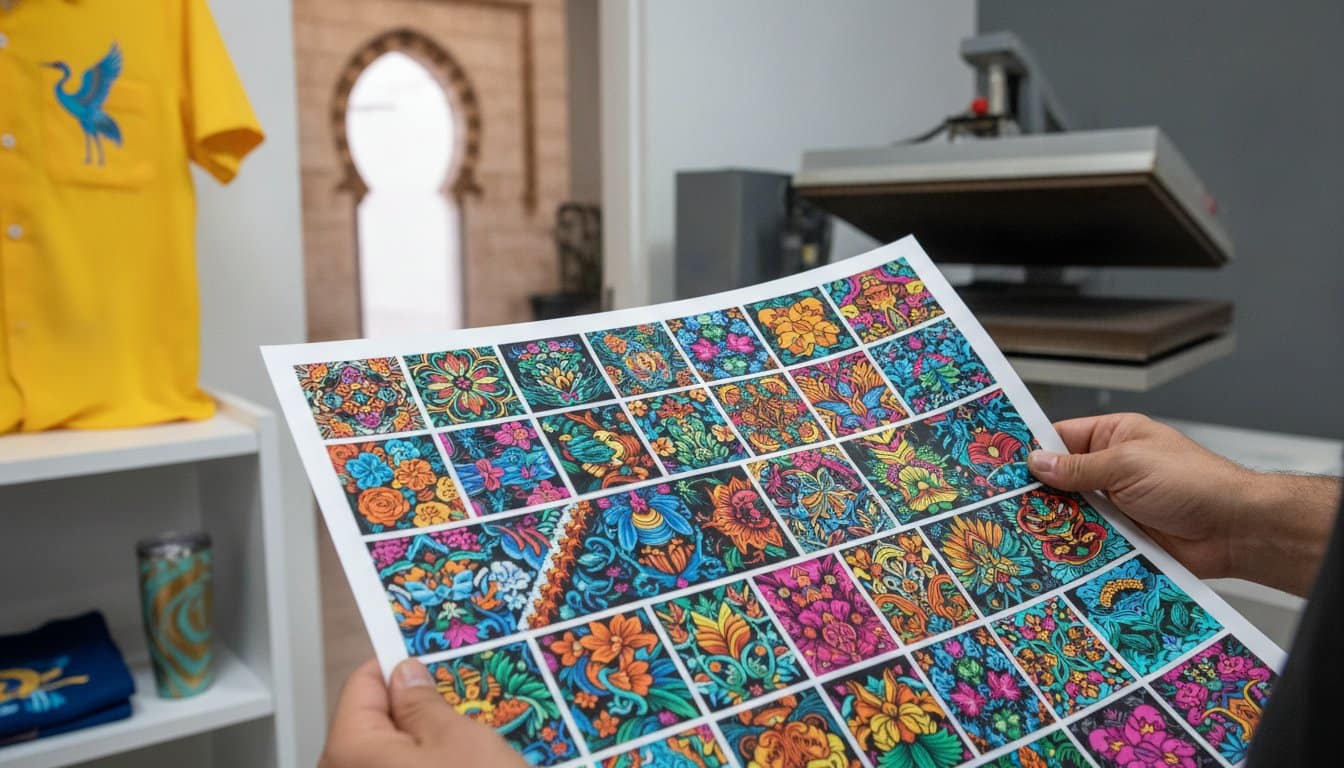
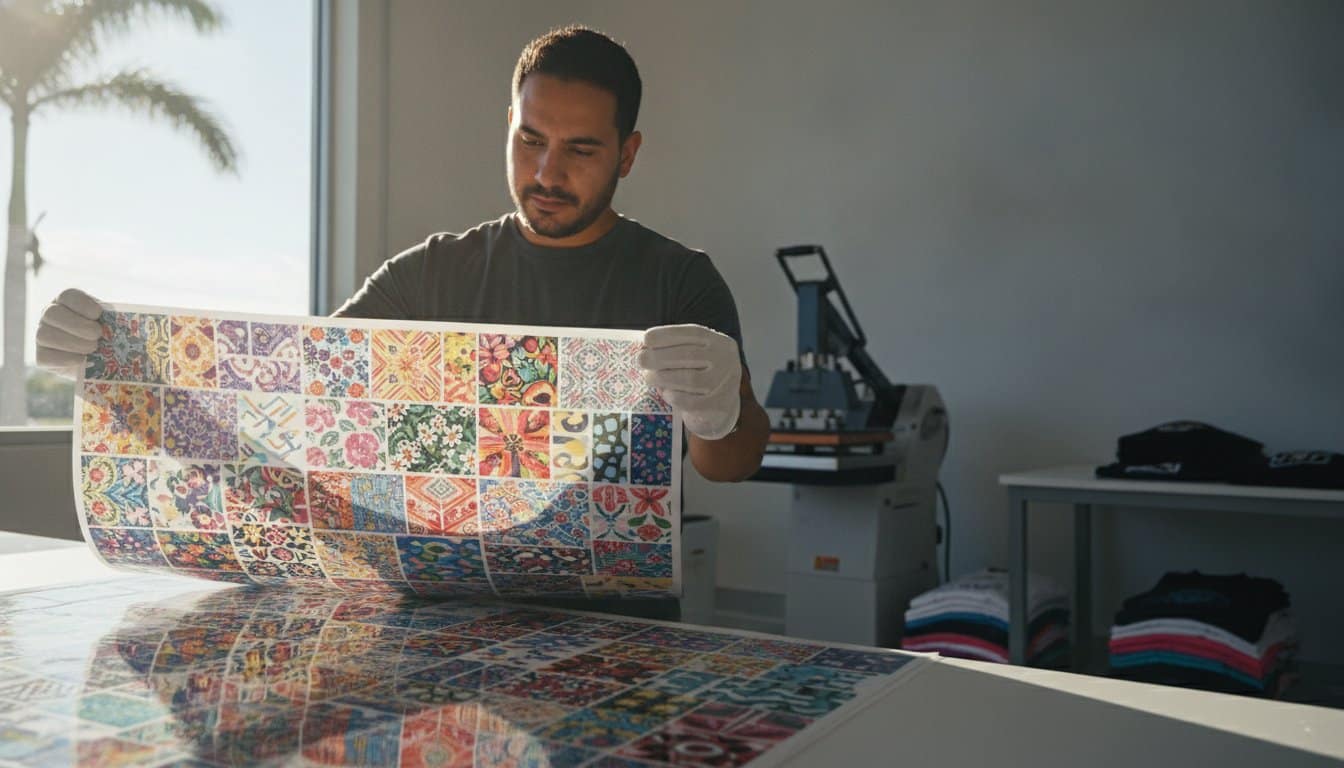
Startups in Wynwood and local brands in Doral often need flexibility. DTF transfers offer zero minimum order quantities (MOQs), allowing businesses to test designs without a large upfront investment. To lower costs further, using the DTF gang sheet builder lets you organize multiple designs on a single roll. This maximizes your material usage and reduces waste.
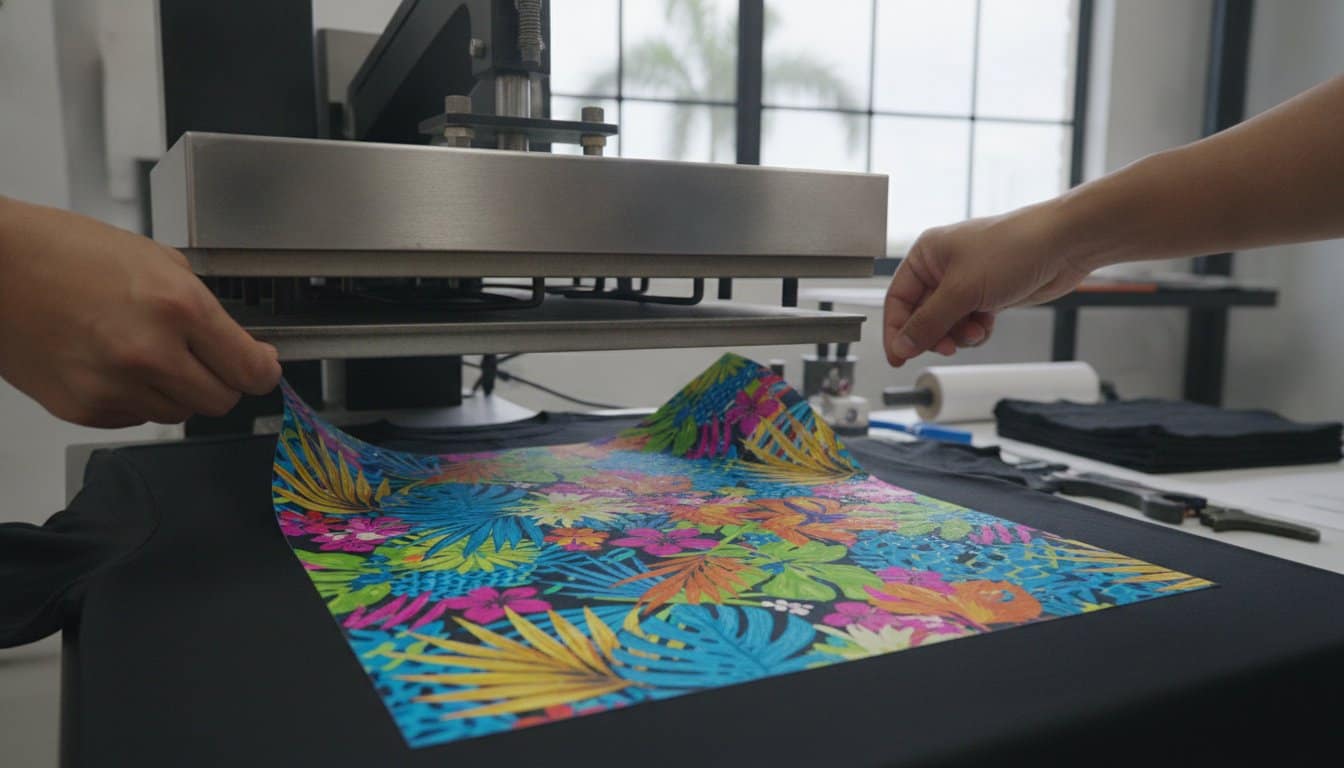
Durability in the Miami heat is essential. DTF transfers are known for their high stretchability, making them the best choice for activewear and performance fabrics used by local gyms and sports teams. Modern DTF won’t crack or peel when the fabric is pulled, which is a common requirement for 2026 apparel standards in Miami Dade. It’s a reliable way to ensure your brand looks good even after 50 washes.
The Role of Screen Printing in Bulk Production
Large-scale events in Downtown Miami and corporate retreats in Opa Locka rely on the Screen Printing Method for massive volume. This traditional technique is unmatched for speed once the initial screens are burned and aligned. However, every color requires a separate screen and a separate setup fee, which can increase the price of complex logos for small runs.
Screen printing has limitations regarding photographic detail. It uses halftone dots to simulate gradients, which may not look as sharp as a digital DTF print. If your design features 1 to 3 solid colors and you need 500 shirts for a local festival, screen printing is the most economical path. If you’re looking for fast results, you can order custom transfers to see the quality difference yourself.
Captain Printing
Phone: (305) 930-4700
Email: [email protected]
Address: 13680 NW 19th Ave Unit 1B, Opa Locka, FL 33054
Professional Alternatives: Custom Embroidery and UV DTF
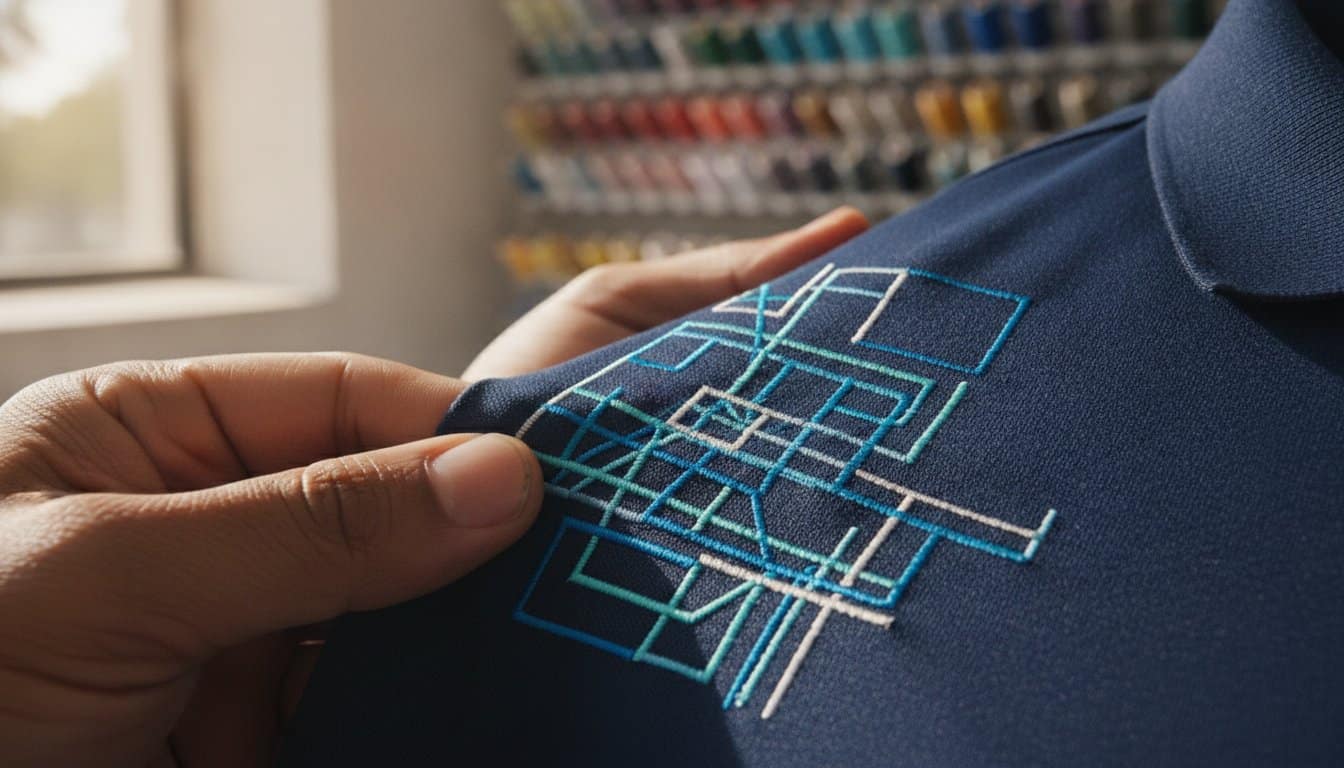
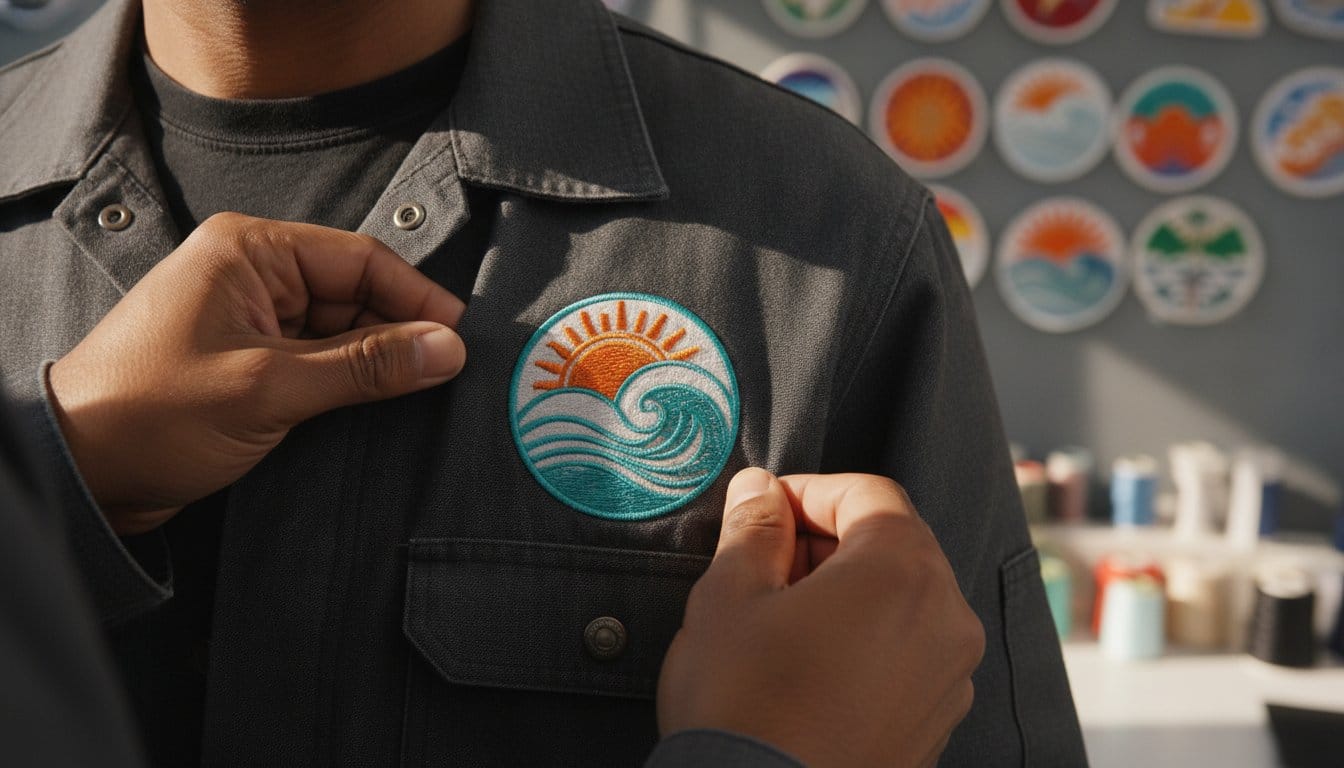
Standard ink methods like Direct-to-Garment (DTG) Printing or screen printing offer vibrant colors, but they don’t provide physical dimension. When you’re deciding how to choose a printing method for t-shirts, consider the texture. Premium brands often opt for embroidery to create a high-end finish that stands out in a crowded Miami market. It’s about positioning. A raised, stitched logo communicates stability and longevity that a flat print cannot match.
Don’t assume embroidery is limited to corporate polos. In 2026, Miami streetwear brands and local fitness centers use custom stitching on heavyweight hoodies, joggers, and beanies. It’s a durable choice for items that face frequent high-heat washing. It adds a tactile element that customers can feel, which increases the perceived value of the garment. If your goal is to build a luxury or professional brand identity, moving beyond standard ink is a strategic necessity.
Embroidery for Miami Uniforms and Corporate Identity
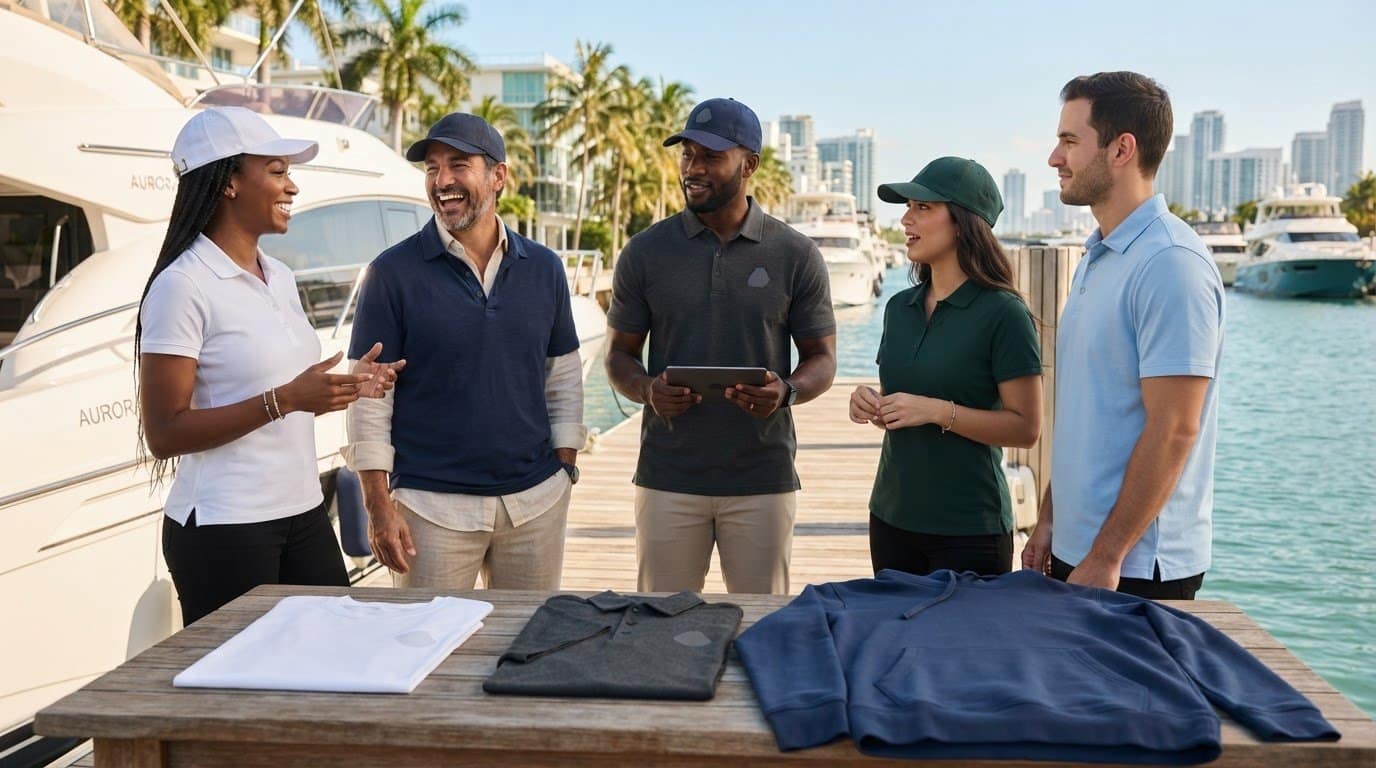
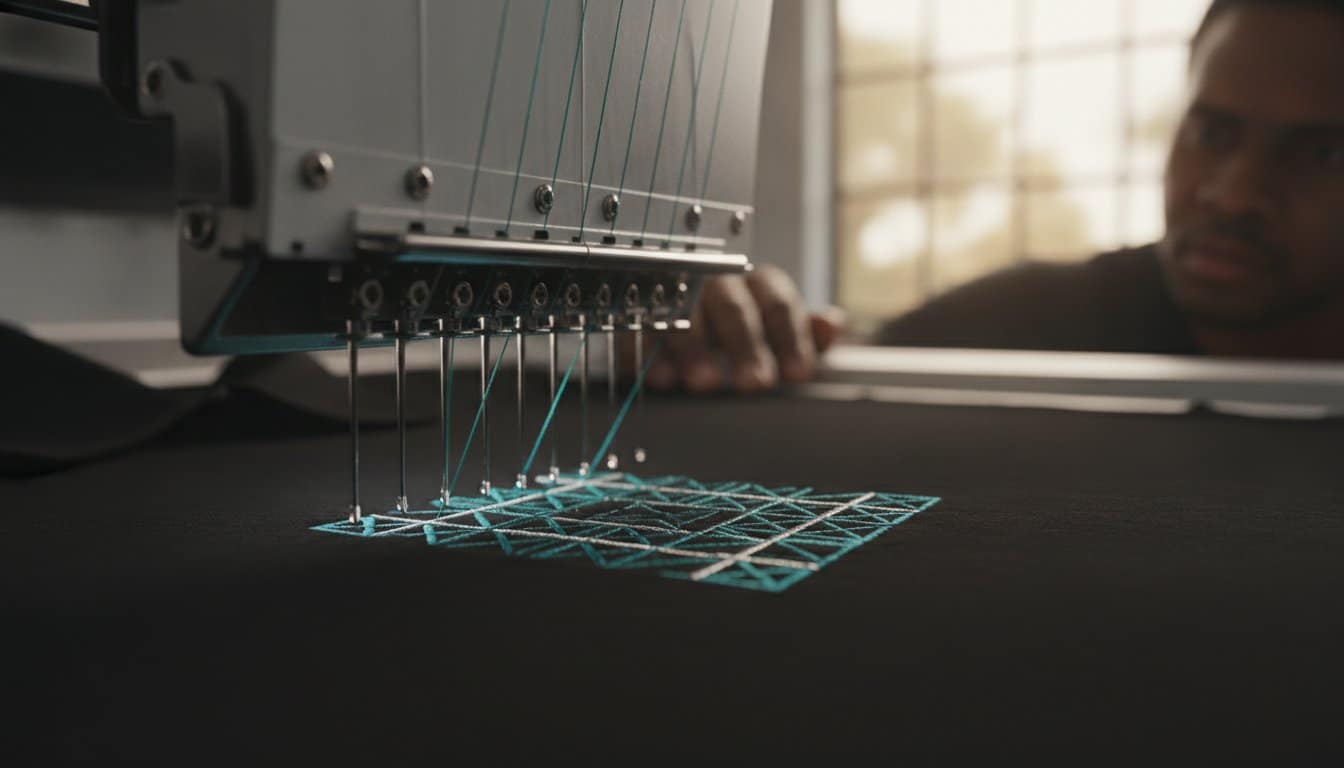
Local contractors in Doral and schools in Hialeah prefer custom stitching in Miami because of its extreme durability. Thread won’t crack or peel like ink. Heavy-duty workwear requires materials that withstand the Florida humidity and rigorous physical labor. To get professional results, your logo must be digitized correctly. This process converts your artwork into a stitch map, ensuring every needle movement is precise. We handle this digitization in-house at our Opa Locka facility to maintain strict quality control. This ensures your brand looks sharp on everything from industrial vests to executive outerwear.
UV DTF for Hard Goods and Restaurant Branding
Your branding strategy shouldn’t stop at fabric. UV DTF (Direct to Film) transfers allow you to extend your brand to tumblers, mugs, and glass. Miami restaurants in Wynwood and Downtown use these transfers for permanent, dishwasher-safe decals on glassware. The UV curing process creates a “Perma Patch” effect. This provides a 3D tactile feel that mimics high-end embossed printing. It’s an efficient way to brand promotional items without the high minimums of traditional pad printing. These decals bond to hard surfaces instantly; they’re ideal for rapid local distribution and onsite events.
To start your project or learn more about how to choose a printing method for t-shirts and hard goods, contact Captain Printing today. Visit our local shop at 13680 NW 19th Ave Unit 1B, Opa Locka, FL 33054. You can also reach us at (305) 930-4700 or via email at [email protected].
Selection Framework: 5 Steps to Choose the Right Method
Selecting the wrong technique leads to wasted budget or poor durability. Follow this five-step framework to determine how to choose a printing method for t-shirts for your next Miami project. It ensures your apparel looks professional and arrives on time for your deadline.
- Step 1: Audit your design complexity and color requirements. Identify if you have a simple one-color logo or a high-resolution photograph with complex gradients.
- Step 2: Determine your total quantity and budget per unit. Small batches of 12 to 24 shirts have different cost structures than bulk orders of 500 or more.
- Step 3: Match the printing method to your specific fabric type. 100% cotton, tri-blends, and performance polyesters all react differently to heat and ink.
- Step 4: Factor in the required turnaround time for your Miami event. Local events like Art Basel or the Miami International Boat Show often require 24-hour or same-day production.
- Step 5: Verify the production capabilities of your local printer. Ensure the shop has in-house equipment at their Miami-Dade facility to avoid third-party delays.
Evaluating Design Complexity and Color Counts
Design details dictate your technical path. Screen printing requires a separate screen for every color, which increases setup costs for multi-color graphics. If your design features intricate shadows or more than five colors, DTF (Direct to Film) is more efficient. DTF handles complex gradients better than traditional methods because it prints the entire CMYK spectrum in a single pass. The physical size of the design also impacts your budget. Larger prints require more ink and larger film sheets, so optimizing your graphic dimensions helps control costs.
Balancing Order Volume with Production Speed
Scaling from a dozen shirts to 1,000 units requires a shift in strategy. For small runs, digital methods provide the fastest path to completion. When you need to scale, screen printing offers a lower price point per unit once the initial setup is complete. You can optimize your order for t-shirt printing in Miami by choosing local pickup. This avoids the hidden costs of national shipping and the unpredictability of transit times. Local Miami-Dade logistics allow for immediate access to your finished products at our Opa Locka warehouse.
If you have your artwork ready and need a fast, professional solution, you can use our Gang Sheet Builder to organize your designs and start production today.
Contact Captain Printing:
Phone: (305) 930-4700
Email: [email protected]
Address: 13680 NW 19th Ave Unit 1B, Opa Locka, FL 33054
Why Local Miami Production Beats National POD Platforms
National print-on-demand (POD) platforms often ship from distant hubs in the Midwest or overseas. This creates a disconnect between the customer and the final product. When you determine how to choose a printing method for t-shirts, proximity to the production line is a major factor in both speed and quality. Local Miami production eliminates the risk of shipping delays and allows for immediate quality verification.
Working with a local Opa Locka facility means you can see the results before a full run starts. If a design file has low resolution or color profile issues, our team identifies it immediately. We solve art issues in real-time. You won’t wait 48 hours for an automated email response while your event deadline approaches. Choosing local production also reduces your carbon footprint by eliminating long-haul logistics and supports the Miami-Dade economy directly.
Same-Day Printing Benefits for Local Events
Events in Wynwood and Miami Beach move fast. Trade shows at the Miami Beach Convention Center often have emergency needs for extra staff shirts or promotional giveaways. The reliability of local pickup beats unpredictable shipping carriers every time. Many Miami businesses now use DTF transfers for rapid marketing. For example, a local restaurant can launch a new merchandise line in 24 hours to capitalize on a viral social media moment. This speed is impossible with national platforms that require 7 to 10 days for processing.
The Captain Printing Authority in Opa Locka
Captain Printing operates a professional production facility at 13680 NW 19th Ave Unit 1B. We don’t outsource. Our shop features industrial-grade gear designed for high-volume output and precision. We serve businesses from Hialeah to Downtown Miami with consistent results. If you’re unsure how to choose a printing method for t-shirts, you can use our DTF gang sheet builder to organize your designs and maximize your budget. We’re committed to fast, transparent service for our South Florida partners.
Phone: (305) 930-4700
Email: [email protected]
Address: 13680 NW 19th Ave Unit 1B, Opa Locka, FL 33054
Launch Your Custom Apparel Project in Miami
Deciding how to choose a printing method for t-shirts depends on your specific turnaround time and design complexity. DTF transfers provide high-resolution results for small batches and complex logos. Screen printing remains the standard for bulk orders exceeding 50 units. Local production in Opa Locka eliminates the shipping delays common with national POD platforms. Captain Printing offers same-day production for urgent needs in Miami Dade. Our team specializes in DTF and professional embroidery to ensure your brand stands out in the South Florida market. You can visit our storefront for easy pickup or order online for fast delivery to Doral, Hialeah, and Wynwood.
We’ve simplified the process so you don’t have to wait weeks for your gear. Whether you need custom uniforms for a restaurant in Downtown Miami or promotional shirts for a Wynwood event, we’re ready to help. Start your custom Miami printing order now with Captain Printing to get professional results today.
Contact Information:
Phone: (305) 930-4700
Email: [email protected]
Address: 13680 NW 19th Ave Unit 1B, Opa Locka, FL 33054
It’s time to bring your vision to life with the speed and quality your business deserves.
Frequently Asked Questions
Which t-shirt printing method lasts the longest in Miami humidity?
Direct to Film (DTF) and screen printing are the most durable options for the 70% average humidity found in Miami. DTF transfers are engineered to resist cracking and peeling even after 50 plus washes in tropical climates. This makes them a reliable choice for outdoor workers in Hialeah or Doral who need gear that survives heavy perspiration and frequent laundering.
Can I get same-day t-shirt printing in Miami for a last-minute event?
Captain Printing provides same day printing Miami services for orders placed before the daily production cutoff. Local manufacturing at our Opa locka facility allows us to process rush orders for events at the Miami Beach Convention Center or Downtown Miami corporate gatherings. Customers can upload files directly through our Gang Sheet Builder to accelerate the production timeline.
Is DTF printing better than screen printing for small business uniforms?
DTF printing is often superior for small business uniforms because it requires no screen setup and handles unlimited colors. When you’re learning how to choose a printing method for t-shirts, consider that DTF allows for high detail on small batches of 10 to 20 units. Screen printing remains the industry standard for bulk orders of 50 or more identical shirts with limited color palettes.
What is the best fabric for custom shirts in the Florida heat?
Lightweight 100% ringspun cotton or moisture-wicking polyester blends are the most effective fabrics for the Florida heat. Cotton provides 100% breathability for casual wear, while performance polyester is the standard for Miami Dade landscaping and construction crews. These materials ensure comfort when local temperatures exceed 90 degrees Fahrenheit during the summer months.
How many t-shirts do I need to order to make screen printing cost-effective?
Screen printing becomes cost-effective at a minimum threshold of 24 to 48 units per design. Because this method involves creating physical screens for every color used, the initial setup labor is high. For orders under 24 pieces, DTF transfers are the more economical alternative as they eliminate setup fees and allow for faster turnaround on small runs.
Can I print high-resolution photos on dark-colored t-shirts?
You can print high-resolution photos on dark-colored shirts using Direct to Film (DTF) technology. Unlike older methods, DTF applies a specialized white underbase layer that ensures colors stay vibrant on black or navy fabrics. This process maintains 300 DPI resolution, making it the preferred choice for detailed photographic designs and complex logos.
What is a gang sheet and how does it save me money on printing?
A gang sheet is a single transfer film that contains multiple different designs or logos positioned to maximize every inch of space. By grouping several graphics onto one sheet, you reduce material waste and lower the per-print cost. Our Gang Sheet Builder allows Miami businesses to organize various sizes and designs together, significantly decreasing the total expense for custom apparel runs.
Do I need a special file type for custom embroidery in Miami?
Custom embroidery in Miami requires a digitized file format, such as .DST or .PES, rather than standard image files like .JPG or .PNG. Digitizing is the process of converting artwork into a specific stitch map that industrial embroidery machines can read. If you only have a vector file, our team at the Opa locka shop can help convert your logo for professional application on hats, polos, or jackets.
For professional printing services in Miami, contact Captain Printing at (305) 930-4700 or email [email protected]. Visit our local facility at 13680 NW 19th Ave Unit 1B, Opa Locka, FL 33054 to discuss your project.