Blog
DTF Transfer for Tri-Blends: The Miami Guide to Perfect Prints (2026)

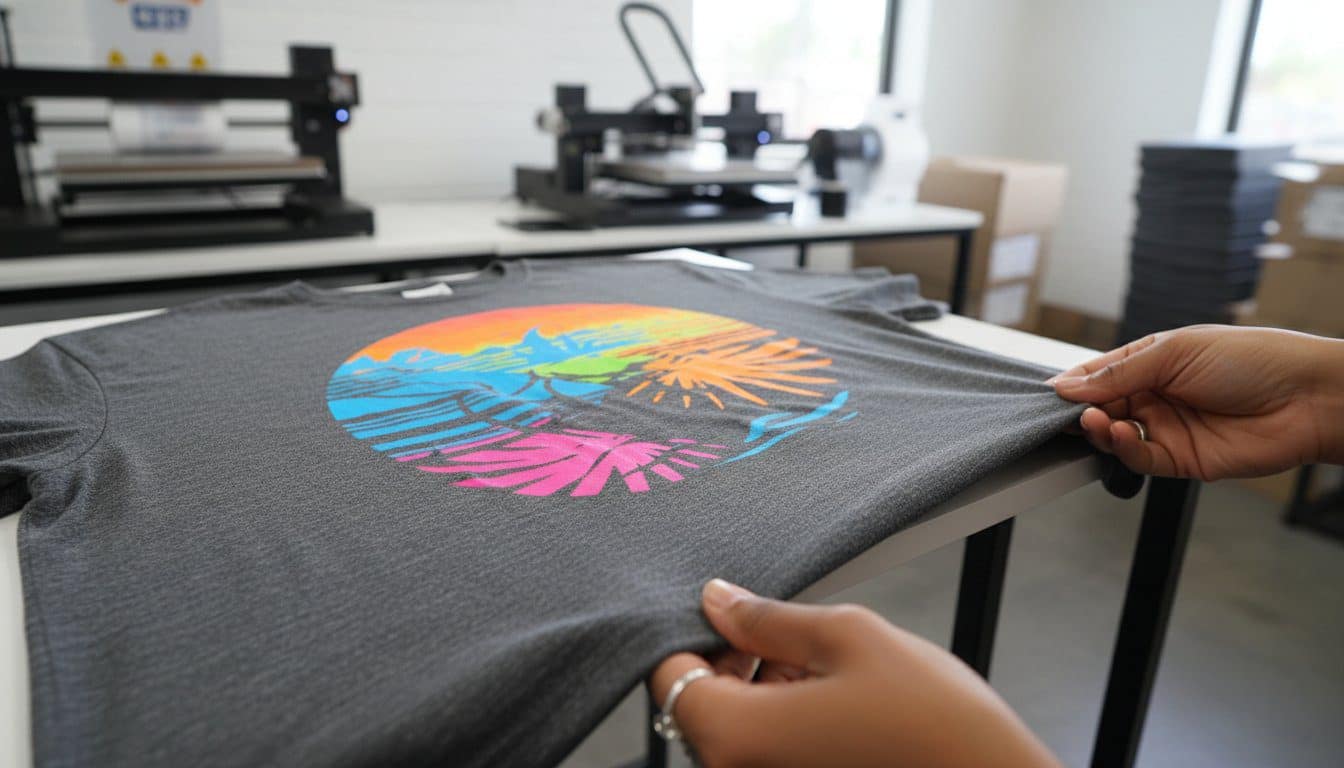
What if your premium tri-blend shirts are actually being ruined by the very heat press meant to customize them? Most shops treat these sensitive fabrics like standard cotton, but that mistake leads to visible heat press boxes and scorched fibers on 85 percent of polyester-heavy garments. Achieving a professional dtf transfer for tri-blends requires a precise balance of low heat and high pressure. At Captain Printing in Opa-locka, we’ve refined this process to ensure your vibrant designs match the high-end feel of the shirt without compromising the fabric.
You likely chose tri-blends for their unmatched softness and durability, so it’s frustrating when a print makes the chest feel heavy or stiff. We promise to provide the exact technical specifications and expert techniques used in our Miami-Dade facility to prevent dye migration and maintain a soft hand feel. This guide previews the essential temperature settings, cooling methods, and local production tips needed for perfect results in 2026. Let’s get your prints right the first time.
Key Takeaways
- Understand the unique 50/25/25 composition of tri-blend fabrics and why DTF technology is the most efficient choice for high-quality, small-batch production.
- Master the “Low and Slow” heat press technique to successfully apply a dtf transfer for tri-blends without causing fabric scorching or dye migration.
- Learn how to manage Miami’s 80%+ humidity levels to protect your DTF film and powder, ensuring consistent print quality in South Florida’s climate.
- Maximize your production ROI by using the online Gang Sheet Builder to organize designs and scale your Miami apparel startup efficiently.
- Identify the essential professional-grade equipment and settings required to achieve durable, retail-ready results on heat-sensitive garments.
Understanding DTF Transfers for Tri-Blend Fabrics
Tri-blend fabrics consist of a specific mix of 50% polyester, 25% cotton, and 25% rayon. This combination is the industry standard for premium, high-end apparel in the Miami market. For local businesses and startups, using a dtf transfer for tri-blends is the most efficient way to achieve professional results. Screen printing often requires large minimum orders and creates a thick, heavy ink deposit. In the Miami heat, a heavy print is uncomfortable. DTF technology provides a “soft hand” feel, meaning the design is thin, breathable, and moves with the garment. This is a critical requirement for retail-ready clothing sold in Wynwood boutiques or used for corporate events in Downtown Miami.
The process of Understanding DTF Transfers involves recognizing how the specialized ink and adhesive powder interact with synthetic fibers. Unlike traditional methods that might struggle with the rayon content, DTF bonds effectively to all three materials in the blend. This makes it a superior choice for small-batch production where quality cannot be sacrificed for speed.
The Anatomy of a Tri-Blend Shirt
Each component of a tri-blend serves a functional purpose for the Florida climate. Rayon provides a silk-like drape and moisture-wicking properties. Cotton ensures the shirt remains breathable during high-humidity days in Miami Dade. Polyester adds the necessary durability to prevent shrinking or losing shape after multiple washes. Common brands used by Miami businesses include Bella+Canvas and Next Level, which are known for their consistent 50/25/25 ratios.
However, polyester and rayon are heat-sensitive. Excessive heat during the printing process can cause “scorching” or a shiny ring around the design. DTF transfers are applied at lower temperatures than standard vinyl, protecting the integrity of these delicate fibers. This ensures the garment stays soft and professional without the damage often seen with DIY heat press methods.
Why DTF is Perfect for Blends
The primary advantage of a dtf transfer for tri-blends is elasticity. DTF ink is formulated to be stretchable. It won’t crack or peel when the fabric is pulled, which is essential for the flexible nature of tri-blends. Traditional vinyl is often too rigid and can feel like a plastic sticker on the chest. DTF adhesive bonds to the mixed fibers without the need for the heavy pre-treatment chemicals required by Direct-to-Garment (DTG) printing.
For Miami startups in Hialeah or Doral, the no-minimum order policy is a significant benefit. You can test a new design or print a small run of 15 shirts for a local marketing activation without the setup fees associated with traditional printing. Our local shop in Opa-locka focuses on fast turnaround times, often providing same-day service for prepared gang sheets. This allows your business to stay agile and respond to market trends immediately.
Contact us today to get your tri-blend project started with high-quality DTF prints delivered fast.
Phone: +1 (305) 930-4700 | Address: 13680 NW 19th Ave, Unit 1B, Opa-locka, FL 33054 | Email: [email protected]
Why Tri-Blends Require a Specialized DTF Approach
Printing on tri-blends isn’t the same as working with 100% cotton. Tri-blends usually consist of 50% polyester, 25% cotton, and 25% rayon. This specific mix creates a soft, breathable fabric that is popular across Miami, but it reacts poorly to standard high-heat press settings. Scorching and dye migration are the two biggest risks for local shops. If you use standard settings, you risk ruining a premium 3.8 oz tee in seconds. A specialized dtf transfer for tri-blends is necessary to protect the integrity of these sensitive fibers.
The technical challenge lies in the melting point of the fabric versus the melting point of the adhesive. Most polyester dyes begin to gasify at temperatures above 280 degrees. If your heat press is set to 320 degrees for a standard cotton transfer, those gases will bleed into your ink. To prevent this, we utilize low-temp adhesive powders. These specialized powders melt at 250 to 275 degrees, allowing the bond to form before the fabric dyes react. You can organize these specialized prints efficiently using our Gang Sheet Builder to ensure every design on your run is optimized for lower temperatures.
The Danger of Dye Migration
Dye migration is the process where gasified fabric ink bleeds through the transfer adhesive and settles into the top layer of the print. Tri-blends are significantly more susceptible to this than cotton because of their high synthetic content. Research into the How to Apply DTF Transfers to Tri-Blends confirms that the interaction between disperse dyes and heat is a critical variable in garment decoration. For dark tri-blend garments in colors like charcoal or navy, we recommend using a “blocker” or low-bleed DTF film to maintain color purity.
Preserving the Premium Soft Feel
Tri-blends are chosen for their lightweight, airy feel. A heavy, thick print creates a “sticker” effect that ruins the garment’s natural drape. We use fine-mesh powder to create a thinner and more flexible print. Hand feel is the tactile quality of a finished print. By using a specialized dtf transfer for tri-blends, you ensure the print moves with the fabric. This is essential for local Miami gyms and activewear brands that need durability without the bulk of traditional vinyl. If you are preparing a large order for a Doral corporate event, order your custom transfers from our Opa-locka facility to ensure a professional finish.
Phone: +1 (305) 930-4700 | Address: 13680 NW 19th Ave, Unit 1B, Opa-locka, FL 33054 | Email: [email protected]
How to Apply DTF Transfers to Tri-Blends: A Step-by-Step Guide
Applying a dtf transfer for tri-blends requires a “Low and Slow” approach. Tri-blend fabrics contain polyester and rayon, which are sensitive to high temperatures. If you use standard cotton settings, you risk scorching the garment or causing “dye migration” where the fabric color bleeds into your design. You must use a professional-grade heat press for these transfers. Hand irons don’t provide the consistent pressure or accurate temperature control needed to fuse the adhesive into the complex weave of a tri-blend. For baseline temperature and pressure references, consult our Custom Heat Transfers Guide.
Step 1: Preparation and Moisture Removal
In Miami Dade, moisture is the primary cause of transfer failure. A 5-second pre-press isn’t optional when you’re working in Opa-locka or Hialeah. The high local humidity gets trapped in the fabric fibers and will create bubbles in the adhesive if not removed. Use a lint roller to clear the surface of the garment before pressing. Tri-blends often have “fuzz” that can interfere with a clean bond. Set your heat press between 275°F and 290°F. This lower range protects the synthetic components of the shirt while still activating the DTF adhesive.
Step 2: The Primary Press and Cooling
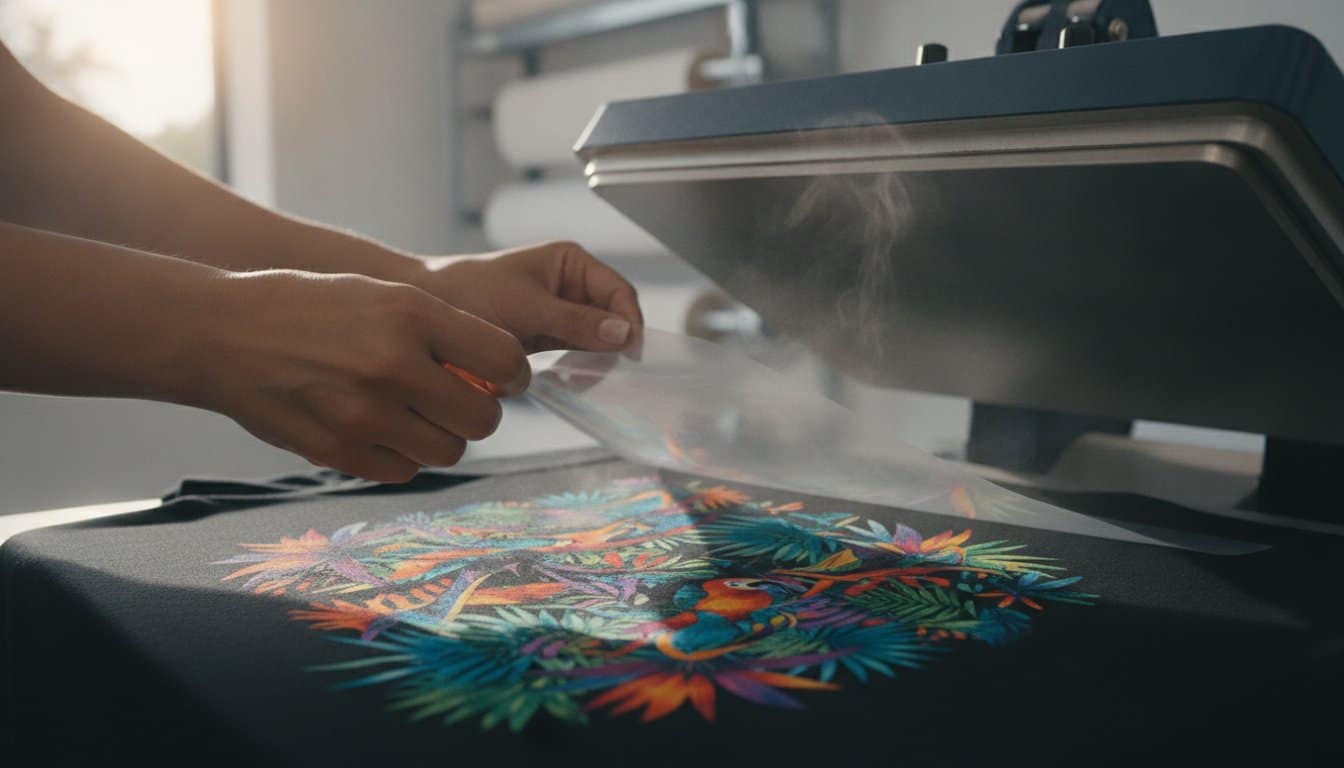
Position your transfer and apply medium pressure for 10 to 12 seconds. Don’t use heavy pressure, as it can crush the fabric and leave a permanent glossy square around the design area. The Direct-to-film (DTF) printing process relies on a specific thermal reaction. For tri-blends, we recommend a “Cold Peel” method. Let the garment cool completely before removing the film. Peeling while hot can pull the delicate rayon fibers and cause the edges of your dtf transfer for tri-blends to lift or fray. Pull the film in one smooth, low motion.
Step 3: The Finishing Press
The final press seals the design and improves the “hand feel” of the print. Place a Teflon sheet or parchment paper over the design and press for an additional 5 seconds. If you want a professional matte finish that blends into the garment, use a heavy cotton cloth instead of Teflon for this step. This helps the ink settle into the fabric texture. Once finished, inspect the print closely. You should see the subtle pattern of the fabric weave through the ink. This visual “weave bond” confirms the print is locked in and ready for the Miami heat.
Phone: +1 (305) 930-4700 | Address: 13680 NW 19th Ave, Unit 1B, Opa-locka, FL 33054 | Email: [email protected]
Solving Miami-Specific Printing Challenges for Tri-Blends
Miami’s 80% average humidity is the primary enemy of high-quality apparel production. When you’re working with a dtf transfer for tri-blends, moisture management becomes a critical technical requirement. High humidity causes DTF adhesive powder to clump and prevents the film from releasing cleanly during the peel process. This often results in “orange peel” textures or adhesive failure on the heat press. Because tri-blends are made of cotton, polyester, and rayon, they absorb moisture differently than 100% cotton, making the bond between the transfer and the fabric even more sensitive to local weather conditions.
Managing Humidity in the Shop
In Hialeah and surrounding Miami-Dade areas, ambient moisture quickly ruins open containers of TPU powder. If the powder absorbs moisture, it won’t bond correctly to the ink during the curing stage. We maintain a strictly controlled environment to ensure every dtf transfer for tri-blends remains “Ready-to-Press” upon delivery. Humidity-controlled storage is vital for transfer longevity and prevents the film from becoming tacky or difficult to handle. You should store your transfers in airtight containers or sealed poly bags with desiccant packs. This prevents the moisture in the Miami air from degrading the adhesive quality before you can apply it to your tri-blend garments.
Fast Turnaround for Local Businesses
Local contractors in Doral and Wynwood often face tight deadlines for marketing activations or corporate events. Relying on national shipping is risky because of frequent delays at regional sorting facilities. Choosing Custom T-Shirt Printing in Miami allows you to bypass the logistical bottlenecks of traditional couriers. Our facility is located near NW 19th Ave, providing easy access for businesses in Downtown Miami and the Design District. Picking up your orders locally in Opa-locka ensures you have your materials in hand hours before your event starts.
The demand for “Same Day DTF Printing Miami” has increased among event organizers who need immediate uniform branding. Our Opa-locka location serves as a central hub for the entire county. Whether you’re coming from the Port of Miami or the industrial parks in Doral, our shop is positioned for quick entry and exit. We prioritize speed without sacrificing the technical precision required for complex tri-blend prints. This local presence means you can inspect your prints in person and get immediate solutions for your specific branding needs.
Phone: +1 (305) 930-4700 | Address: 13680 NW 19th Ave, Unit 1B, Opa-locka, FL 33054 | Email: [email protected]
Scaling Your Production with Captain Printing’s Gang Sheet Builder
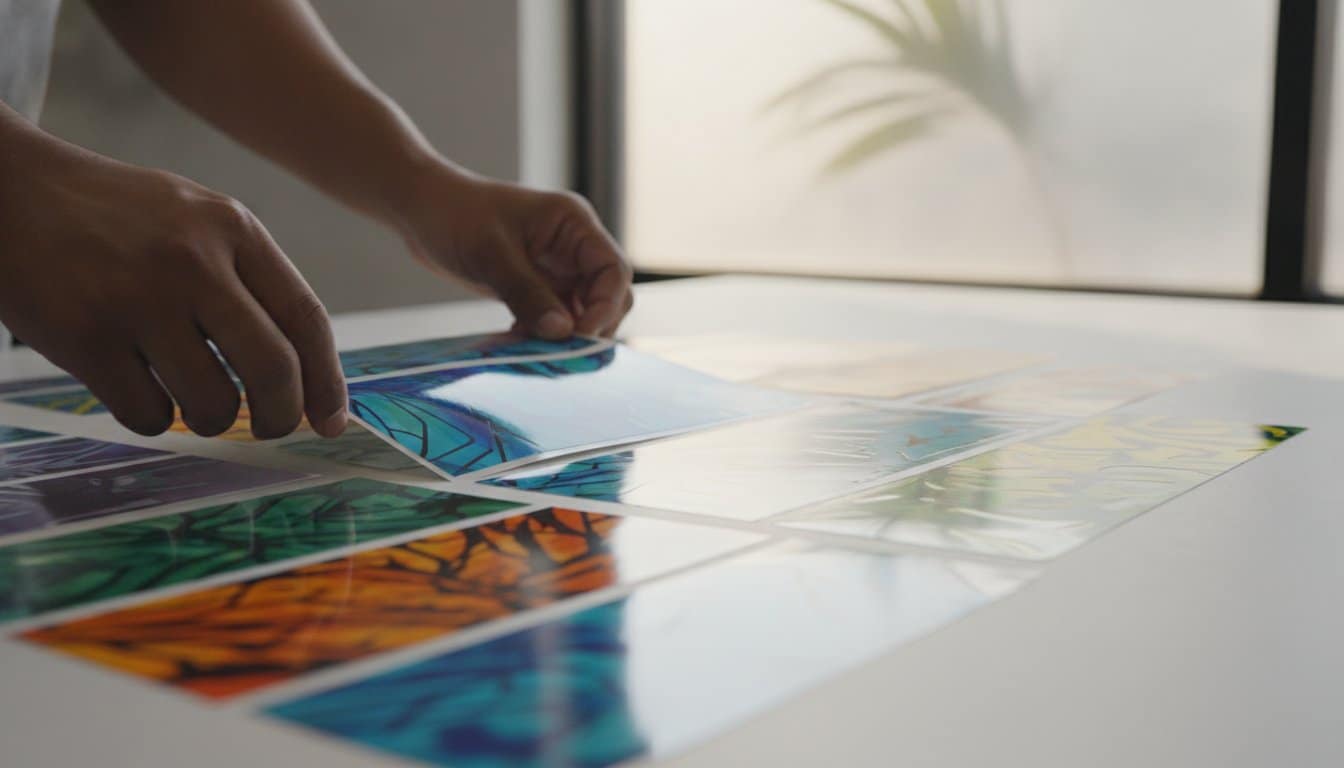
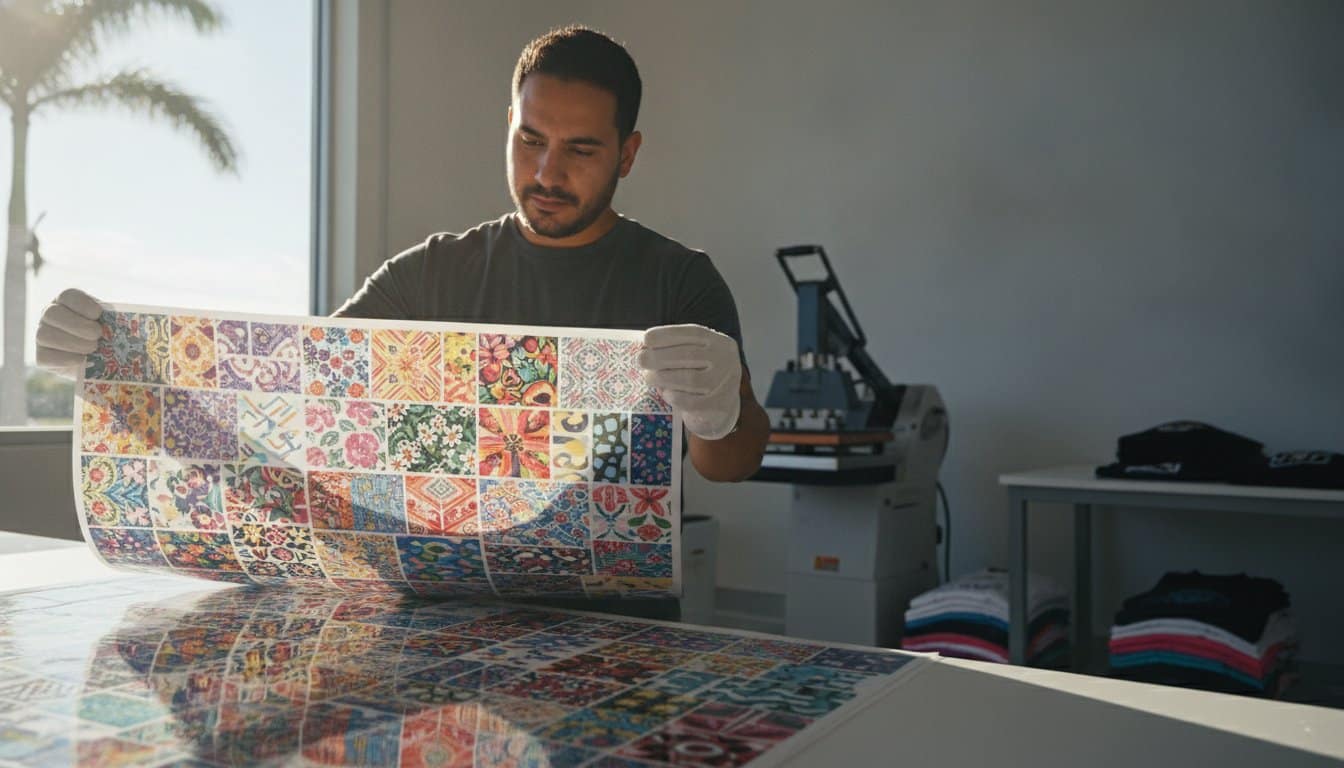
Maximizing your return on investment requires efficiency in both design and material usage. Our online Gang Sheet Builder allows you to organize multiple designs on a single transfer sheet, reducing waste and lowering your cost per garment. For Miami startups, this tool is the fastest way to scale from single custom pieces to bulk production without the overhead of traditional screen printing. By grouping your logos into one layout, you save on setup fees and shipping costs, making dtf transfer for tri-blends more affordable for small batches.
Our builder eliminates the guesswork. You don’t need expensive design software or a background in prepress. You simply upload your files, drag them into place, and see the exact dimensions before you order. This direct control ensures that every 22-inch wide roll is packed with high-quality graphics ready for immediate application. It’s a professional solution for local contractors in Hialeah and Opa-locka who need to move quickly from a customer’s idea to a finished product.
Building Your First Tri-Blend Gang Sheet
Success starts with organization. When preparing a gang sheet, group your designs by color profile. This helps maintain consistency across your entire run of tri-blend garments. For a standard tri-blend t-shirt, a 10-inch or 11-inch width is typical for a full-front chest print. If you’re printing on tri-blend hoodies in Downtown Miami, you might increase that to 12 inches. Use the builder to place smaller 3.5-inch left-chest logos in the gaps between larger designs. This strategy ensures you aren’t paying for empty space on the film. Our system handles the technical alignment, so you avoid the mess and registration errors common with DIY printing methods.
Why Miami Trusts Captain Printing
Captain Printing is the local authority for high-volume DTF production in Miami-Dade. We provide unmatched quality because we control the entire process from our Opa-locka facility. We don’t outsource. This allows us to offer super fast turnaround times, including same-day printing for orders placed before our daily cutoff. Local businesses in Wynwood and Doral rely on us to keep their inventory stocked without the long wait times of national online-only printers.
We support the local small business ecosystem by providing reliable, professional-grade transfers that work every time. Whether you need a single gang sheet for a pop-up event or 500 feet of film for a corporate uniform contract, we deliver. You can choose local pickup at our warehouse to save on transit time or opt for fast shipping across Florida. If you’re new to the process, read our Gang Sheets Guide to learn more about optimizing your layouts for dtf transfer for tri-blends. Let’s get your production moving today.
Scale Your Tri-Blend Production Today
Tri-blend fabrics offer the soft feel that Miami customers demand, but they require technical precision to avoid heat damage. Successful results depend on low-temperature application and high-quality adhesives. When you choose dtf transfer for tri-blends, you’re opting for a durable finish that maintains the garment’s natural stretch. This specialized approach prevents the common issues of scorching or dye migration often found with standard heat transfers on sensitive polyester blends.
Captain Printing provides expert support for these heat-sensitive materials at our Opa-locka facility. We don’t require minimum orders. This allows businesses in Wynwood and Downtown Miami to test new designs without inventory risk. Our team manages the technical production so your prints stay vibrant even in the Florida humidity. We offer same-day printing for orders placed through our online builder, keeping your local production schedule on track.
Build Your DTF Gang Sheet for Tri-Blends Now
We’re ready to help you grow your custom apparel brand with reliable local expertise and fast turnaround times.
Phone: +1 (305) 930-4700 | Address: 13680 NW 19th Ave, Unit 1B, Opa-locka, FL 33054 | Email: [email protected]
Frequently Asked Questions about DTF for Tri-Blends
Can you put DTF transfers on 50/25/25 tri-blend shirts?
Yes, you can apply DTF transfers to 50% polyester, 25% cotton, and 25% rayon fabrics. This specific material blend is popular for Miami fitness brands because it’s breathable and soft. The adhesive used in the transfer process bonds effectively to all three fiber types without the ink migration issues common in traditional screen printing.
What is the best temperature for pressing DTF on tri-blends?
The optimal temperature for a dtf transfer for tri-blends is between 275°F and 290°F. Because tri-blends contain rayon and polyester, they’re sensitive to high heat. Pressing for 10 to 12 seconds at this lower range ensures a permanent bond without melting the synthetic fibers or causing fabric discoloration.
How do I prevent my tri-blend shirt from scorching under a heat press?
Use a heat press pillow and a protective Teflon sheet to distribute heat evenly and prevent direct contact with the heating element. Scorching typically occurs when temperatures exceed 300°F. Lowering your pressure to a medium setting, around 30 to 40 PSI, also protects the delicate weave of shirts used by businesses in Doral and Hialeah.
Will DTF transfers peel off tri-blend fabric after washing?
DTF transfers won’t peel if they’re applied with the correct heat and pressure settings. These prints are lab-tested to withstand 50 to 60 wash cycles. To maintain the print’s integrity in the South Florida heat, users should wash garments inside out in cold water and avoid high-heat drying cycles.
Do I need a special adhesive powder for tri-blend DTF transfers?
Standard TPU powder works for most applications, but a high-stretch adhesive powder is recommended for tri-blends. Since these fabrics are designed to stretch, the adhesive must be flexible to prevent the design from cracking. We use premium powders at our Opa-locka facility to ensure the print moves naturally with the garment.
How long does a DTF transfer last on a tri-blend garment?
A professional dtf transfer for tri-blends lasts for the entire life of the shirt, typically 50 or more washes. The print remains vibrant and intact long after the fabric itself begins to show wear. This durability makes it a reliable choice for corporate uniforms and event apparel throughout Miami Dade.
Can I get same-day DTF transfers for tri-blends in Miami?
Yes, Captain Printing provides same-day production for DTF transfers at our local shop. Customers in Wynwood, Downtown Miami, and surrounding areas can upload designs via our Gang Sheet Builder and pick up their orders the same afternoon. We prioritize fast turnaround times to meet the tight deadlines of local businesses.
Is DTF better than screen printing for tri-blend hoodies?
DTF is often better than screen printing for tri-blends because it doesn’t require a thick plasticol under-base. Screen printing on tri-blends can result in a heavy, stiff feel that ruins the fabric’s natural drape. DTF maintains a lightweight, soft hand-feel while allowing for unlimited colors and fine details that screen printing can’t match.
Phone: +1 (305) 930-4700 | Address: 13680 NW 19th Ave, Unit 1B, Opa-locka, FL 33054 | Email: [email protected]