Blog
Custom Work Shirts for Florida Heat: Fabric and Print Guide


Traditional thick plastisol prints act like solid sheets of plastic across a worker’s back, trapping body heat the moment temperatures cross 90 degrees. If you manage an outdoor crew in Miami, Hialeah, or Fort Lauderdale, you already know that heavy uniforms quickly turn into sweat-soaked, peeling liabilities after repeated industrial wash cycles. Crew members deal with chafing and trapped heat, while your brand takes a hit from degraded logos. Selecting the right custom work shirts for Florida heat requires pairing lightweight, moisture-wicking textiles with flexible decoration methods that preserve fabric breathability.
Discover how to choose breathable fabrics and durable decoration methods for South Florida work crews without sacrificing brand visibility. Switching from rigid inks to modern Direct-to-Film transfers or targeted commercial embroidery keeps your staff comfortable, compliant, and looking sharp under harsh direct sunlight. This guide breaks down essential fabric blends, compares print durability against daily sweat, and shows you how to secure reliable workwear with fast local turnaround and zero order minimums.
Key Takeaways
- Understand why standard heavy cotton fabrics fail under extreme South Florida humidity and how technical synthetic weaves optimize airflow.
- Discover why flexible Direct-to-Film transfers outperform heavy screen print ink on custom work shirts for Florida heat without blocking sweat evaporation.
- Evaluate decoration techniques engineered to resist degradation from constant UV exposure, body salt, and frequent industrial wash cycles.
- Identify appropriate garment styles, ranging from UV-blocking long-sleeve sun hoodies to corporate technical polos, based on field exposure levels.
- Streamline crew outfitting by partnering with an in-house Miami facility offering genuine same-day turnaround with no order minimums or setup fees.
Why Florida Heat Requires Purpose-Built Custom Work Shirts
South Florida worksites demand specialized apparel. Standard trade uniforms fail quickly when ambient temperatures climb alongside tropical humidity levels. An estimated 611,100 Floridians work in outdoor-dominant jobs like construction and landscaping, where managing physical heat stress is a daily operational challenge. Equipping these crews with proper custom work shirts for Florida heat requires evaluating raw textiles through the broader performance of textile products under extreme climatic stress. Without proper moisture transport and air permeability, your crew risks fatigue and heat exhaustion before midday.
Traditional 100 percent heavyweight cotton fails on South Florida jobs. Cotton absorbs liquid readily, but it holds moisture instead of releasing it. In high relative humidity, wet cotton clings to the skin, adds physical weight, and stops the body’s natural evaporative cooling process. Work shirts must satisfy three functional criteria to keep trade crews safe and productive:
- Moisture transport: Moving sweat immediately away from the skin to the outer surface of the shirt.
- Air permeability: Allowing ambient airflow through the weave to cool the skin surface.
- Durable decoration: Ensuring company logos remain intact through extreme UV exposure and repeated wash cycles.
The South Florida Climate Factor on Job Sites
Between June and October, job sites across Miami-Dade and Broward counties face heat index values that routinely exceed 105 degrees Fahrenheit. Ambient humidity levels hovering near 80 percent prevent standard sweat evaporation. When field crews wear saturated, heavy shirts in direct sunlight, the trapped moisture increases body heat storage and accelerates heat exhaustion risks during long shifts.
Why Standard Screen Printing Fails in High Heat
Heavy screen printing compounds the problem. Standard plastisol ink cures into a dense, rubberized layer over the fabric surface. This creates an impermeable barrier across the worker’s chest or upper back. Sweat pools directly beneath the graphic, causing skin irritation, severe chafing, and general discomfort. In hot working environments, your crew needs lightweight decoration options like flexible DTF transfers or targeted embroidery that preserve garment ventilation.
Choosing the Best Breathable Fabrics and Printing Methods
Selecting custom work shirts for Florida heat requires matching specific fabric weights with compatible garment decoration techniques. Fabric selection directly affects crew safety under the federal OSHA’s General Duty Clause, which obligates employers to mitigate severe heat hazards. While some shops push sublimation exclusively, that method restricts you entirely to white or pastel 100 percent polyester. Using modern Direct-to-Film transfers lets you decorate dark garments, 50/50 blends, and safety neon shirts without losing breathability.
The table below compares standard trade fabrics and their optimal decoration pairings for high-heat environments:
| Fabric Type | Weight Range | Moisture Management | Recommended Print Method |
|---|---|---|---|
| 100% Microfiber Polyester | 3.8 – 4.2 oz/yd² | High (Capillary action) | Lightweight DTF Transfers |
| 65/35 Poly-Cotton Blend | 4.2 – 4.5 oz/yd² | Moderate (Durable/Snag-resistant) | DTF or Left-Chest Embroidery |
| Lightweight Tri-Blend | 3.8 – 4.3 oz/yd² | Moderate-High (Soft hand feel) | High-stretch DTF Transfers |
| Combed Ring-Spun Cotton | 4.3 – 4.5 oz/yd² | Low (Absorbs sweat) | Custom Embroidery (Indoor/Office) |
Performance Polyester vs Cotton Blends for Crew Comfort
Microfiber polyester remains the standard choice for full-sun exposure. The fine synthetic filaments pull liquid away from the body through rapid capillary wicking, allowing fabric to dry rapidly in passing breezes. For trades demanding higher abrasion resistance like roofing or mechanical contracting, a 65/35 poly-cotton blend provides snag protection while remaining substantially lighter than traditional heavy workwear. Aim for fabric weights between 3.8 and 4.5 ounces per square yard to keep the garment durable yet light.
DTF Heat Transfers on Technical Sportswear
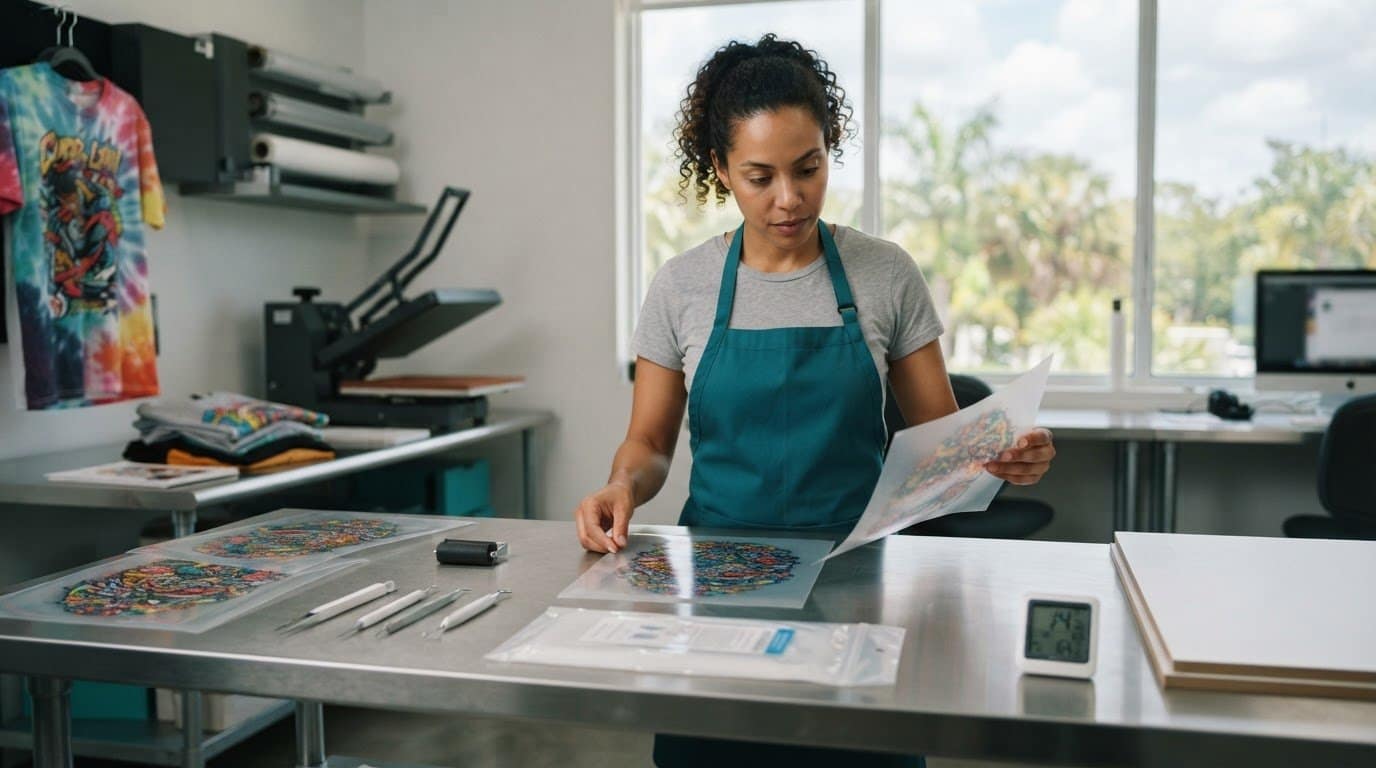
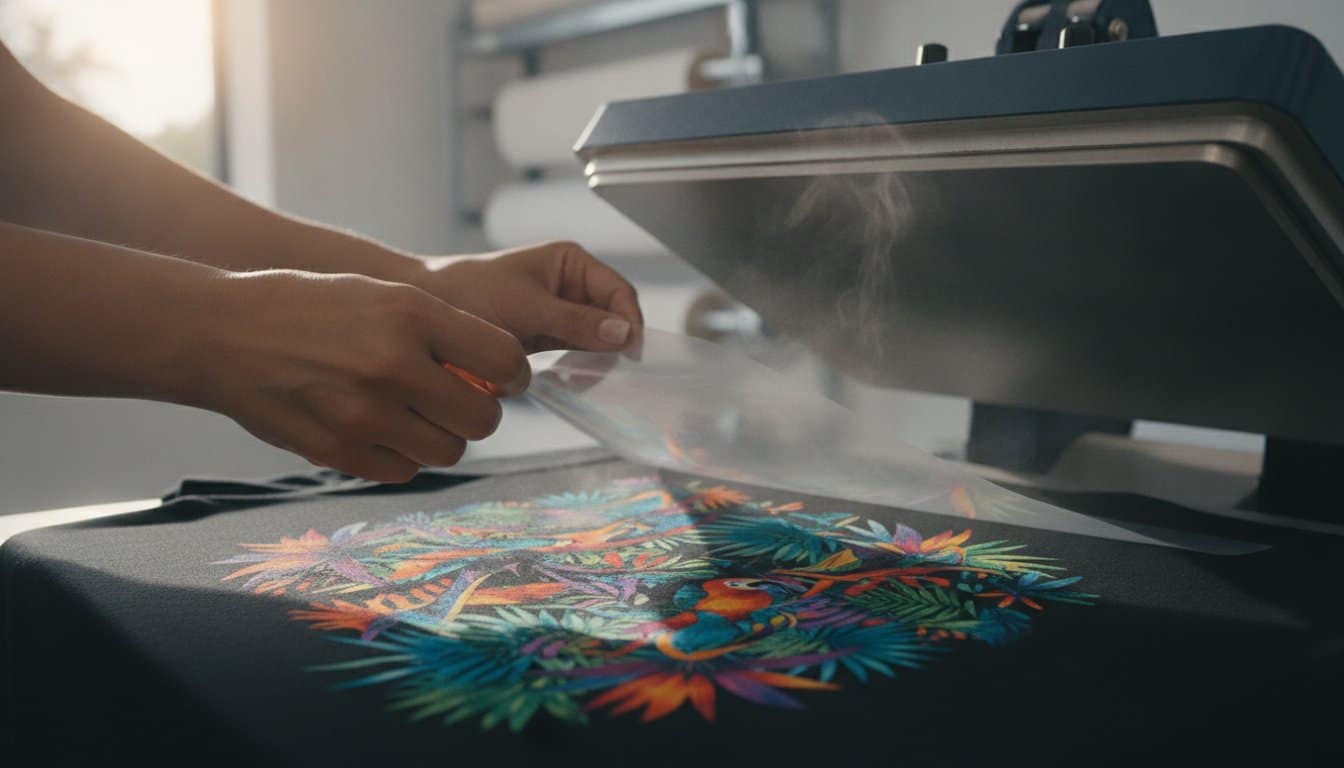
Modern DTF transfers solve the heavy-ink problem common to screen printing. The thin polyurethane adhesive powder bonds directly to synthetic fibers without sealing every air pocket in the weave. This allows full-color graphics to stretch naturally with the fabric during intense physical movement on job sites in Doral or Wynwood. The process works exceptionally well on ANSI-compliant neon yellow and safety orange shirts, maintaining high visibility without cracking under heavy strain.
Custom Logo Embroidery for Professional Field Polos
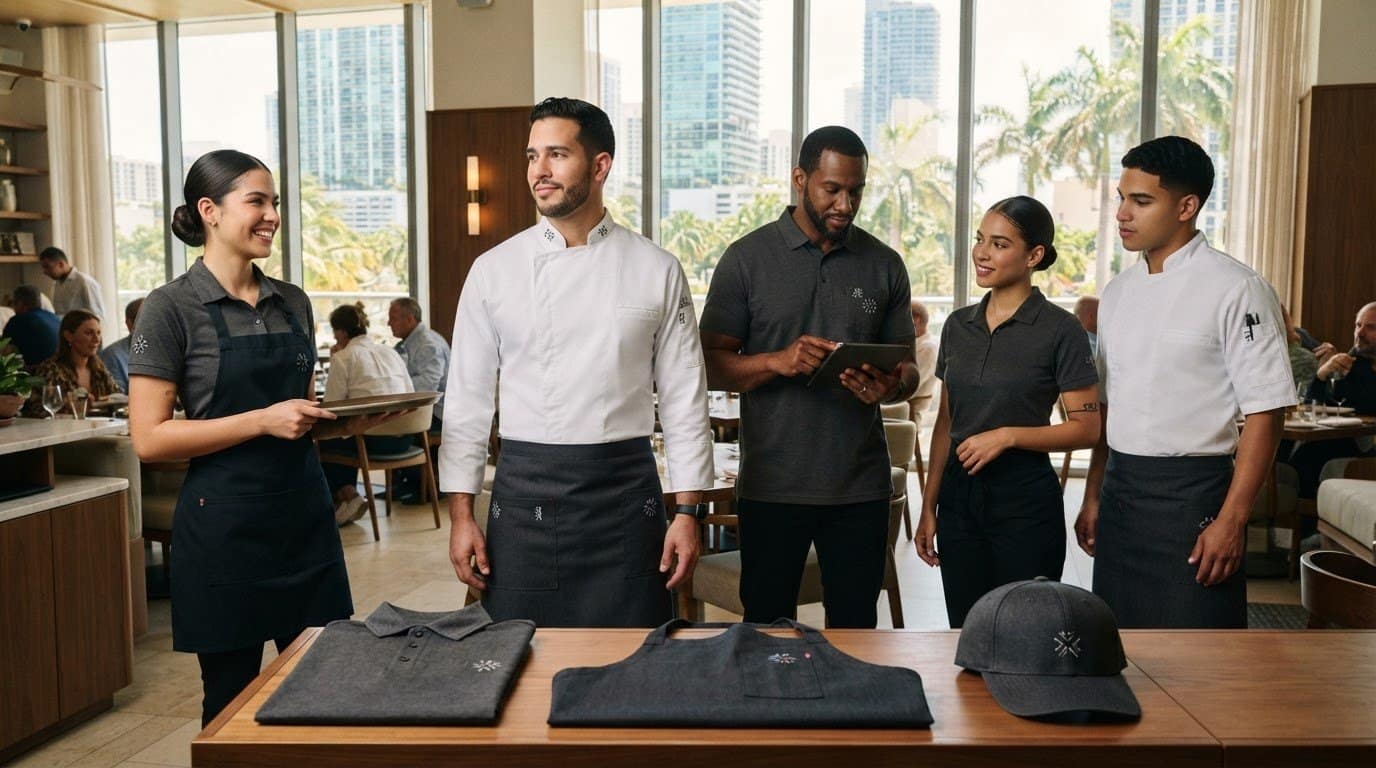
Management and site supervisors require a tailored look without sacrificing comfort. Commercial embroidery provides a permanent, professional aesthetic for moisture-wicking corporate polos. Left-chest placements work best when paired with soft, lightweight backings that prevent abrasive friction against the skin during movement. If you need trade uniforms that balance heat performance with crisp corporate branding, explore options with Miami DTF transfers and uniform printing to match every crew tier.
Durability Standards: Sweat Resistance, UV Rays, and Daily Washing
South Florida worksites subject decorated apparel to intense chemical and physical degradation. Body perspiration contains dissolved salts that crystallize inside garment fibers as moisture evaporates under high temperatures. When combined with direct ultraviolet radiation, these salt crystals act like micro-abrasives against printed adhesives and screen inks. Commercial trade uniforms demand tested durability standards to ensure company logos survive daily wear without flaking, fading, or peeling along the margins.
Workplace sun safety also links directly to the garment weave and print structure. Evaluating the Ultraviolet Protection Factor (UPF) of your workwear helps ensure field crews avoid skin damage while remaining cool. High-grade custom work shirts for Florida heat balance this tight, protective weave with commercial-grade Direct-to-Film adhesive bonds that withstand rigorous exposure throughout the workweek.
Combating Salt Degradation and Sun Bleaching
Roofing, landscaping, and paving crews in Hialeah and Doral face extreme sun exposure that rapidly bleaches standard dyes. Cheap vinyl films turn brittle and lift along fine detail lines because salt crystals compromise inferior glue layers. Industrial-grade DTF transfers utilize UV-stable pigment inks and thermoset polyurethane powders. These bond deep into synthetic threads, resisting color shifting and chemical breakdown caused by continuous perspiration.
Proper Laundering Guidelines for Decorated Technical Apparel
Uniform longevity depends heavily on correct washing protocols. Commercial heat transfers applied at proper temperature settings (typically 300°F to 320°F under medium pressure) achieve permanent mechanical adhesion to synthetic fibers. To maximize shirt life through frequent cycles, follow these production-backed care standards:
- Wash in cold water: High water temperatures degrade elastic bonding resins and shrink performance polyester weaves.
- Skip fabric softeners: Liquid softeners coat technical fibers with chemical residues that clog wicking channels and trap sweat odors permanently.
- Tumble dry low or air dry: Excessive dryer heat weakens print margins; rapid-drying performance synthetics dry naturally in minutes.
- Turn shirts inside out: Shielding external graphics from rough zippers and metal buttons during agitation prevents surface scuffs.
Following these simple handling steps keeps your branded workwear functional and visible across dozens of wash cycles, protecting your uniform investment.
How to Build a Custom Work Shirt Package for Your Trade
Every commercial trade faces distinct job site hazards, which means uniform needs vary across sectors. A roofing contractor requires drastically different gear than an indoor electrical technician. Equipping your crew with custom work shirts for Florida heat requires a deliberate, step-by-step selection framework to ensure worker comfort, regulatory compliance, and brand longevity.
Follow these four steps to structure your trade package efficiently:
- Step 1: Identify job site exposure and regulatory requirements. Determine if your crew needs ANSI-rated high-visibility neon fabrics, flame resistance, or maximum UPF protection from constant direct sun.
- Step 2: Select task-specific garment silhouettes. Choose lightweight crew-neck performance shirts for heavy labor, long-sleeve hooded sun shirts for roofing, or technical moisture-wicking polos for site managers.
- Step 3: Map practical decoration placements. Position logos where safety vests, fall harnesses, or tool belts won’t conceal or abrade the graphic. Upper back, left chest, and forearm placements work best.
- Step 4: Consolidate print designs. Arrange multiple chest, back, and sleeve designs onto space-saving gang sheets to maximize production speed and keep unit costs low.
Construction, Roofing, and Landscaping Configurations
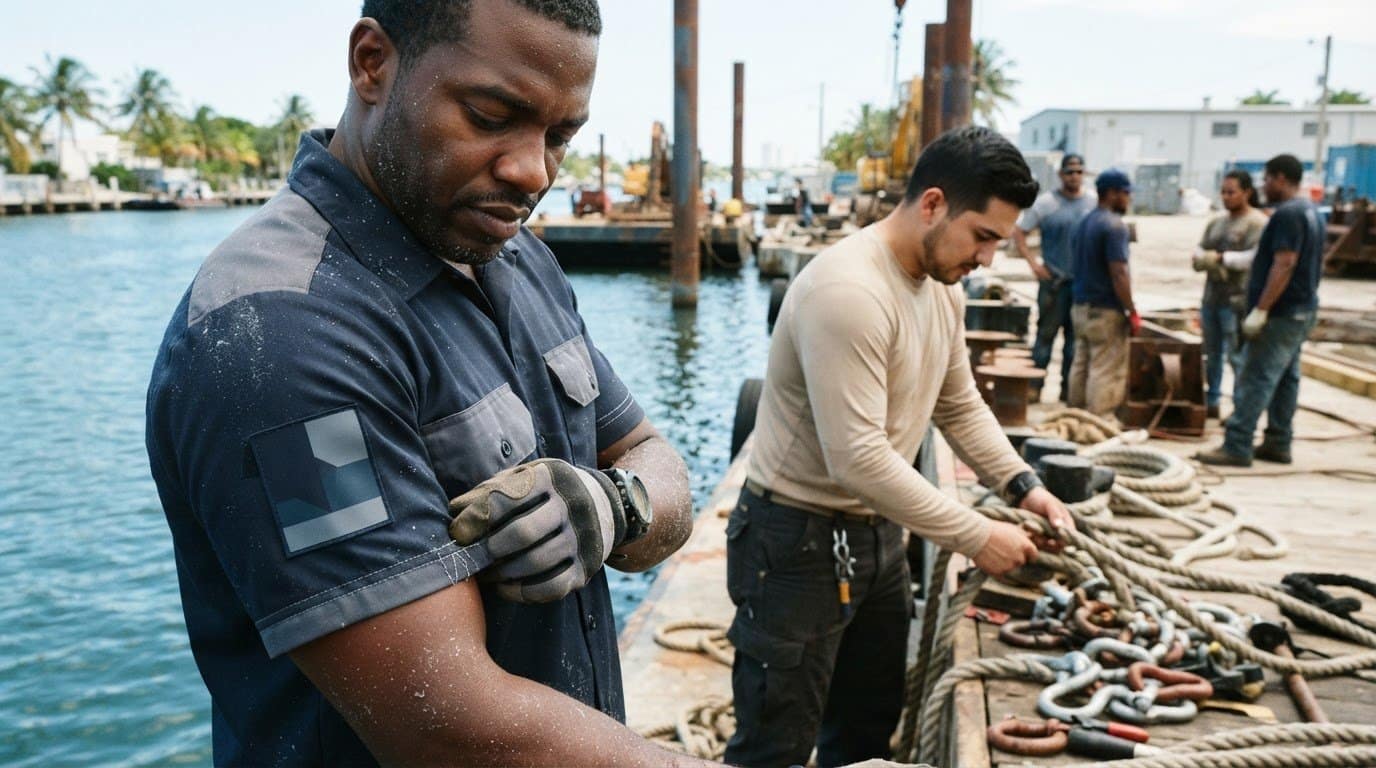
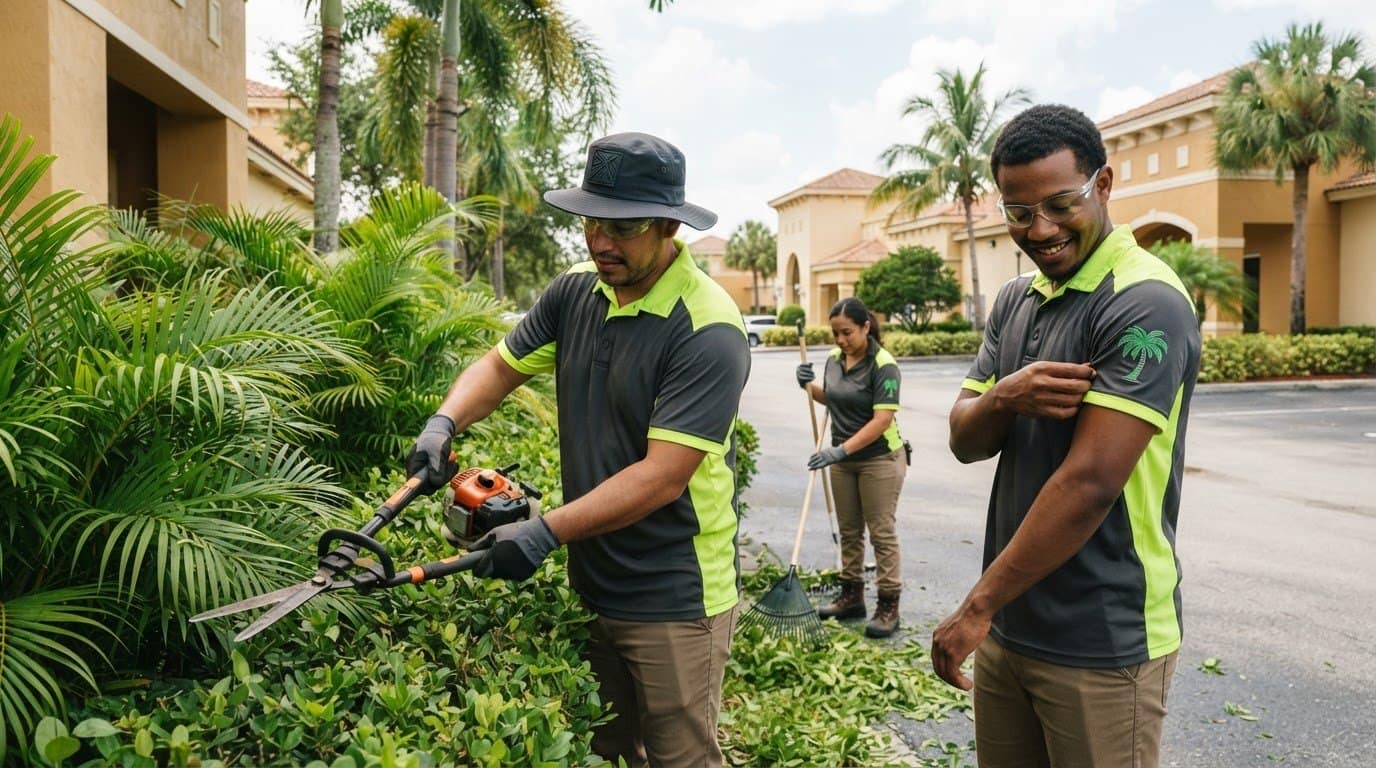
Roofing and landscaping teams face direct solar exposure for eight to ten hours daily. For these trades, lightweight long-sleeve performance sun hoodies with built-in neck coverage provide superior thermal defense compared to short-sleeve tees. When ordering for trade crews across Miami-Dade and Broward, providing clear, bilingual sizing and labeling helps keep el equipo de trabajo organized, compliant, and ready for work.
Marine, HVAC, and Mobile Service Fleet Solutions
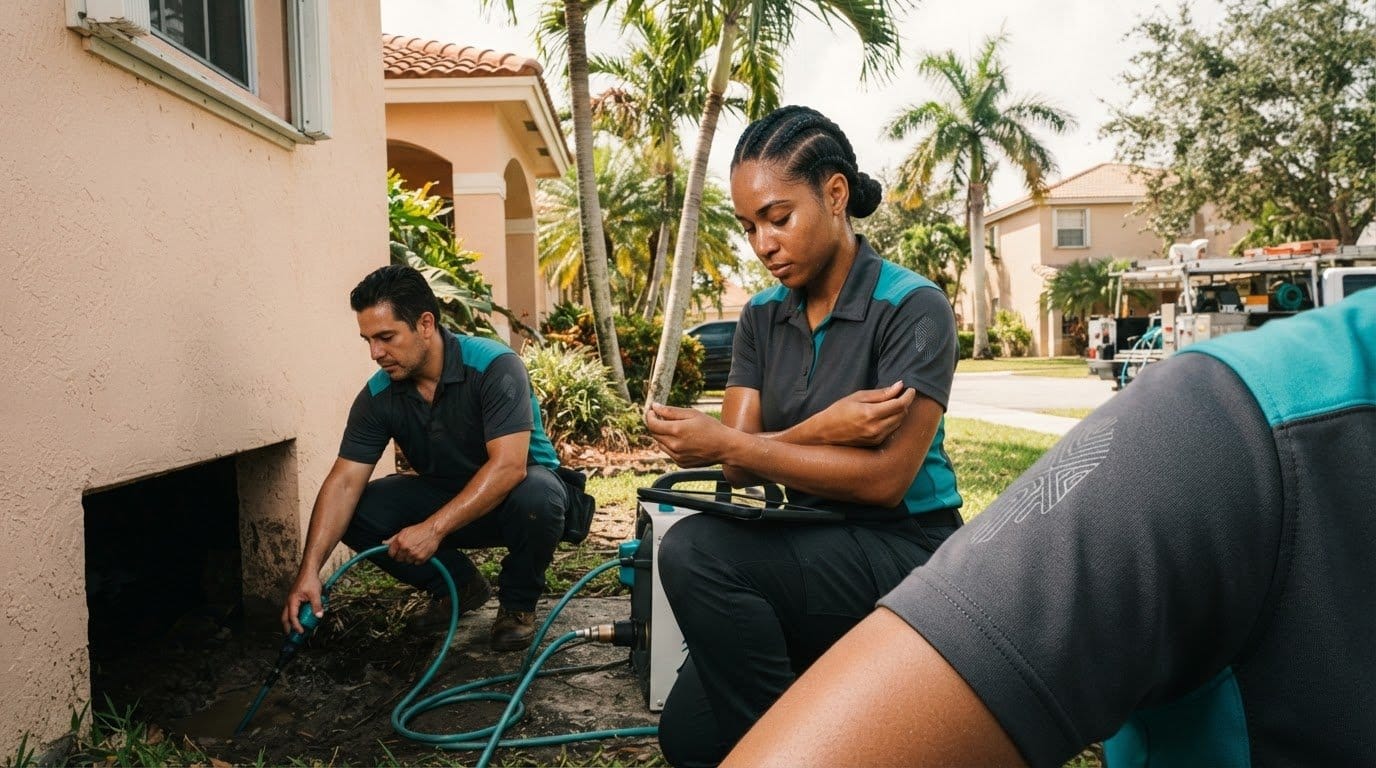
HVAC technicians frequently transition between 130-degree residential attics and air-conditioned vans. This extreme temperature swing demands antimicrobial, odor-resistant synthetic weaves that release moisture immediately. Technicians wearing heavy utility vests need logos placed on the sleeves and high across the shoulders where branding remains clearly visible to homeowners. Secure your crew packages quickly by ordering DTF transfers in Miami for durable, fast-turnaround trade uniforms that stand up to the elements.
Fast Local Custom Uniform Production at Captain Printing in Miami
Waiting weeks for out-of-state apparel shipments disrupts project schedules when you need to onboard crew members immediately. Captain Printing operates an industrial production facility in Opa-locka, delivering finished work apparel directly to Miami-Dade and Broward commercial contractors. When sudden project bids demand compliant, branded uniforms, working with a local shop eliminates transit delays and shipping damage. You get reliable custom work shirts for Florida heat produced with speed and accuracy.
Every commercial order benefits from flexible production parameters designed for active field trades:
- No minimum order quantities: Order a single replacement shirt for a new hire or hundreds for an entire fleet without arbitrary batch thresholds.
- Zero setup fees: Avoid screen burn charges, film costs, and hidden technical setup expenses on your print jobs.
- True same-day turnaround: Submit your production-ready files in the morning and pick up finished gear the same afternoon for urgent site requirements.
- Bilingual support team: Coordinate sizing, placements, and deadlines directly in English or Spanish with experienced shop personnel.
Same-Day Production and Local Walk-In Convenience
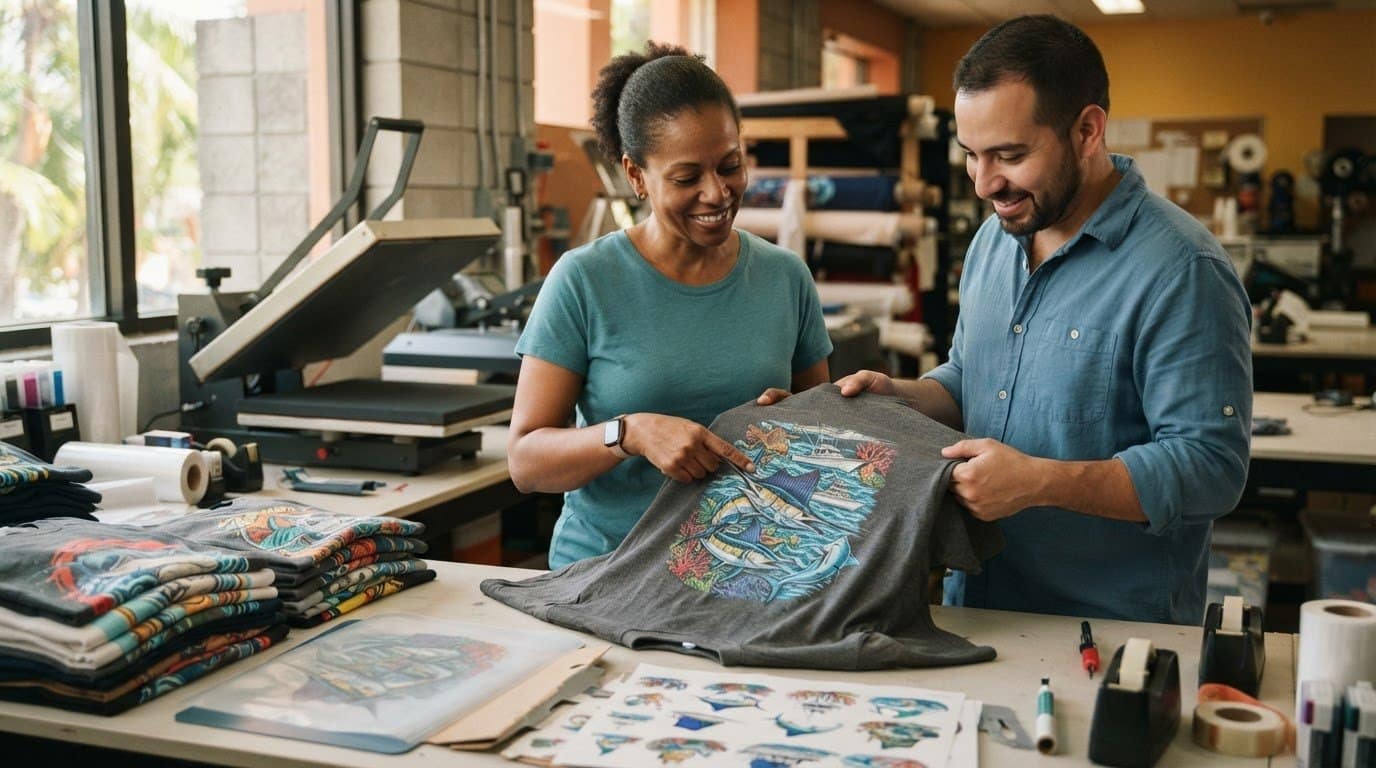
Located at 13680 NW 19th Ave in Opa-locka, our facility provides quick highway access for trade companies based in Hialeah, Doral, Wynwood, and Fort Lauderdale. Local contractors can walk straight to the counter to inspect material weights, review transfer adhesion, and examine physical samples. If you have an unexpected hiring wave, same-day pickup ensures your workers report to the job site properly outfitted.
Ordering Process and Direct Contact Information
Starting a production run is straightforward. Upload your vector graphics or pre-built layouts directly through our digital portal to order custom DTF transfers in Miami for your company apparel. For corporate uniform orders, custom embroidery digitization, or volume fleet quotes, contact our production specialists directly via telephone, WhatsApp, or email for prompt assistance.
Equip Your Field Crews with Heat-Ready Uniforms
Protecting your team from extreme climate stress starts with ditching heavy, sweat-soaked cotton and dense plastisol prints. Pairing lightweight performance polyester weaves with flexible, stretch-resistant Direct-to-Film graphics ensures optimal airflow and all-day comfort on demanding outdoor jobs. Specifying purpose-built custom work shirts for Florida heat keeps your staff safe, compliant with federal heat safety expectations, and visually sharp throughout grueling shifts.
Captain Printing builds durable trade uniforms engineered for South Florida worksites. Operating from our Opa-locka facility, we deliver commercial-grade wash endurance that withstands heavy perspiration, UV rays, and daily laundering. Take advantage of zero setup fees, no minimum order quantities, and true same-day turnaround for urgent hiring needs across Miami-Dade and Broward. Order durable DTF transfers and workwear printing in Miami today to keep your crews cool, productive, and looking professional on every job site.
Phone: +1 (305) 930-4700 | Address: 13680 NW 19th Ave, Unit 1B, Opa-locka, FL 33054 | Email: [email protected]
Frequently Asked Questions
What is the best fabric for custom work shirts in Florida heat?
Lightweight 100 percent polyester microfiber or 3.8 to 4.2 ounce poly-blend fabrics are the most effective options for South Florida jobs. These synthetic knits pull sweat away from the skin through capillary action, evaporating moisture quickly in high relative humidity. Heavy cotton absorbs liquid and stays wet all day. For outdoor crews requiring custom work shirts for Florida heat, choose lightweight performance fabrics that provide sun protection without restricting airflow.
Will DTF transfers make my work shirts feel hot and sweaty?
No, modern Direct-to-Film transfers do not create the thick, rubbery sweat barriers associated with standard plastisol screen printing. DTF uses a micro-thin polyurethane adhesive powder that bonds directly to individual fabric yarns while maintaining lightweight flexibility. The print stretches naturally with the textile without sealing off entire breathability panels. This allows the performance knit to continue venting heat and moving moisture away from the body.
How do custom printed work shirts hold up against heavy sweat and frequent washing?
Commercial DTF prints easily withstand daily sweating, abrasive salt crystallization, and frequent wash cycles when cured properly. Because the thermoset adhesive fuses deep into synthetic and blended yarns, the print resists cracking, fading, and edge peeling. To maximize uniform lifespan across a grueling South Florida summer, wash the garments in cold water, skip liquid fabric softeners that clog moisture-wicking channels, and dry them on low heat.
Can I print custom logos on high-visibility safety shirts for construction crews?
Yes, DTF transfers apply cleanly to ANSI-compliant fluorescent safety yellow, neon lime, and safety orange polyester work shirts. The solid white underbase used in DTF printing blocks neon fabric dye migration, ensuring company logos stay bright and color-accurate. We place graphics strategically on the left chest, upper back, or sleeves to avoid covering retroreflective tape strips, keeping your crew compliant with local worksite safety guidelines across Miami-Dade.
Is custom embroidery better than heat transfer printing for Florida uniforms?
Custom embroidery works best for corporate polos and management apparel, while heat transfers are superior for active field crews working in extreme heat. Heavy embroidered backings and dense thread clusters can feel stiff and abrasive against sweaty skin during intense manual labor. For estimators, project managers, and indoor staff, left-chest embroidery provides an upscale appearance. For technicians wearing custom work shirts for Florida heat, lightweight DTF transfers deliver better airflow.
Are long sleeve performance shirts actually cooler than short sleeve cotton tees in direct sun?
Yes, long-sleeve technical performance shirts keep workers cooler than short-sleeve cotton t-shirts under direct solar radiation. Direct sunlight on bare arms raises skin temperature and accelerates fatigue, while damp cotton traps hot moisture against the torso. A lightweight, UPF-rated long-sleeve polyester shirt blocks infrared radiant heat and direct ultraviolet rays. Simultaneously, the fabric spreads perspiration across a broader surface area for faster evaporative cooling in passing breezes.
What is the turnaround time for custom work shirts in Miami at Captain Printing?
Captain Printing provides genuine same-day turnaround for urgent custom workwear orders from our production facility in Opa-locka. Because we run full in-house commercial printing and embroidery equipment, we don’t rely on third-party shipping brokers. Local businesses in Hialeah, Doral, Wynwood, and throughout Miami-Dade can upload artwork in the morning, inspect physical samples at our counter, and collect completed orders that afternoon with zero setup fees and no minimum order quantities.