Blog
Moisture-Wicking Florida Pest Control Uniforms: 2026 Guide

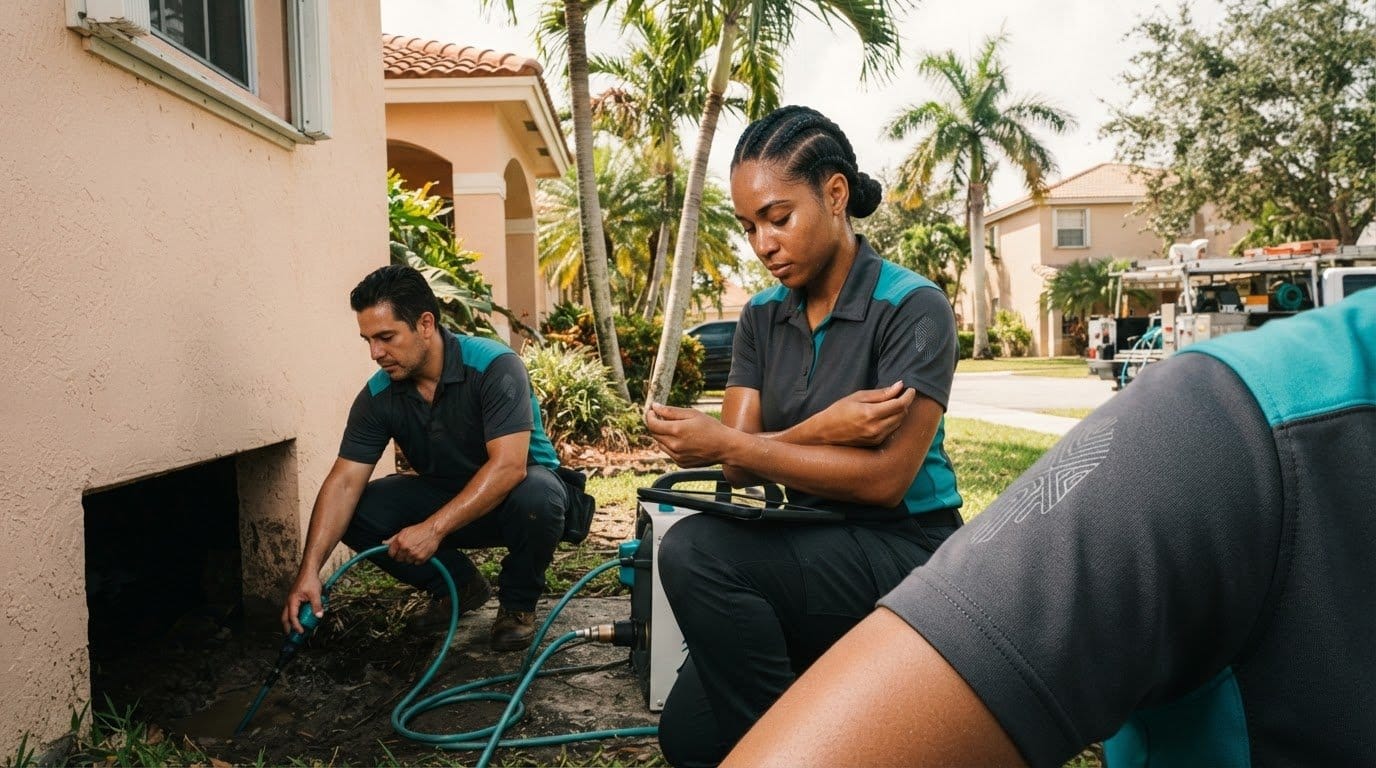
Florida recorded 31,011 heat-related emergency room visits and hospitalizations between 2018 and 2022, and exterminators face those dangerous conditions every day in confined attics and crawlspaces. Investing in moisture-wicking uniforms for florida pest control isn’t just about appearance; it’s a vital operational step to protect your field crew from heat exhaustion. You already know that dense work shirts soak through with sweat, restrict movement, and leave technicians drained before midday.
Your team needs lightweight performance apparel that rapidly pulls moisture away from the skin while handling daily pesticide contact. Unfortunately, traditional decoration methods work against these garments; thick screen prints trap heat like plastic shields, and heavy embroidery backings scratch the chest. Discover the ideal technical fabrics, breathable branding methods, and care protocols required for durable Florida pest control uniforms.
This guide details field-tested synthetic knits, built-in sun protection, and stretchable DTF transfers engineered to survive harsh chemical washing. Learn how to maintain a sharp, compliant fleet across South Florida without sacrificing technician safety or comfort.
Key Takeaways
- Micro-denier synthetic knits leverage capillary action to pull sweat outward, preventing the chafing and heat buildup caused by wet cotton workwear.
- Specifying proper moisture-wicking uniforms for florida pest control requires high-UPF polyester fabrics that endure daily chemical exposure and frequent laundering.
- Stretch-proof DTF transfers preserve fabric breathability and mobility, eliminating the chest irritation and puckering common with dense direct embroidery.
- Calibrating lower application temperatures and firm pressure ensures durable graphic adhesion without scorching heat-sensitive technical blends.
- Sourcing apparel decoration through a local Miami walk-in facility enables same-day fulfillment with zero minimums during peak extermination hiring surges.
Why Standard Workwear Fails Florida Pest Control Technicians
Pest management professionals in South Florida face a brutal working environment. Daily service routes require crawling through tight spaces, spraying exterior perimeters, and climbing into dark rafters. Traditional 100% heavy cotton shirts fail under these conditions. Cotton acts like a sponge; it absorbs perspiration, traps moisture against the skin, and creates severe friction points that cause painful chafing. Modern moisture management in textiles relies on specialized synthetic micro-denier fibers that pull sweat away from the body to speed up surface evaporation. Deploying dedicated moisture-wicking uniforms for florida pest control ensures technicians stay dry, cool, and fully mobile throughout demanding multi-stop schedules.
Beyond comfort, exterminators must maintain a crisp, professional presentation. Technicians represent your brand directly on customer properties, inside commercial kitchens, and across high-end residential estates. When an employee arrives in a saturated, sagging cotton uniform with dark sweat rings, it damages client trust. High-performance moisture-wicking shirts hold their shape, resist wrinkling, and project the competent image required to close pest control renewals.
The South Florida Climate Factor: Heat, Humidity, and Crawlspaces
Relative humidity across Miami-Dade and Broward counties frequently exceeds 70% to 80% year-round. This excessive humidity halts natural sweat evaporation. When a technician enters an unventilated attic in Doral or Hialeah during midsummer, ambient attic temperatures regularly climb past 130°F. Heavy natural fabrics soak completely within minutes. The wet cotton sticks tightly to the torso, restricting airflow, limiting shoulder range of motion, and accelerating severe thermal fatigue.
Chemical Exposure and Frequent Wash Cycles
Daily extermination tasks involve persistent contact with chemical sprays and dilute chemical residues. Saturated natural cellulose fibers trap these liquid solutions, increasing the risk of chemical absorption directly through the skin. In contrast, performance synthetics provide a non-absorbent physical barrier that dries quickly. Keeping service technicians safe and presentable requires durable textiles capable of enduring aggressive laundering:
- Residual chemical buildup: Cellulose fibers hold onto pesticide oils, while synthetic knits release chemical residues easily during wash cycles.
- Heavy detergent stripping: Commercial detergents degrade untreated cotton fibers, causing rapid thinning, collar fraying, and seam failure within months.
- Industrial wash longevity: Selecting engineered moisture-wicking uniforms for florida pest control gives extermination fleets fabric lifespans three times longer than standard trade workwear.
Fabric Engineering: Selecting the Best Moisture-Wicking Blends
Synthetic workwear operates on mechanical capillary action. Fine micro-denier polyester fibers create micro-channels that pull perspiration outward toward the garment surface for fast evaporation. When specifying moisture-wicking uniforms for florida pest control, fabric weight dictates performance in the field. Ultra-light 3.8-ounce jerseys maximize airflow during extreme heat, but they snag easily in tight crawlspaces. Medium-weight 4.5 to 5.5-ounce textured knits provide the puncture resistance needed to survive direct contact with ductwork, crawlspace nails, and coarse outdoor foliage.
Fabric testing labs evaluate these mechanical properties rigorously. Industry standard comfort tests to determine fabric performance measure one-way transport capacity and liquid absorption rates to verify cooling claims. For pest control operators, selecting certified moisture-wicking technical fabrics ensures technicians stay dry without sacrificing garment structure under heavy gear belts.
100% Micro-Polyester vs. Poly-Spandex Blends
Pure 100% micro-polyester offers maximum evaporative cooling and chemical wash stability. It dries rapidly and resists chemical thinning over consecutive wash seasons. Adding 5% to 8% spandex introduces mechanical four-way stretch, giving technicians better mobility when crouching into crawlspaces or kneeling along perimeters. However, spandex retains more moisture than pure polyester. Tight-knit piqué weaves solve this balance by delivering natural mechanical stretch and snag resistance without adding excess moisture-holding elastane.
Solar Defense: UPF 30+ to 50+ Sun Protection
Standard light-colored cotton tees offer a low UPF rating of roughly 5 to 7, which drops closer to 3 when soaked with perspiration. High-performance synthetics maintain protective UPF 30+ to 50+ ratings even under heavy saturation. This tight weave blocks up to 98% of harmful UV radiation during all-day perimeter treatments across Miami, Fort Lauderdale, and Doral. Darker shades absorb more UV rays naturally, but technical workwear incorporates UV-reflective finishes to keep technicians cool under direct sunlight.
Odor Resistance and Antimicrobial Fabric Treatments
Sweat interacting with synthetic polymers creates prime conditions for odor-causing bacteria. To preserve fleet freshness across long summer shifts, prioritize garments engineered with durable antimicrobial finishes:
- Silver-ion technology: Embedded antimicrobial compounds neutralize bacteria directly within the fiber core before odors set.
- Industrial wash retention: Quality antimicrobial finishes withstand commercial detergents without washing out after a dozen cycles.
- Breathable branding: Maintain full garment airflow by pairing technical weaves with flexible DTF transfers in Miami rather than dense embroidery shields that trap heat against the chest.
Decoration Methods: DTF Transfers vs. Custom Embroidery on Performance Fabrics
Branding performance apparel requires careful consideration of how decoration impacts garment breathability and stretch. Direct embroidery remains popular for corporate wear, but dense needle penetration creates severe structural problems on lightweight polyester under 4 ounces. Every puncture weakens delicate synthetic micro-yarns, causing visible puckering around the design perimeter. In contrast, polyurethane-based film used in DTF transfers in Miami bonds directly to the fabric face. This enables lightweight moisture-wicking uniforms for florida pest control to retain full four-way elasticity across active side panels and shoulder zones without cracking.
Field comfort directly impacts productivity and safety. When working exterior perimeters under high heat indexes, complying with OSHA’s heat safety recommendations means keeping technicians as cool and unrestricted as possible. Traditional direct embroidery relies on stiff cutaway backings that trap moisture over the chest. That rough, damp stabilizer rubs against the skin with every step, creating severe friction burns over an eight-hour route.
Why Direct-to-Film (DTF) Excels on Modern Synthetics
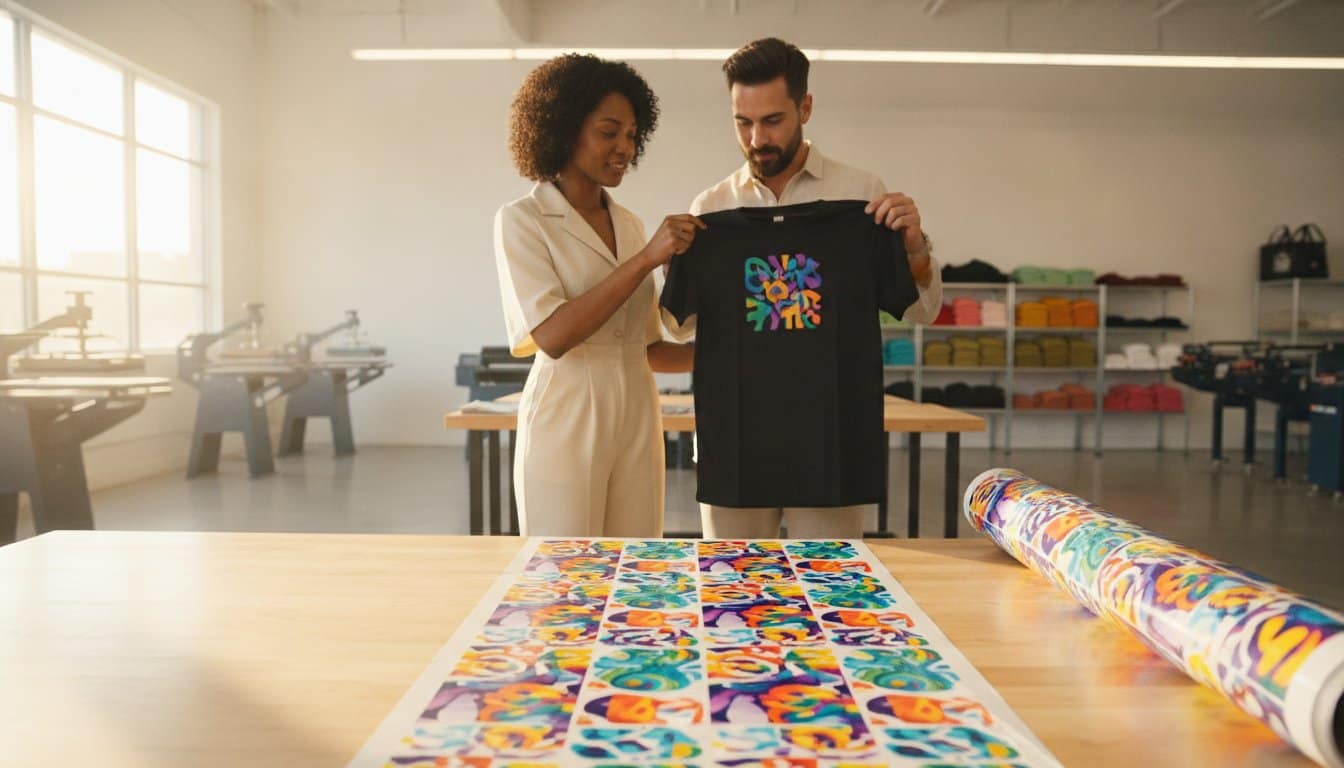
Direct-to-film technology uses fine-grain hot-melt adhesive powder that fuses at lower temperatures without burning delicate synthetic knits. The ultra-thin film layer stretches and rebounds with the movement of the shirt instead of forming an impermeable plastic plate. You can also reproduce crisp micro-text, regulatory license numbers, and detailed company mascots with clean clarity. Pest control operations can maximize production speed by combining chest logos, sleeve emblems, and large full-back graphics onto efficient gang sheet options for rapid uniform batching.
When Custom Embroidery Remains the Professional Choice
Traditional embroidery still serves an important function on structured workwear over 5.5 ounces, such as heavy outerwear jackets, hats, and collared twill button-downs. To prevent chest irritation, print technicians must use ultra-soft poly-mesh backing instead of rigid industrial stabilizers. A proven fleet standard pairs professional custom embroidery on hats and heavy collar tips with flexible DTF graphics across the upper chest and back.
Dye Migration and Bleed-Through Prevention
Decorating colored polyester presents a chemical challenge known as dye migration. Dispersed dyes inside synthetic fabrics convert into gas under high heat, bleeding into white inks and turning sharp graphics dull pink or gray. Selecting premium decoration prevents this breakdown entirely:
- Low-bleed blockout layers: Premium DTF films incorporate active carbon or anti-migration backing layers that halt dye sublimation on dark navy, charcoal, and red performance shirts.
- Superior elasticity: Standard plastisol screen prints split and peel when stretched over active athletic panels, while flexible film flexes without tearing.
- Chemical resilience: Heat-fused polyurethane resists cracking even after persistent exposure to commercial extermination laundry detergents.
Technical Heat Application and Maintenance Protocols
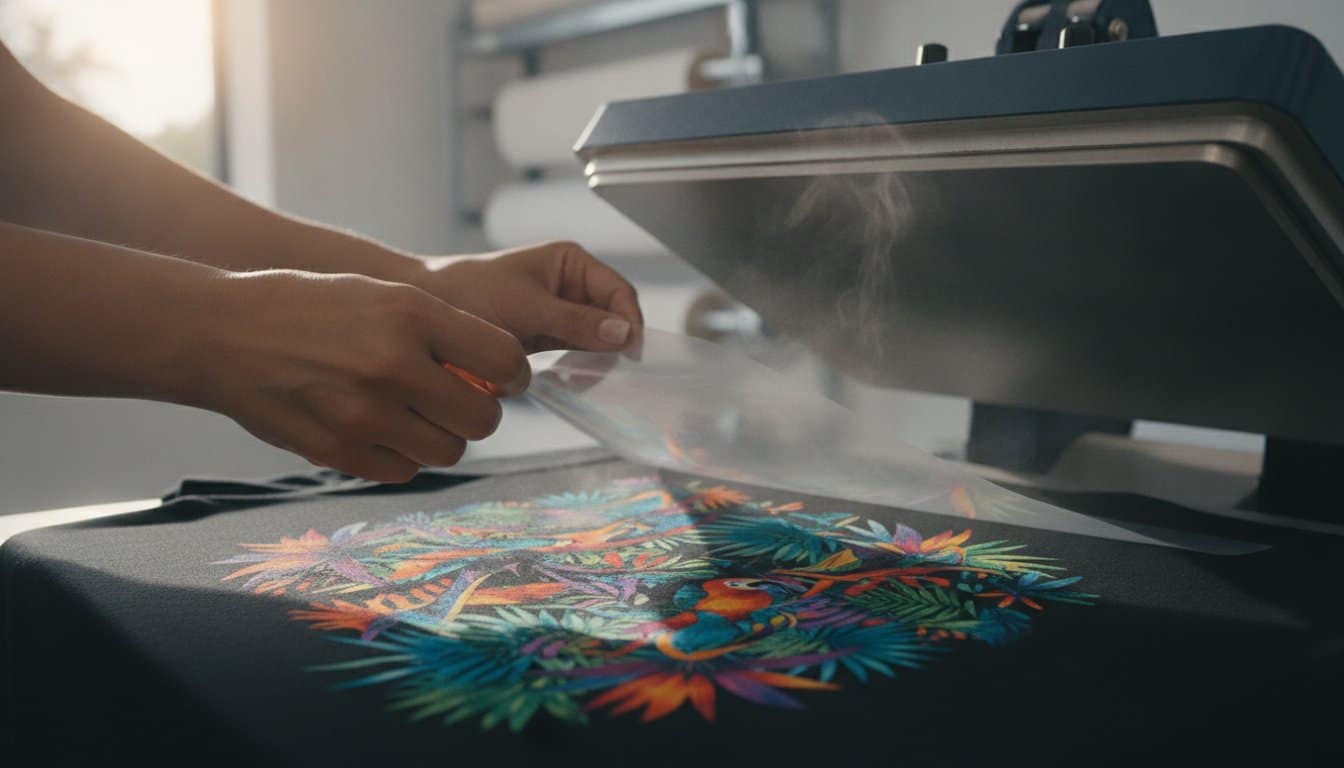
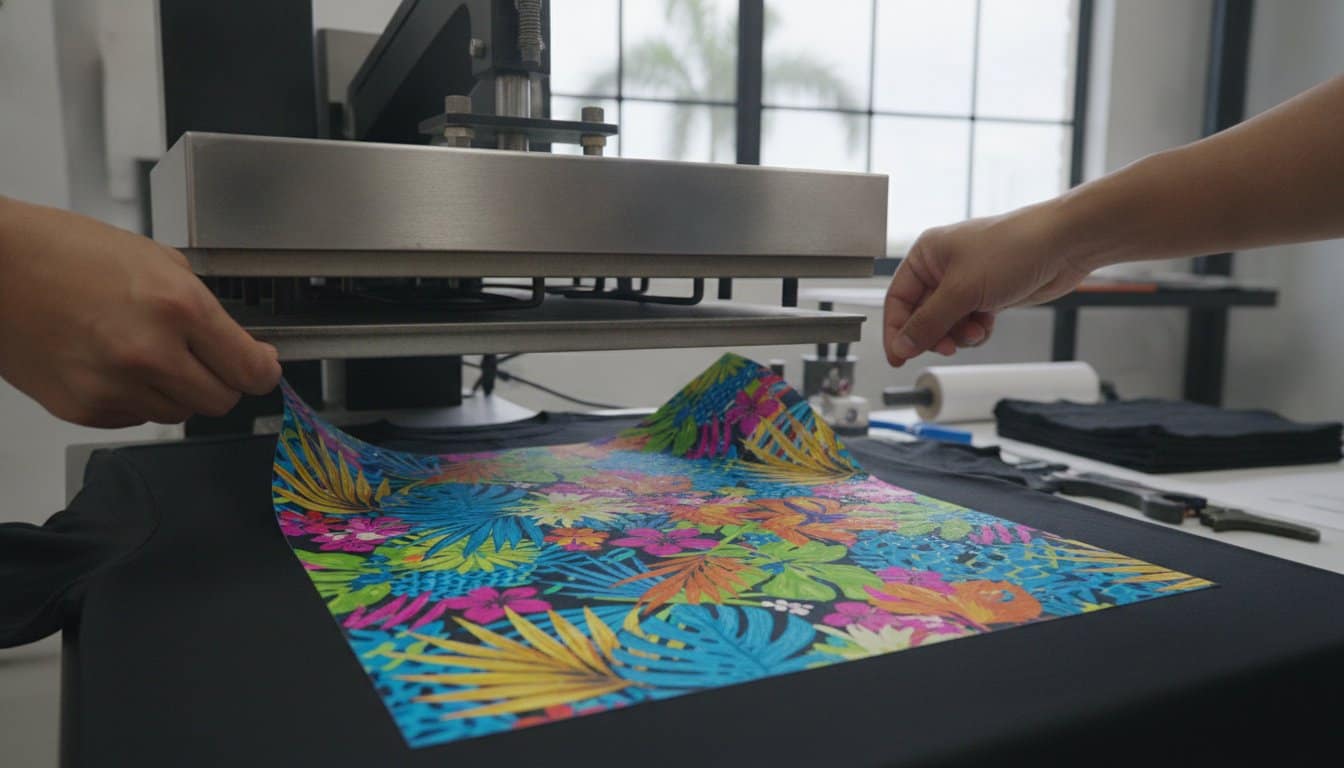
Decorating temperature-sensitive synthetics demands precise mechanical parameters. Standard cotton press settings scorch polyester fibers instantly, leaving permanent shiny press marks across chest panels. Successfully applying transfers to moisture-wicking uniforms for florida pest control requires calibrated heat presses, lower temperature thresholds, and specific dwell times. When pressing textured moisture-wicking weaves, medium-to-firm mechanical pressure forces the melted adhesive powder directly between micro-denier yarns instead of allowing it to sit loosely on the surface.
Peel mechanics are equally critical for edge durability. Rushing the peel on warm polyester stretches the graphic edges, creating microscopic liftoff points that peel after initial wash cycles. Allow the transfer to cool completely to room temperature before removing the carrier film. This ensures clean, sharp logo lines across active flex zones.
Heat Press Settings for 100% Polyester and Poly-Blends
Follow these exact production variables to bond graphics securely without glazing synthetic weaves:
- Application temperature: Calibrate your heat press between 275°F and 290°F. Never exceed 300°F on lightweight polyester.
- Pneumatic pressure: Maintain 40 to 50 PSI (medium-firm manual pressure) to drive the hot-melt adhesive deep into the textile channels.
- Dwell time: Press the initial transfer for 10 to 12 seconds, then remove the garment from the platen to cool.
- Finishing press: After cold-peeling the film, cover the bare print with a silicone protective sheet and press for 5 seconds. This locks the transfer flush into the fabric grain and removes synthetic sheen.
If you prefer ready-to-press graphics for in-house uniform production, order custom DTF transfers in Miami engineered specifically for low-temperature synthetic application.
Laundering Rules for Pest Control Fleet Managers
Fleet longevity depends on strict washing protocols. Chemical extermination washes can degrade transfers if care instructions are ignored:
- Turn garments inside out: Shielding the graphic face from friction against zippers, buttons, and machine agitators prevents micro-abrasions.
- Wash cold or warm: Use cold or warm water cycles paired with mild detergents to lift residual pest chemicals without weakening heat-activated adhesives.
- Ban all fabric softeners: Liquid fabric softeners and dryer sheets coat synthetic yarns in waxy silicone layers. This clogs capillary micro-channels, destroying the garment’s natural wicking ability.
- Tumble dry low: Dry garments on low heat settings or line dry. High commercial dryer temperatures cause adhesive fatigue and premature edge peeling.
Sourcing Custom Florida Pest Control Uniforms with Local Production
National uniform portals fail service fleets during seasonal operational spikes. When summer subterranean termite swarms peak across South Florida, waiting three weeks for a distant decorator leaves new technicians sidelined. Securing moisture-wicking uniforms for florida pest control through an agile regional provider eliminates shipping delays and keeps your service routes fully staffed. Direct in-house production allows managers to order finished apparel or press-ready graphics on demand, ensuring every team member represents your business professionally from day one.
Operational agility requires rapid production capacity without unnecessary billing friction. Contract decorators often add digitizing charges, artwork fees, and high minimum thresholds that penalize growing fleets. Partnering with a dedicated facility lets you bypass these overhead expenses completely:
- Zero minimum order requirements: Decorate a single replacement shirt for an emergency hire or outfit thirty technicians without volume penalties.
- Transparent billing: Work with clear, upfront production costs that eliminate hidden screen fees, setup charges, or reorder minimums.
- Direct graphic access: Source ready-to-press graphics via DTF transfers Miami to brand workwear on your schedule using standard shop heat presses.
Fast Fleet Turnaround: Eliminating Minimums and Setup Fees
Holding unassigned uniform stock ties up operating capital. With on-demand manufacturing, you print apparel as new personnel pass background checks and field training. For extermination companies scaling routes throughout Doral, Wynwood, and Hialeah, genuine same-day turnaround prevents route downtime. You can quickly add branded performance polos to your commercial fleet right when seasonal demand spikes.
In-House Physical Support in South Florida
Evaluating technical apparel requires checking fabric weight, stretch resistance, and collar structure in person. Operating near your decorator provides distinct logistics advantages over distant web vendors:
- Walk-in production access: Stop by a physical shop in Opa-locka to inspect print quality, compare tactile synthetic finishes, and confirm correct sizing.
- Bilingual service: Communicate directly with account representatives fluent in English and Spanish; nuestro equipo está listo para ayudar with immediate technical support.
- Same-day local dispatch: Pick up completed orders directly at the production floor or arrange expedited regional dispatch throughout Miami-Dade, Broward, and Fort Lauderdale.
Reliable regional decoration keeps your fleet compliant, comfortable, and presentable without production delays. Contact a local production specialist today to outfit your field team with high-performance moisture-wicking uniforms for florida pest control built to withstand South Florida heat.
Equip Your Pest Control Fleet for Peak Florida Performance
Upgrading to synthetic performance workwear protects your field technicians from severe heat stress while maintaining a sharp brand image across customer properties. Pairing lightweight micro-denier knits with flexible film graphics prevents dense backing materials from trapping perspiration or chafing skin during humid crawlspace inspections.
Specifying durable moisture-wicking uniforms for florida pest control keeps your routes running safely and efficiently. At our physical walk-in shop in Opa-locka, we provide commercial same-day in-house printing with zero minimum order requirements and no setup fees. We produce high-stretch transfers engineered specifically for technical polyester workwear, ensuring your logos endure heavy chemical washing without peeling or cracking.
Ready to upgrade your field team? Order your high-durability DTF transfers today for fast local production and dependable route onboarding.
Phone: +1 (305) 930-4700 | Address: 13680 NW 19th Ave, Unit 1B, Opa-locka, FL 33054 | Email: [email protected]
Frequently Asked Questions
Can you apply DTF transfers to 100% polyester moisture-wicking work shirts?
Yes, direct-to-film transfers bond securely to 100% polyester performance shirts. The process uses specialized low-melt polyurethane powder that fuses cleanly without damaging synthetic fibers. Unlike old plastisol prints that suffocate the fabric, DTF film flexes with active technical knits. This makes it an ideal decoration choice for moisture-wicking uniforms for florida pest control, ensuring logos don’t crack when technicians stretch or bend.
Will insect repellent or pesticides dissolve custom uniform logos?
Routine contact with diluted field pesticides will not break down cured DTF transfers or polyester threads. However, concentrated chemical active ingredients and high-DEET repellents act as harsh plasticizers if sprayed directly onto printed film. Instruct technicians to spray repellents on skin or outer extremities before dressing, or apply aerosol sprays away from custom uniform logos to avoid chemical softening and print degradation over time.
Why does heavy embroidery cause issues on lightweight performance polos?
High-stitch direct embroidery pierces thin synthetic fabrics repeatedly, creating tension that puckers light micro-denier jersey shirts. Additionally, the thick tearaway or cutaway stabilizing backing stays trapped behind the design. In South Florida humidity, this backing acts as a damp sponge directly against the technician’s chest. It blocks airflow, traps sweat against bare skin, and causes painful friction rash during long, active extermination routes.
What temperature should you use when pressing transfers onto polyester uniforms?
Set your heat press between 275°F and 290°F when decorating synthetic performance workwear. Pressing at standard cotton temperatures above 300°F will glaze, melt, or permanently scorch heat-sensitive polyester yarns. Apply medium-firm pneumatic pressure between 40 and 50 PSI for 10 to 12 seconds. Always allow the garment to cool down completely before peeling the film to keep fine edges crisp and prevent distortion.
Why are fabric softeners banned when washing moisture-wicking uniforms?
Fabric softeners and dryer sheets leave a waxy silicone coating over synthetic fibers. This chemical film clogs the micro-channels that power capillary moisture management, preventing sweat from escaping outward to evaporate. The garment then retains body heat and odor-causing bacteria just like wet cotton. Wash performance workwear with standard commercial detergents alone, using cold or warm water cycles to maintain open, breathable fibers.
What is the best uniform color for pest control technicians in Florida?
Light gray, sand, and light khaki are optimal uniform colors for Florida exterminators. Light shades reflect intense solar radiation during exterior perimeter treatments, keeping field staff cooler than dark navy or black apparel. Neutral earth tones also hide attic dust, insulation fibers, and drywall powder picked up during interior crawlspace inspections, ensuring technicians maintain a clean, professional look throughout their shifts.
Can I order custom moisture-wicking uniforms with no minimum order requirements?
Yes, you can order customized moisture-wicking uniforms for florida pest control without minimum quantity restrictions. At Captain Printing in Opa-locka, we decorate single garments for new hires or full fleets for expanding routes with zero setup fees. Local businesses can visit our walk-in shop near Hialeah and Doral to review fabric samples in person or request genuine same-day DTF printing for immediate route deployment.