Blog
Durable Construction Uniforms in Miami: Buying Guide

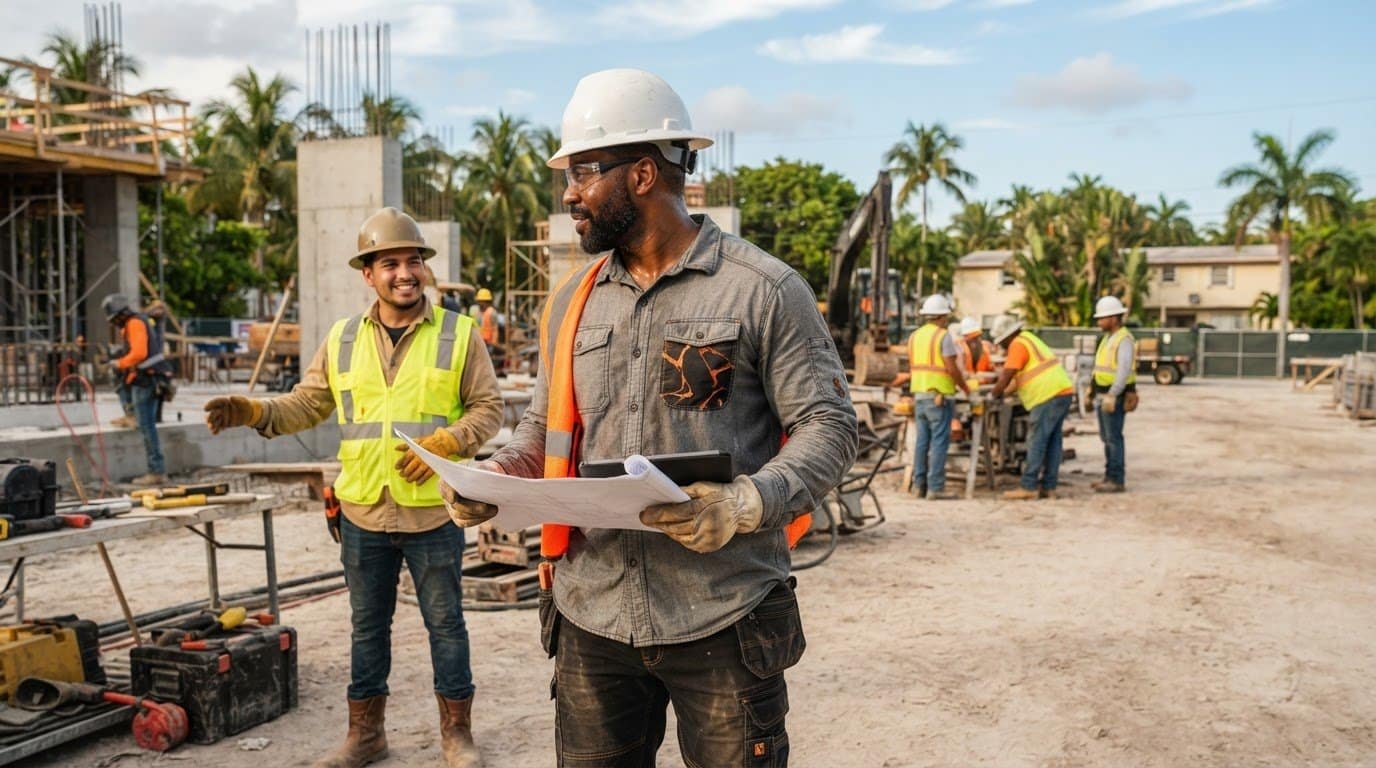
The toughest-looking uniform isn’t always the right one for a Miami job site. Durable work uniforms for construction miami crews should fit the tasks, weather, and expected wear while keeping the team’s appearance consistent.
Heat, humidity, sun, and rain make fabric choice a practical decision, not just a matter of appearance. Cotton, polyester-cotton blends, and performance fabrics have different characteristics, and each garment’s construction and care instructions matter. Logo decoration matters too: embroidery and DTF printing suit different artwork and garment needs.
This guide compares common workwear fabrics, useful garment features, and DTF versus embroidery for crew logos. Use the role-by-role steps to select garments and organize a finished, decorated construction apparel order in Miami. The goal is workwear that suits the crew’s tasks and represents the company professionally.
Key Takeaways
- Match each crew’s uniform to its tasks, comfort needs, coverage, and job-site conditions in Miami.
- Compare garments by fit, movement, coverage, and the care instructions on each garment’s label.
- Choose embroidery or DTF based on the logo artwork, placement, garment, and intended use. Neither method alone guarantees uniform durability.
- Use a role-by-role plan to select durable work uniforms for construction miami crews and keep their branding consistent.
- Captain Printing provides finished, decorated construction apparel from its shop at 13680 NW 19th Ave Unit 1B, Opa-locka, FL 33054.
What Should Miami Construction Teams Look for in Durable Work Uniforms?
Assess job tasks, comfort, garment construction, visibility needs, and branding before choosing uniforms. A program for durable work uniforms for construction miami crews should distinguish everyday company apparel from garments selected for a specific protective purpose. No single shirt or uniform suits every role or site condition.
Miami-area crews work through heat, humidity, strong sun, and sudden rain. Consider how much time employees spend outdoors, how freely they need to move, and whether their clothing gets wet or soiled during a shift. Review garment labels and documentation for material, care, and any stated protective properties. Don’t assume a uniform is protective or compliant based on its appearance alone.
Which construction jobs affect uniform requirements?
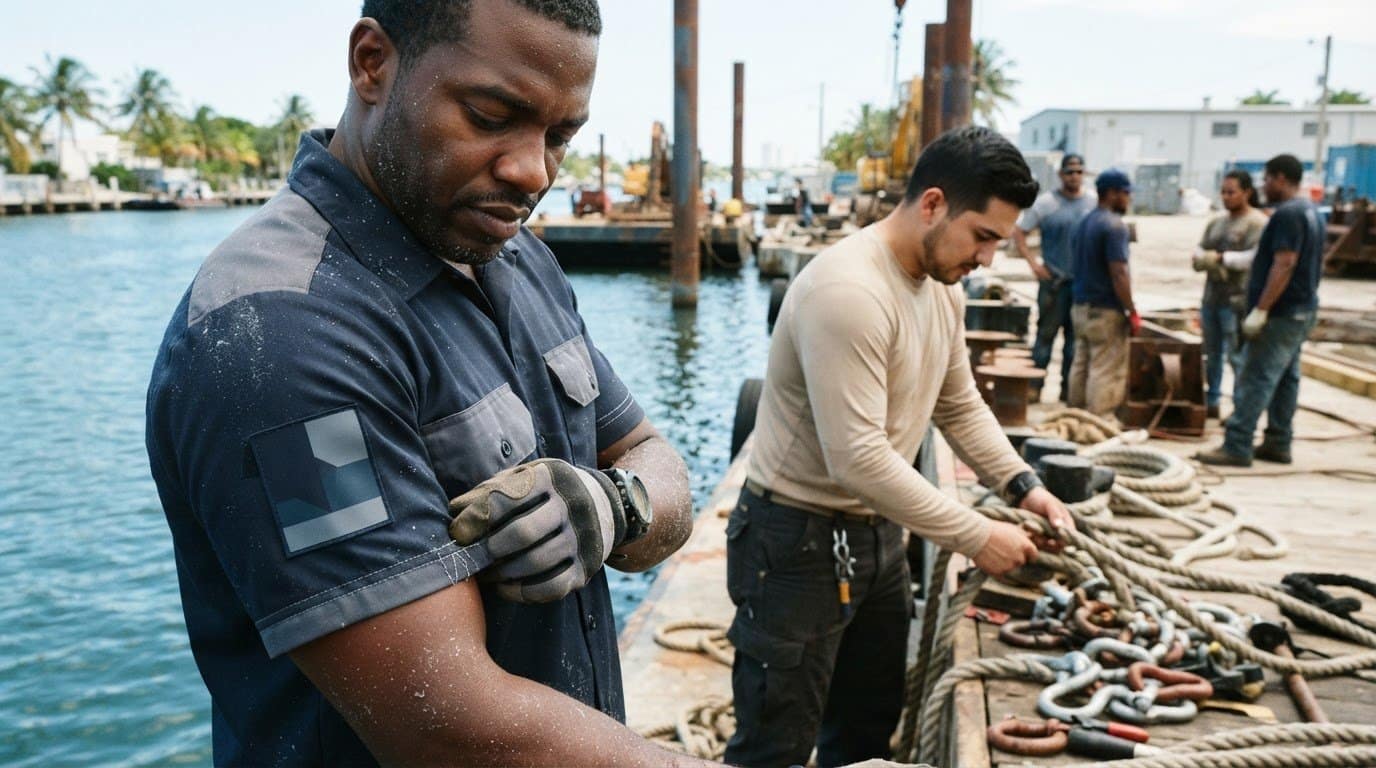
Indoor finishing work may call for clothing that allows reach and precise movement without interfering with tools or materials. Outdoor crews may need different coverage for changing weather and extended sun exposure. Site supervisors often move between work areas and meetings, while equipment operators may prioritize a fit that stays clear of controls and moving parts.
Check sleeve length, pocket placement, closures, and fit against the actual tasks. Loose fabric or poorly positioned pockets may be inconvenient around tools and equipment. These are practical garment-selection considerations, not proof that a garment meets a safety standard.
How should Miami weather factor into workwear?
For hot, humid shifts, consider garments that feel comfortable and allow the movement the job requires. Sun exposure and rain should inform decisions about coverage and when a garment is appropriate for use. Fabric names alone don’t establish how a specific garment performs. Use the garment’s documentation and care label to guide selection and maintenance.
Keep everyday branded uniforms separate from required protective apparel. The Personal Protective Equipment (PPE) overview explains the general purpose of equipment selected to protect workers from hazards. Employers must match any required protective or high-visibility apparel to the worksite, its hazards, and applicable rules. Don’t treat a company logo, color, or ordinary work shirt as a substitute for specified protective gear.
Once garment needs are clear, plan the branding method around the apparel and logo artwork. Captain Printing provides finished custom apparel and decoration services for Miami construction companies. For crews using DTF apparel decoration, review DTF transfers in Miami as one option for applying a company logo.
Which Fabrics and Garment Features Help Construction Uniforms Hold Up?
Choose fabric and garment style by role, fit, expected use, and care instructions. Cotton, polyester, and blended fabrics are material categories, not guarantees of comfort, abrasion resistance, or service life. For durable work uniforms for construction miami crews, review the specification and care label for each garment before placing a program-wide order.
How do cotton, polyester, and blended fabrics differ?
Fiber content helps identify what a garment is made from, but it doesn’t tell the whole performance story. Fabric weight, construction, seams, fit, and care requirements also affect how a garment works for a particular crew. Compare those details on the garment documentation rather than assuming every cotton shirt or polyester blend will wear the same way.
Follow the care label for washing and drying. Don’t apply one wash setting across different garments unless their care instructions support it. Repeated care using the wrong method can affect appearance and fit, so include label review when selecting shirts, outer layers, and work pants.
Which garment features matter on an active jobsite?
Check fit, seam placement, pocket access, sleeve coverage, closures, and freedom of movement against the work being done. A pocket useful for a supervisor may interfere with a worker’s tool belt. Sleeves that suit outdoor coverage may be inconvenient for a task requiring close hand movement. Test garment choices against actual work motions.
Use high-visibility or protective apparel based on its stated specifications and the worksite’s needs, not color or appearance alone. Employers can review OSHA construction PPE standards when determining applicable protective equipment requirements. A standard company uniform should not be treated as a substitute for required PPE.
| Garment type | Coverage | Movement considerations | Possible work context |
|---|---|---|---|
| Work shirt | Light, upper-body coverage | Check sleeve length and fit during reaching | Indoor finishing or general crew wear |
| Polo | Upper-body coverage with a collared profile | Check collar, seams, and range of motion | Site supervision or customer-facing duties |
| Hoodie or outer layer | Additional coverage | Check bulk and whether it limits task movement | Layering when conditions call for it |
| Work pants | Lower-body coverage | Assess fit, pocket access, and movement | Field tasks that require frequent bending or kneeling |
Quick rule: Garment suitability depends on the task, fit, material specification, and care requirements. Match each item to the worker’s role, then decorate it to support consistent crew branding. For apparel logos, review DTF apparel decoration in Miami as one option for finished custom workwear.
DTF Printing or Embroidery: Which Logo Method Suits Construction Uniforms?
Choose DTF printing or embroidery based on the logo artwork, garment placement, intended use, and the garment’s material and care instructions. Neither method alone guarantees uniform durability. The decoration has to suit the apparel and the work it will see.
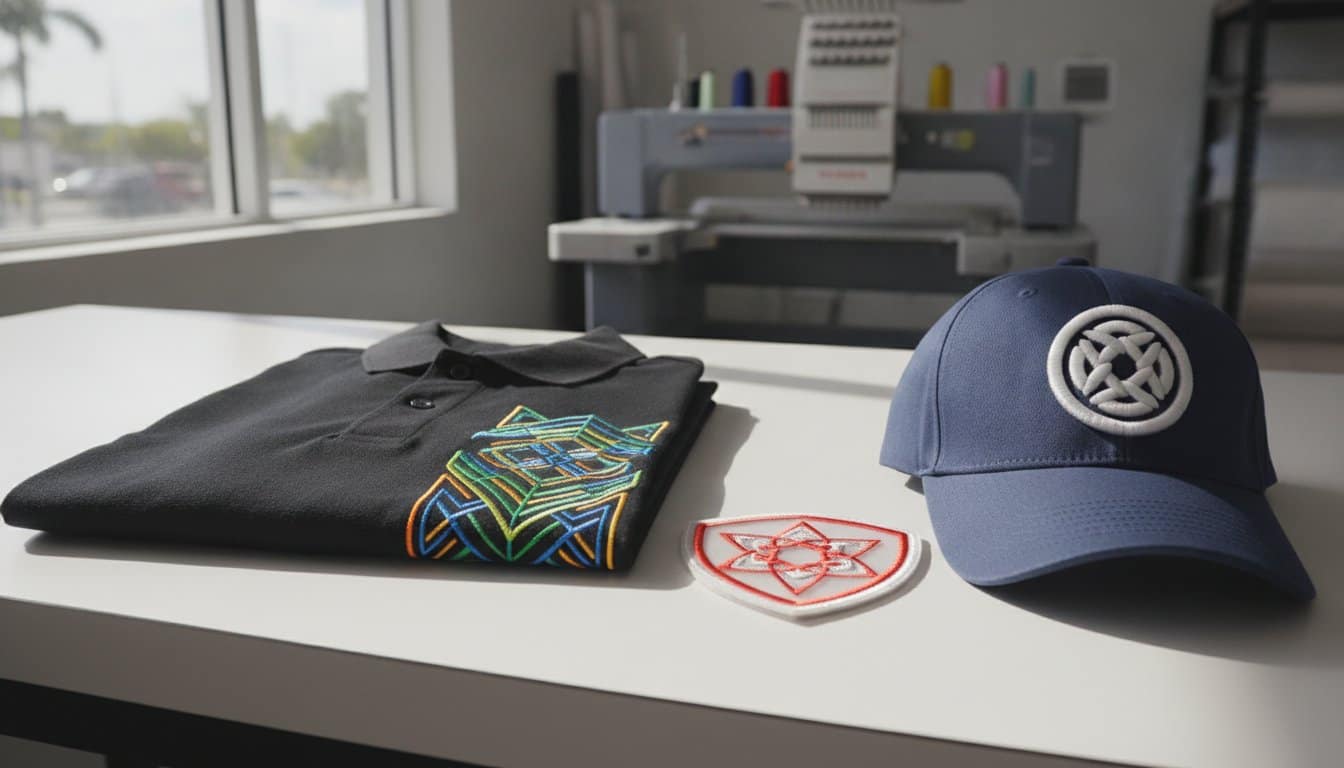
DTF applies printed artwork to apparel; embroidery forms the logo with stitches. That difference affects the look and design details each method can reproduce. For durable work uniforms for construction miami crews, compare the decoration with the garment specification rather than relying on a general claim about wash life.
| Decision factor | DTF printing | Embroidery |
|---|---|---|
| Artwork | Useful for printed logo artwork with detailed or multicolor elements | Works well for designs suited to stitched detail and thread |
| Appearance | Printed surface design | Raised, stitched appearance |
| Placement | Consider the available garment area and its surface | Consider logo size, seams, and the garment area that can be stitched |
| Best fit | Printed artwork where visual detail is a priority | Business apparel where a stitched logo suits the garment and design |
When is DTF printing a practical choice for workwear?
DTF is an apparel decoration method for applying printed logo artwork. It can suit designs with multiple colors or fine visual detail, provided the selected garment and its care instructions align with the decoration. A gang sheet groups multiple submitted designs for production, which can help organize a set of crew logos or placements. See the DTF transfers guide for more on the process.
When can embroidery fit a construction uniform?
Embroidery creates branding with stitches and is commonly used on business apparel. Consider logo size, placement, seam location, and design simplicity before choosing it. Small text or intricate artwork may need adjustment to work as stitching. For more background, consult the guide titled Custom Stitching in Miami: Professional Embroidery for Business Apparel.
Material and care matter for both methods. Review the garment’s care label and decoration guidance before setting a uniform program; avoid assuming that one method will last longer in every use case. Required protective apparel is a separate decision from logo decoration. Employers can consult OSHA standards for construction PPE when reviewing applicable worksite requirements.
For Miami crews comparing printed logos on finished workwear, explore DTF apparel decoration in Miami.
How Can You Choose Construction Uniforms for a Miami Crew?
Build the order around crew roles, work conditions, and coverage needs, then standardize garment choices and branding by role. This process helps Miami construction businesses select durable work uniforms for construction miami teams without treating every employee’s job as the same.
- Group workers by role. Separate field crews, equipment operators, finishing teams, and site supervisors. Note the tasks, tools, and movement each role requires.
- Define work conditions and coverage. Record indoor or outdoor work, sun and rain exposure, and any separately specified protective clothing. Keep routine branded apparel distinct from required PPE.
- Select garment types. Choose shirts, polos, outer layers, or work pants according to task, fit, and coverage. Review garment specifications and care labels before finalizing each choice.
- Set logo details. Collect approved logo files and decide placement and decoration method by garment and role. Keep the same choices for equivalent positions across locations.
- Organize the order record. List crew counts, role groups, garment types, logo files, placement preferences, and care details. Use consistent group names to make repeat orders easier to manage.
| Garment type | Role example | Logo method to consider | Care-label review |
|---|---|---|---|
| Work shirt | Field crew or finishing team | DTF for printed artwork; embroidery for a suitable stitched logo | Check fabric content and decoration-care guidance |
| Polo | Site supervisor or customer-facing staff | Consider embroidery for a compact business logo or DTF for printed artwork | Follow the garment’s washing and drying instructions |
| Hoodie or outer layer | Workers needing an additional layer | Choose by artwork, placement area, and garment construction | Review care instructions for the specific item |
| Work pants | Field roles requiring lower-body coverage | Keep branding secondary to garment function and placement | Use the label’s stated care method |
How can a team keep uniforms consistent across locations?
Set a shared standard for garment colors, logo placement, and decoration method by role. Store approved artwork, garment names, and care-label details with the order record. This gives the team a clear reference when organizing future orders. For bilingual crew coordination, label the uniform plan in English and Spanish, including “construction uniforms” and “uniformes de construcción.”
Captain Printing serves Miami-area businesses with finished custom apparel and decoration services, including construction company uniforms. To add printed branding to crew apparel, order DTF transfers for uniform logos.
Where Can Miami Businesses Order Decorated Construction Uniforms?
Miami construction companies can order finished custom apparel and decoration services from Captain Printing, a local provider with a physical shop and in-house production at 13680 NW 19th Ave Unit 1B, Opa-locka, FL 33054. The company provides construction company uniforms, custom embroidery, and DTF decoration for apparel.
For businesses sourcing durable work uniforms for construction miami crews, keep the apparel order and logo-decoration decision connected. Select garments by crew role, then match the logo method and placement to each garment. Treat protective clothing as a separate specification-led decision, not an assumption based on the uniform or its decoration.
What happens when a construction company prepares an order?
Organize the details before submitting the order. Provide garment types and quantities by crew group, the logo artwork, preferred decoration method, and placement for each item. For example, list shirts for field employees separately from polos for supervisors if the styles or logo locations differ.
Captain Printing decorates finished apparel with DTF printing or custom embroidery. DTF suits printed artwork, while embroidery creates a stitched logo. Material, artwork detail, placement, and garment care instructions help guide the choice. The Miami service page explains DTF transfers in Miami for apparel decoration.
How should buyers prepare artwork and plan repeat orders?
Submit clear logo artwork and identify the intended location on each garment. Group the order by role, garment type, and decoration choice so production instructions stay easy to follow. Keep the final artwork, placement notes, garment names, and care details together for reference.
Use the same approved colors, logo placement, and decoration method for equivalent roles across repeat orders. This record helps maintain a consistent crew appearance as the program grows or teams change. Captain Printing serves Miami-area businesses from its Opa-locka shop for construction apparel orders.
For printed logo decoration on finished construction apparel, start your Miami DTF transfer order.
Build a Uniform Program That Fits the Crew
Start with the work. Match garment type, fit, material, and care requirements to each crew role and Miami job-site conditions. Then choose DTF printing or embroidery based on the logo artwork, placement, and intended use. A decoration method alone can’t guarantee uniform durability.
Captain Printing provides construction company uniforms and custom apparel decoration from its physical shop at 13680 NW 19th Ave Unit 1B, Opa-locka, FL 33054, with in-house production. Keep garment choices, approved logo files, and placement notes organized to support consistent repeat orders.
Ready to add printed branding to your construction apparel? Order Miami DTF transfers for branded construction apparel from Captain Printing in Opa-locka.
Phone: +1 (305) 930-4700 | Address: 13680 NW 19th Ave, Unit 1B, Opa-locka, FL 33054 | Email: [email protected]
Frequently Asked Questions
What makes a work uniform durable enough for construction?
Durability depends on garment construction, material, fit, task exposure, care, and how often the uniform is worn. Review the garment specification and care label rather than relying on fiber names alone. A shirt used for indoor finishing may face different demands than clothing worn outdoors or around equipment. Keep ordinary branded apparel separate from protective clothing, which must match job requirements. Avoid assuming a fixed lifespan or wash count without product-specific evidence.
Which fabric is best for construction uniforms in Miami?
No single fabric is best for every crew or task. Compare cotton, polyester, and blends using each garment’s stated fiber content, fit, care instructions, and intended use. Miami’s heat, humidity, sun, and rain should inform decisions about comfort and coverage. Don’t infer breathability, moisture performance, or durability from fiber content alone. Check the garment documentation for relevant properties, then select items suited to employees’ actual work conditions.
Is DTF printing durable enough for construction work uniforms?
DTF is a method for applying printed artwork to apparel, and its performance depends on the garment, decoration, application, and care. It can suit detailed or multicolor crew logos, but don’t assume a particular wash life without product-specific evidence. Follow the finished garment’s care instructions. Choose DTF or another decoration method based on the artwork, intended placement, apparel material, and the uniform’s expected use on the job.
Should construction uniforms use embroidery or DTF printing?
Choose the method that fits the logo artwork, garment, placement, and preferred appearance. Embroidery creates branding with stitches, while DTF applies printed artwork to apparel. Consider both alongside the garment’s material and care instructions. First identify the garments assigned to each crew role. Then compare how the design and placement work with the garment and the team’s regular use, rather than assuming one decoration method is right for every uniform.
Can a Miami construction company order custom uniforms locally?
Yes. Captain Printing serves Miami-area businesses from its physical shop at 13680 NW 19th Ave Unit 1B, Opa-locka, FL 33054, with in-house production. The company provides finished custom apparel and decoration services, including construction company uniforms, DTF transfers, and custom embroidery. Prepare crew garment needs, logo artwork, and placement preferences before ordering. For printed logo decoration, order Miami DTF transfers for construction apparel.