Blog
How to Choose Durable Uniforms for Marine Construction Crews

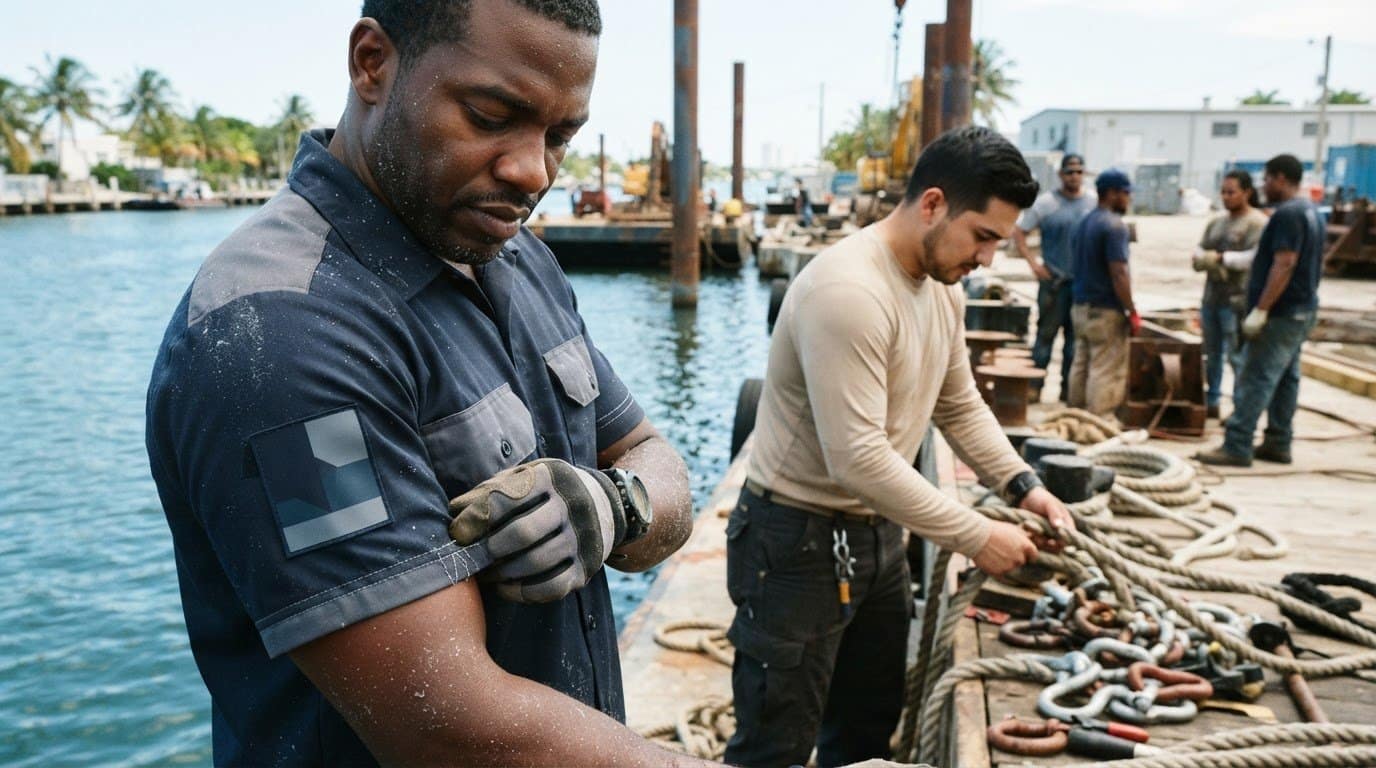
What makes a marine construction uniform hold up: the garment, the logo, or how well both match the work? Choosing durable uniforms for marine construction starts with the crew’s actual tasks and exposure, not a one-style-fits-all order. Sun, spray, repeated movement, and contact with equipment all affect what workers need from their apparel.
Uniforms can wear quickly on demanding outdoor jobsites, and a logo that doesn’t suit the garment material can undermine an otherwise practical choice. Make garment performance and decoration separate decisions. First assess fit, movement, intended use, and care needs; then choose branding that suits the selected garment.
This guide provides a job-based checklist for comparing uniform needs, selecting practical apparel, and matching company branding to suitable garments. It explains when custom embroidery or DTF transfers may suit a logo and what to review before choosing. Miami-area construction companies can order finished uniforms and apparel decoration from Captain Printing at 13680 NW 19th Ave Unit 1B, Opa-locka, FL 33054. For a look at apparel decoration, see Miami.
Key Takeaways
- Choose durable uniforms for marine construction by matching garment needs to crew roles, wear patterns, and care routines.
- Compare workwear for fit, movement, layering, cleaning, and intended use before placing an order.
- Match embroidery or DTF transfers to the garment and logo design. Decoration choice alone doesn’t establish garment performance.
- Organize the order by role, confirm sizes, finalize artwork and logo placement, then review the proof.
- Miami-area crews can order finished uniforms with custom embroidery or DTF transfers from Captain Printing’s Opa-locka shop.
What Makes Marine Construction Uniforms Durable on Miami-Area Jobsites?
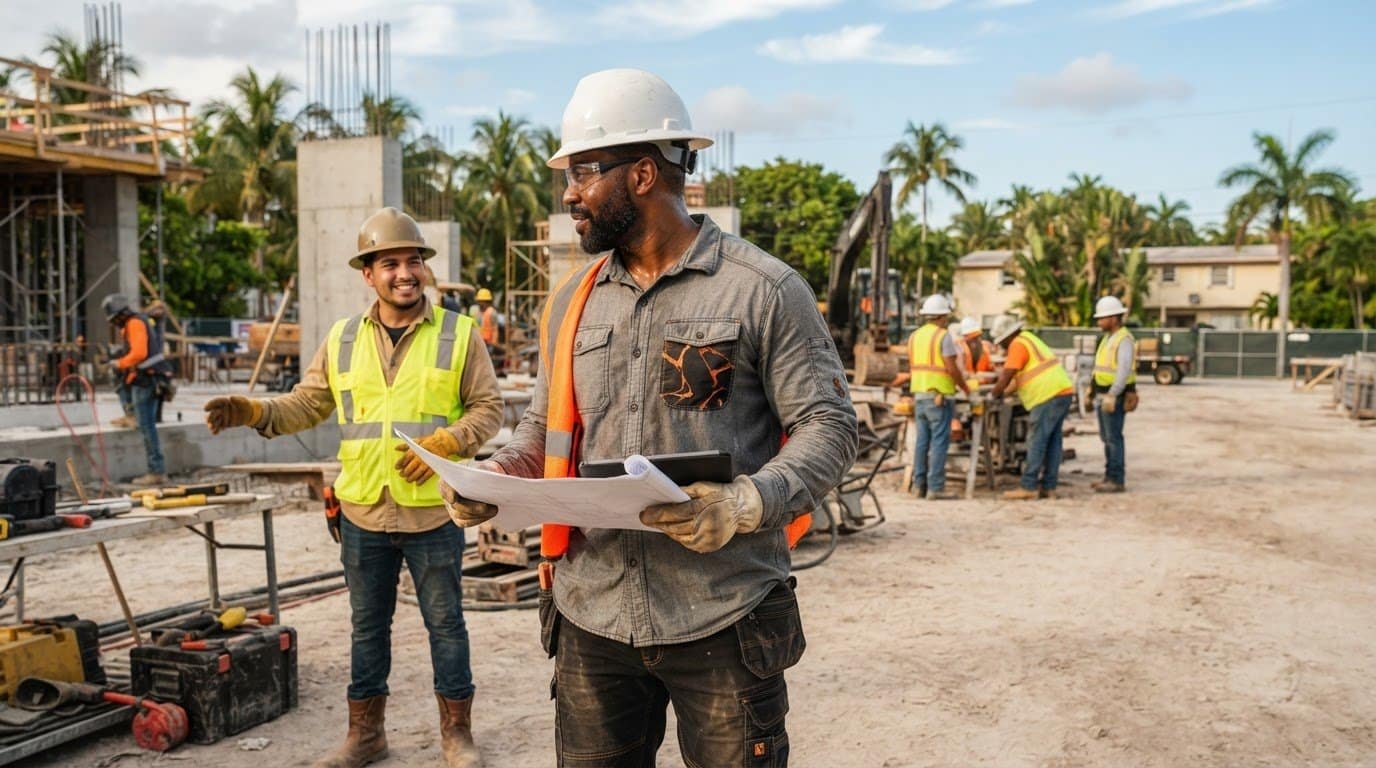
Durable uniforms for marine construction are garments selected for the work crews perform, the wear they experience, and the way uniforms are cared for. Durability isn’t a single fabric claim. A crew member moving equipment through a work area may need different apparel from a supervisor who divides time between site visits and office duties.
Start with the job, not a single style for everyone. Separate ordinary workwear from task-specific protective equipment (PPE). A uniform can identify a team and support day-to-day work, but it shouldn’t be treated as protective equipment unless it’s selected for that purpose. For a general overview of Personal protective equipment (PPE), consider how protective items address particular workplace hazards.
Which jobsite conditions should buyers assess first?
Map each crew’s regular tasks and exposure before comparing garments. Record where clothing may encounter:
- Water, spray, or frequent wet conditions.
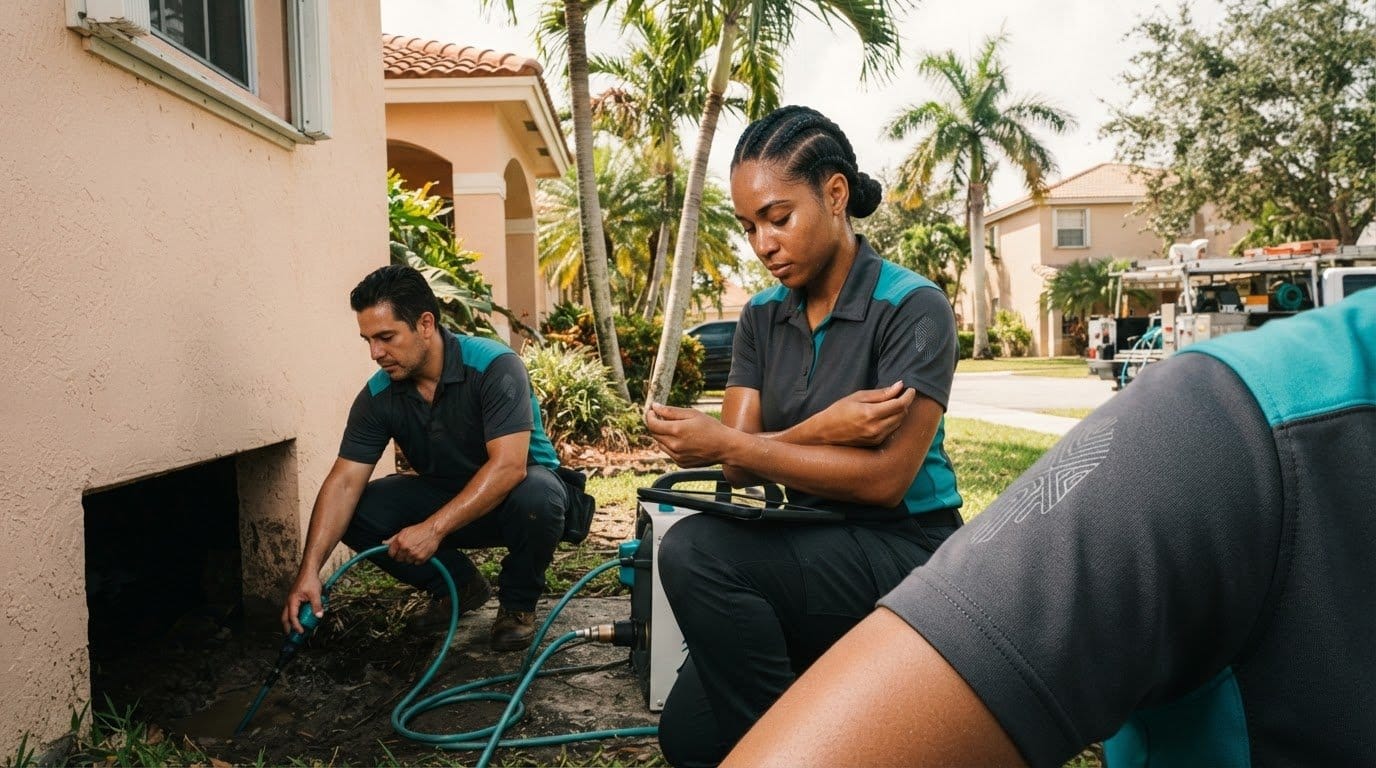
- Direct sun and Miami-area heat and humidity.
- Dirt, rough surfaces, or repeated contact that may cause abrasion.
- Frequent reaching, bending, climbing, or other repeated movement.
Use these as assessment prompts, not assumptions about what a garment can withstand. South Florida’s heat and humidity are practical planning considerations, but they don’t guarantee that any particular material will keep a worker cool or dry. Include routine washing and care practices in the review, since they affect how the crew will use the garments. Companies in Opa-locka, Hialeah, and Doral can use the same task-based assessment before ordering finished uniforms.
How do crew roles change uniform requirements?
Different duties create different requirements. Document the workday for each role before choosing garments or adding decoration.
- Field crews: Record movement, equipment contact, and exposure to water, sun, and dirt.
- Equipment operators: Consider the movements and layers required while operating equipment.
- Supervisors: Note time spent moving between active work areas and meetings.
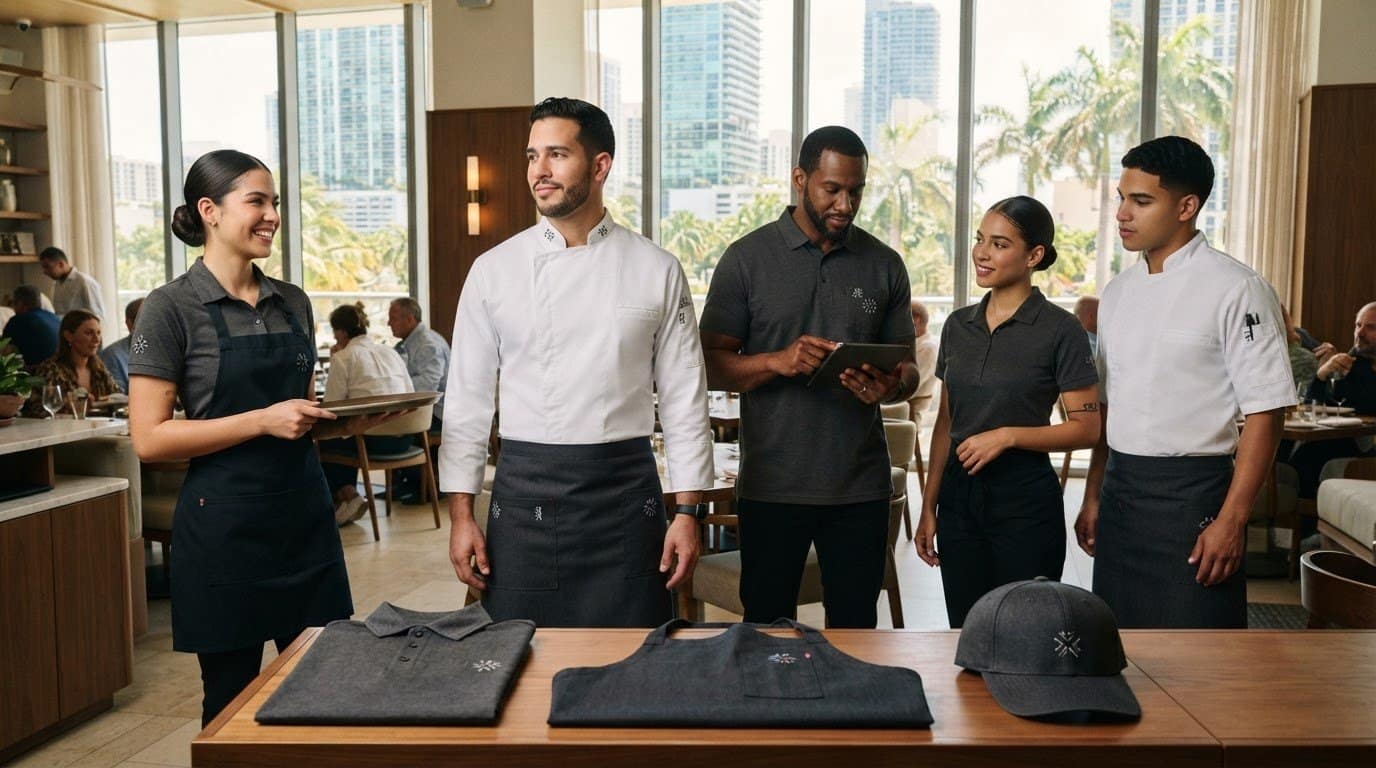
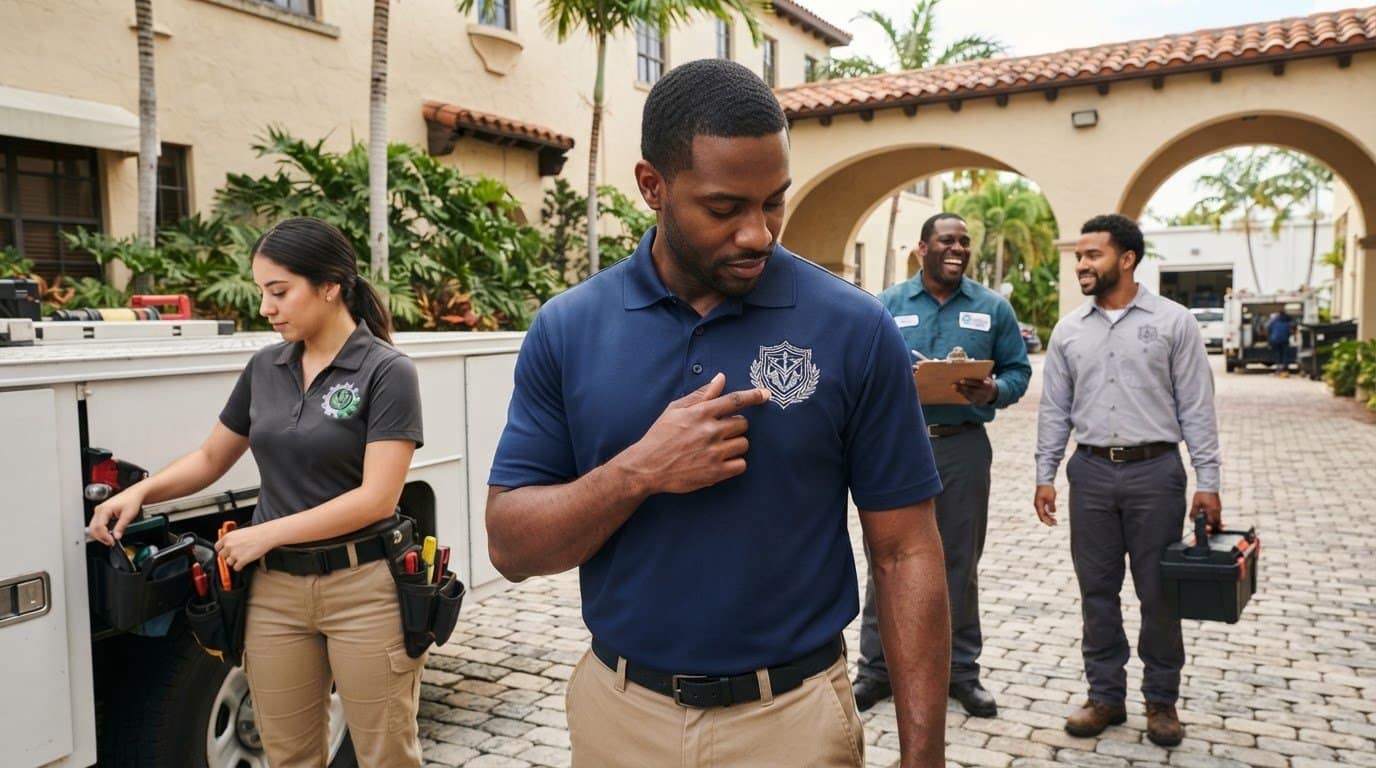
- Client-facing staff: Consider identification, a consistent appearance, and the settings where they meet clients.
Visibility, mobility, and layering needs can vary across these roles. Keep garment selection separate from logo selection: custom embroidery and DTF transfers can brand suitable apparel, but decoration doesn’t establish protective properties. Captain Printing provides finished uniforms and apparel decoration for Miami-area businesses. For apparel branding details, see DTF transfers in Miami.
How Should You Choose Marine Construction Workwear?
Use a documented selection process rather than ordering one garment for every crew member. Durable uniforms for marine construction depend on matching each garment to the work, fit preferences, care routine, and approved protective equipment requirements. Keep uniform purchasing separate from PPE decisions, and use the relevant safety requirements for working over water to inform site safety planning.
What should a marine construction uniform checklist include?
Build the order around the people who will wear it. Record each role’s tasks, expected wear, sizing and layering preferences, replacement planning, and branding needs. For every garment under consideration, compare its product information and care documentation with the crew’s requirements. The table is a starting point, not a claim that any garment has specific protective properties.
| Garment type | Task fit | Care notes | Questions to verify |
|---|---|---|---|
| Work shirt | Consider roles that need upper-body coverage and frequent arm movement. | Follow the garment’s care label and product documentation. | Does the fit allow the movements and layers needed for the task? |
| Trousers | Assess duties involving walking, bending, or repeated movement. | Check cleaning instructions and any stated care limits. | Do the fit and construction suit the wearer’s daily movements? |
| Coveralls | Evaluate whether a one-piece garment suits the role and work routine. | Review the full care instructions before setting a crew laundry routine. | How does the garment fit over planned layers and during work movements? |
How can teams evaluate fit and everyday usability?
Review a sample before placing a team-sized order. Have representative crew members try it while performing familiar job movements, such as reaching, bending, or climbing. Inspect the closures, pockets, seams, and fit of the specific garment. Features vary, so verify each detail in the garment documentation instead of assuming it comes standard.
Use this sequence to make the decision consistent:
- 1. Audit tasks: Group crew members by role and record routine work conditions.
- 2. Set requirements: Note fit, movement, layering, intended use, and care needs for each role.
- 3. Compare options: Review garment details and care documentation against the checklist.
- 4. Review a sample: Assess fit and usability before finalizing quantities.
- 5. Plan branding: Confirm logo placement and decoration suitability for the selected garment. See DTF transfers for apparel decoration as one branding option.
This process helps Miami construction companies make role-based choices without treating uniforms as substitutes for required PPE. For a team order, record the final garment and care details alongside each role so replacements can follow the same criteria.
Which Uniform Branding Holds Up: DTF Transfers or Embroidery?
Choose branding based on the garment, logo artwork, and how the uniform will be used. Embroidery creates a stitched logo, while a DTF transfer applies printed artwork to suitable apparel. Neither method makes a garment durable by itself. For durable uniforms for marine construction, evaluate the clothing and decoration together, and don’t assume a wash life or performance level without garment-specific and application details.
Keep safety decisions separate from branding. A logo does not establish that a garment meets a jobsite requirement. For projects with specific safety standards, consult the applicable project documentation and relevant references, including the US Army Corps of Engineers safety standards.
When might embroidery suit a uniform logo?
Custom embroidery is an option for branding business clothing and uniforms. It can suit a simple logo when a stitched appearance fits the team’s preferred look. Plan the logo size and placement around the garment’s shape and the intended viewing distance. Fine design details may need careful review at the proposed size, so assess the artwork and garment together before finalizing the order.
For more on business apparel decoration, see Custom Stitching in Miami: Professional Embroidery for Business Apparel (2026). Treat the garment’s material, construction, care instructions, and intended use as part of the decision. Don’t assume embroidery performs the same way across different garments.
When might a DTF transfer suit branded workwear?
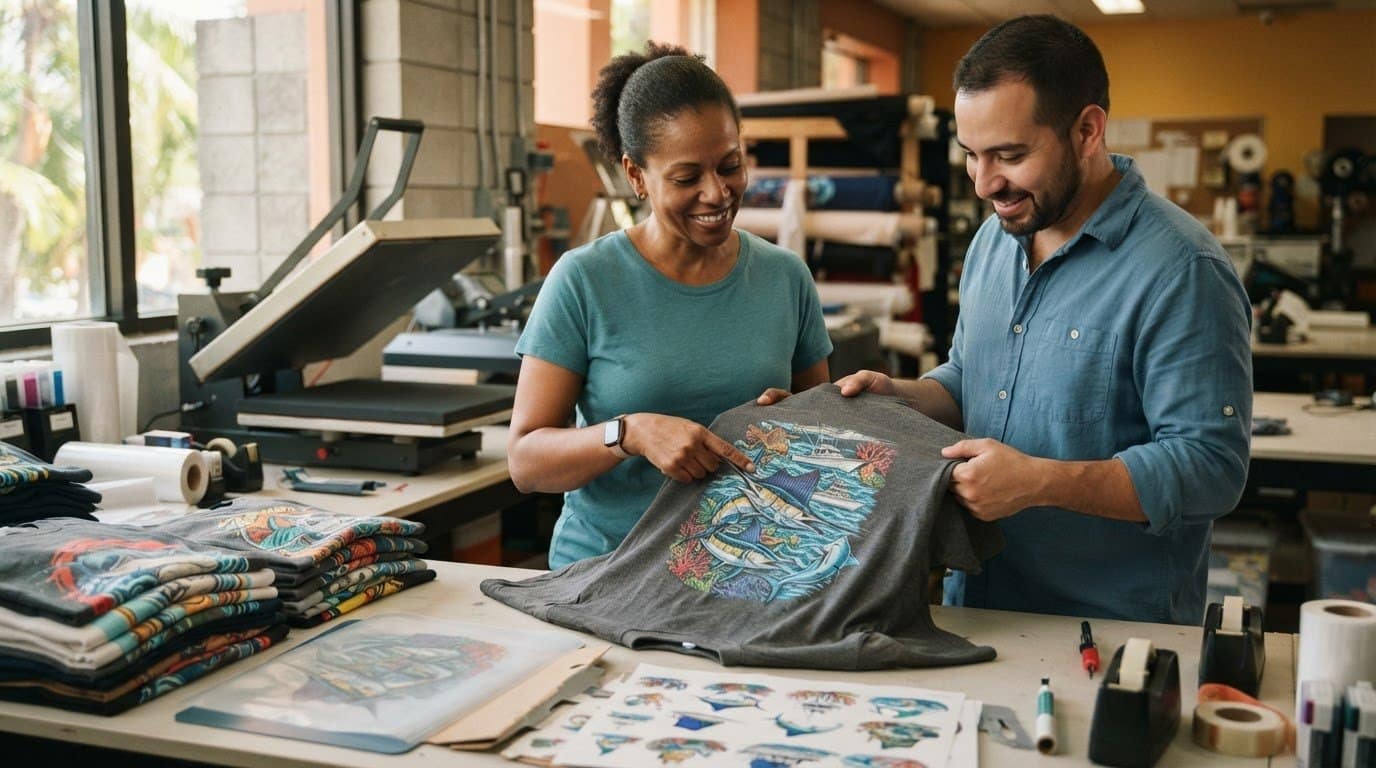
DTF transfers decorate apparel with printed artwork and can support detailed designs. They may suit a company logo with multiple colors or details that matter to the finished appearance. Suitability depends on the garment and its material, so review garment documentation and decoration requirements rather than assuming every uniform is compatible.
For Miami-area apparel decoration, see DTF transfers in Miami. The article What Are DTF Transfers? A Complete Guide for Apparel Decorators offers process context for understanding this decoration method.
Compare both approaches against the same points before choosing:
- Appearance: Decide whether the team wants a stitched logo or printed artwork.
- Artwork: Review logo size, placement, colors, and level of detail.
- Garment: Match the decoration plan to the actual garment and its material.
- Care: Follow garment and decoration-specific instructions. Don’t assume a particular wash life.
Captain Printing provides finished uniforms with custom embroidery and DTF transfers for apparel decoration. Share the garment details and approved artwork so the branding method can be planned for the selected uniform. For bilingual crews, uniformes de trabajo can be organized by role, size, and logo placement in the same order plan.
How Can You Plan a Uniform Order for a Marine Construction Crew?
A clear order plan keeps sizes, role assignments, artwork, and decoration decisions together. It also prevents one crew member’s change from creating confusion across the full order. For teams choosing durable uniforms for marine construction, document the details before approving production.
What details should buyers prepare before placing an order?
Start with a role-based order sheet. Group garments by crew function, but keep logo placement consistent across the team unless a role has a specific documented need. Record the garment and decoration choice for each group so quantities and artwork are straightforward to review.
- Counts and sizes: List the number of garments needed and the size breakdown for each role.
- Role assignments: Identify which garments are for field crews, operators, supervisors, or client-facing staff.
- Logo placement: Specify the location and approximate size of the logo, and note any role-specific differences.
- Artwork: Prepare a clean logo file and document color, layout, and text requirements.
- Garment care: Review care and decoration instructions against the selected garment’s documentation.
Artwork decisions matter. A logo intended for a small chest placement may need a different layout from a larger back design. Keep approved versions clearly labeled, and avoid sending multiple files without identifying which one is final. Include the selected garment and its material with the artwork details so the decoration plan can be reviewed against the actual apparel.
How can buyers reduce avoidable order revisions?
Assign one decision-maker to collect size information and approve the artwork, garment grouping, and logo placement. Before production begins, review a written order summary listing quantities by size and role, decoration method, artwork version, and placement. Resolve any mismatch between the summary and the approved proof before giving approval.
Use this sequence to move from planning to approval:
- Count team members and assign each person to a role group.
- Collect sizes and confirm the garment quantities for each group.
- Finalize the logo file, colors, layout, and placement instructions.
- Choose embroidery or DTF decoration based on the garment and artwork.
- Review the proof and written order summary before approving production.
Keep the approved summary with the team’s uniform records. It gives future orders a reference for sizing, role grouping, and consistent branding, while making it easier to document changes deliberately.
Miami-area construction companies can order finished uniforms and apparel decoration through Captain Printing’s Opa-locka shop or online. To plan branded apparel, review DTF transfers in Miami and prepare approved artwork and garment details for the order.
Where Can Miami Marine Construction Teams Get Branded Uniforms?
Miami marine construction companies can order finished uniforms and apparel decoration from Captain Printing at 13680 NW 19th Ave Unit 1B, Opa-locka, FL 33054. Captain Printing provides custom embroidery and DTF transfers for adding company logos to suitable apparel. Choose the garment for its intended work first, then plan decoration around its material and the logo design.
What can Captain Printing provide for branded workwear?
Custom embroidery adds a stitched company logo to business clothing and uniforms. DTF transfers apply printed artwork to apparel and can accommodate detailed logo designs. The appropriate method depends on the garment and artwork, so keep garment performance separate from decoration claims and follow the garment’s care and decoration instructions.
Captain Printing serves Miami-area businesses from Opa-locka. Companies in Hialeah, Doral, Wynwood, and Fort Lauderdale can organize team orders by role, quantity, size, and logo requirements. Same-day production applies to DTF transfers, not finished uniform orders. Keeping that distinction clear helps buyers plan apparel and decoration without assuming a uniform order has the same production timing.
How should a buyer take the next step?
Prepare team quantities and a size breakdown before starting an order. Include approved logo artwork, preferred placement, and the decoration method. If different crew roles need different garments, organize the details by role while keeping logo placement consistent wherever possible. This gives the order a clear basis for review and helps keep the team’s branding coordinated.
For buyers comparing durable uniforms for marine construction, start with a garment selected for the crew’s tasks, then plan decoration for that specific apparel. Provide garment details and artwork together so the uniform and logo can be considered as one finished order. Captain Printing provides finished uniforms and apparel decoration for local construction teams.
Prepare your logo, team quantities, sizes, and decoration preferences, then Start your Miami DTF transfer order through Captain Printing.
Put Your Crew’s Uniform Plan Into Action
Durable uniforms for marine construction start with the work. Assess each role’s tasks, exposure, fit, movement, and care routine before selecting garments, and keep uniform choices separate from required PPE decisions. Then match the logo method to the garment and artwork, using custom embroidery or DTF transfers without assuming either changes the garment’s performance.
Make the order easier to manage with clear quantities, size breakdowns, approved artwork, and consistent logo placement. Captain Printing provides finished uniforms and apparel decoration, including custom embroidery for business uniforms and DTF apparel transfers. Miami-area teams can work with the Opa-locka shop, where production is handled in-house.
Start with your team’s garment and logo details. Start your Miami DTF transfer order. A clear plan helps your crew move forward with coordinated, job-based workwear.
Frequently Asked Questions
What makes a uniform suitable for marine construction?
Suitability depends on crew role, jobsite conditions, garment fit, care routine, and material details verified for the selected garment. Assess exposure to water, sun, dirt, or abrasion, then consider work movements such as reaching, bending, or climbing. Choose apparel for actual duties rather than assumptions. Uniforms help identify a team, but they don’t replace task-specific protective equipment selected for jobsite hazards.
Which fabric is best for marine construction uniforms?
There isn’t one fabric that’s best for every crew or task. Compare garment documentation with expected exposure, comfort needs, movement, and cleaning requirements. Match the material to the work instead of relying on a general label. Review the selected garment’s stated properties and care instructions before ordering, then use those details to decide whether it fits the crew’s routine.
Are embroidered logos or DTF transfers better for work uniforms?
Neither option is a universal winner. Embroidery adds a stitched logo treatment, while a DTF transfer applies printed artwork to apparel. Consider the garment, logo detail, placement, and care instructions together. Don’t assume either method guarantees a particular wash life. Miami-area teams can review DTF transfer options and custom embroidery for business uniforms.
Can DTF transfers be used on marine construction uniforms?
DTF transfers are used to decorate apparel, but suitability depends on the selected garment, its material, and its care instructions. Choose the garment first, then match the artwork and decoration method to its requirements. Don’t assume every uniform is suitable or that a transfer has a specific lifespan. Review the garment’s decoration guidance, then explore DTF transfers in Miami for apparel branding.
How should a company choose uniforms for different crew roles?
List each role’s regular tasks, movement needs, common exposure, layering preferences, and branding requirements. Compare garment options role by role instead of automatically ordering one style for everyone. Keep required protective equipment decisions separate from uniform selection. A simple order table can track each role, garment, size, decoration method, and care details. Assign one person to review the entries and approve the final team order.
Plan branded marine construction uniforms for your Miami-area crew with Captain Printing. Prepare the garment details, quantities, sizes, and approved logo artwork, then start your Miami DTF transfer order.
Phone: +1 (305) 930-4700 | Address: 13680 NW 19th Ave, Unit 1B, Opa-locka, FL 33054 | Email: [email protected]