Blog
How to Prevent DTF Film from Curling in Florida Humidity

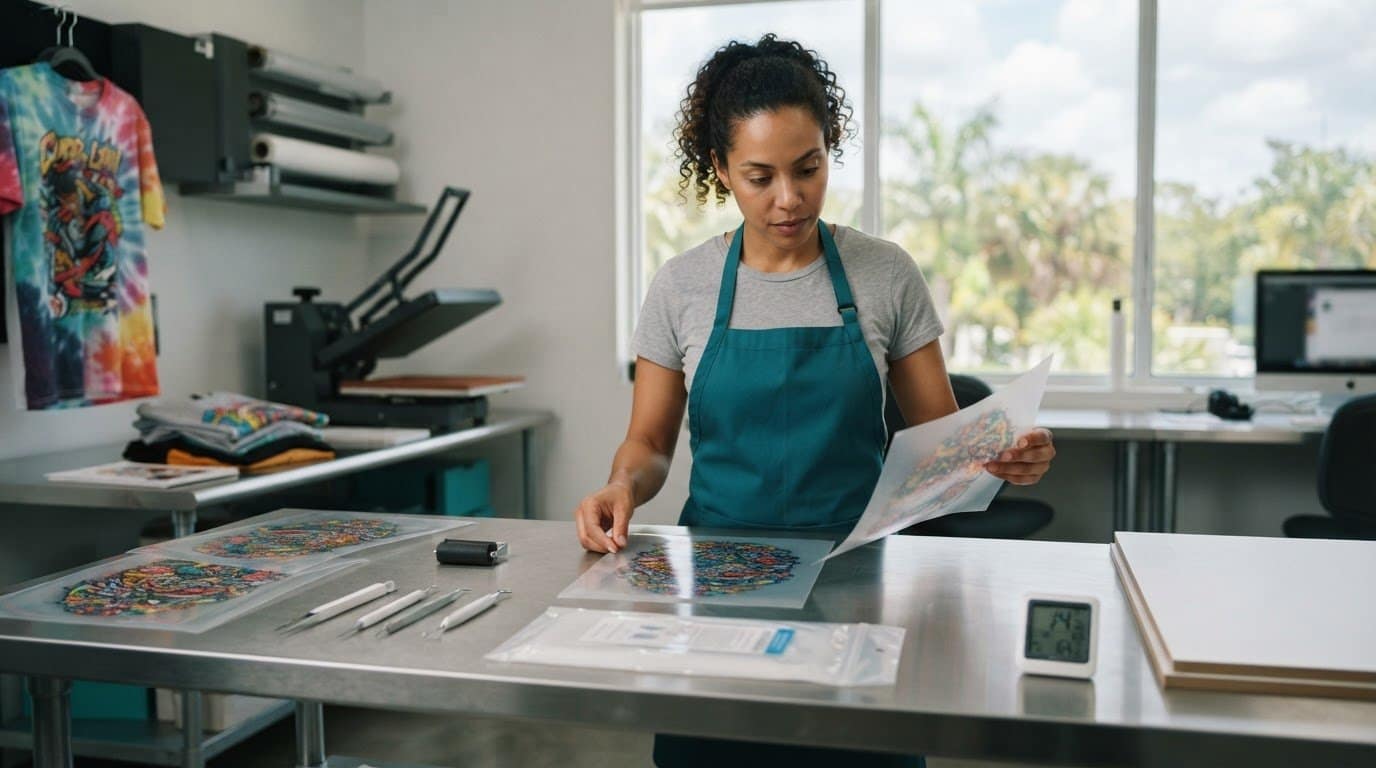
What if the film starts curling before you change a printer or press setting? In Florida, moisture exposure during storage and handling can contribute to DTF film curling. Knowing how to prevent dtf film from curling in florida humidity starts with finding where the curl begins and controlling moisture before adjusting production settings.
If film curls in storage, while loading, or during printing, the cause may not be obvious. Humidity, temperature changes, packaging, and handling can all affect the film. Changing settings before identifying the problem can create new production issues.
This guide provides a practical workflow for tracing curl through storage, handling, and printing. Learn how to store film flat in sealed packaging, handle it consistently, and follow material-specific instructions instead of guessing. You’ll also see when finished, ready-to-press DTF transfers can simplify production for decorators who prefer not to manage film in-house.
Key Takeaways
- Control storage and handling first. Humidity can contribute to curl, but it may not be the only cause.
- Protect unused film from moisture, direct sunlight, and abrupt environmental changes, and follow the film’s instructions.
- Track when curling appears to narrow down whether storage, loading, or handling may be involved.
- Use a repeatable inspection and loading routine to learn how to prevent dtf film from curling in florida humidity without changing settings prematurely.
- Finished DTF transfers can simplify in-house film handling, but they still need proper storage and care before pressing.
Why does DTF film curl in Florida humidity?
Check the film’s storage environment and handling before changing production settings. DTF film curl means a sheet or its edges bend instead of lying flat. Humidity can contribute, but it does not explain every curl, and appearance alone cannot confirm the cause.
For decorators in Miami and across Florida, the practical starting point for how to prevent dtf film from curling in florida humidity is to identify when the film stops lying flat. Check the material instructions, inspect the film, and track what happens during storage and loading before adjusting printer or press settings.
What can humidity change during DTF film handling?
Moisture in the surrounding air may affect how some films behave. Hygroscopy describes the attraction and retention of water from the environment, but DTF film construction varies. The base film, coatings, and other material layers can affect how a particular product responds, so the handling guidance for one film may not apply to another.
Follow the instructions for the specific film. Separate observations from conclusions: a curled edge is an observation, while humidity is only one possible explanation. Packaging, handling, and environmental changes may also be relevant. A curl does not prove that the film absorbed moisture, and changing a setting may not fix it.
When does the film start curling?
Note whether the film is already curled when you open it, begins bending as you load it, or changes after printing. The timing helps narrow down which part of the workflow to investigate. Curl present before loading points to storage or earlier handling; curl that first appears during loading or printing calls for a closer look at those stages.
Keep a simple record for each affected sheet or batch. Include:
- When you first noticed the curl.
- How the film was packaged and stored before use.
- How it was handled and loaded.
- Room conditions at the time, using readings available in your workspace.
- Whether the curl changed during or after printing.
Look for repeatable patterns instead of making several changes at once. If the same material stays flat in storage but curls during loading, investigate that handling step first. If it is curled as soon as the package is opened, review storage and the material’s instructions before changing production settings.
How storage and handling affect DTF film in humid weather
A consistent storage and handling routine helps reduce unnecessary exposure to moisture and physical stress. Keep unused film protected, handle it without bending or twisting, and follow the directions for that specific material. Do not rely on a universal humidity reading or storage temperature; use the film manufacturer’s guidance.
In Florida, a film package may move between different indoor conditions during a workday. Avoid leaving it in direct sunlight, near a source of moisture, or somewhere conditions change abruptly. These precautions help limit variables, but they do not prove humidity caused a curl.
How should you store film between print runs?
Keep film in its original protective packaging when practical. Close the package between uses, and store it in a clean, dry indoor location rather than leaving it exposed on a work surface. Follow the packaging and storage instructions for that material, since recommendations can differ. If the workspace has moisture issues, the EPA’s guidance on controlling moisture and humidity offers general steps for managing indoor moisture.
How can you handle film without adding curl?
Support the sheet or roll as you move it. Avoid letting a sheet fold over an edge, twisting a roll, or gripping one corner while the rest hangs unsupported. Do not stack heavy objects on film or force curled material flat. That can add physical stress without addressing why it curled.
Keep your routine consistent so you can compare results. Record the film type, how it was packaged, where it was stored, and whether it lay flat before and after storage. If the same film stays flat before storage but curls after a particular change, that gives you a useful lead. Change one handling or storage factor at a time, then check the result against the material’s instructions.
- Protect unused film in its original packaging and close it between uses.
- Store it indoors, away from avoidable moisture, sunlight, and abrupt environmental changes.
- Support film during movement and avoid bending, twisting, or placing weight on it.
- Record whether the same film curls before or after a storage change.
This controlled routine is a practical starting point for how to prevent dtf film from curling in florida humidity, without guessing at settings. If you prefer to skip in-house film handling, finished DTF transfers in Miami offer a ready-to-press alternative. Store and handle finished transfers according to their specific instructions as well.
How can you tell humidity-related curl from other DTF problems?
Track when curling appears before deciding what to change. A sheet that is already curled before loading points to a different part of the workflow than one that bends during handling or after printing. One curl symptom alone does not prove humidity is responsible.
Use the observations below to choose a safe next check, not to make an instant diagnosis. Film construction, storage exposure, and how the sheet is supported can all affect what you see.
| Observation | Possible workflow area | Safe next check |
|---|---|---|
| Film is curled when first opened. | Storage or material-specific behavior. | Review its packaging and storage instructions. Compare another section from the same package. |
| Edges lift while the sheet is moved or loaded. | Handling or uneven support. | Support the sheet evenly and observe whether the curl changes during loading. |
| The whole sheet bends before printing. | Storage, handling, or the film’s construction. | Inspect a newly opened section and compare it with film already exposed during work. |
| A roll curves toward its former shape after being unrolled. | Roll memory or material behavior. | Record how the material sits before and during loading. Follow the film’s handling directions. |
| Curl first appears during or after printing. | Loading, printing, or another process condition. | Check the transfer and equipment instructions before changing settings. |
What do different curling patterns suggest?
Note whether only the edges lift, the full sheet bends, or an unrolled section curves back toward its roll shape. These are useful descriptions, not proof of a specific cause. Compare a newly opened section with material that has been exposed during work, and record whether the pattern changes. Keep the film supported during the comparison.
Should you change press or printer settings first?
Not without checking the relevant transfer and equipment instructions. Unverified heat adjustments can create separate quality problems and make the original curl harder to troubleshoot. For how to prevent dtf film from curling in florida humidity, change one variable at a time, and only after checking storage, handling, and instructions.
If the curl persists, log what you observed, the single change you made, and the result. This gives you a clearer basis for the next step than changing several settings at once.
What step-by-step routine helps prevent DTF film from curling?
A repeatable routine helps protect film and identify where curling begins. Start with the manufacturer’s instructions and a visual inspection, not an unverified printer or press adjustment. Follow the same sequence for each run so you can compare results.
What should you check before the next print run?
Before loading film, confirm that the material and transfer instructions match the job. Inspect the sheet for bends, note its packaging and storage history, and prepare a clean, dry work surface. Support the film evenly as you handle it. Use only the temperature and process settings specified for the relevant transfer.
- Review the instructions. Read the manufacturer’s storage and handling guidance for the specific film. Keep those directions with your production notes.
- Inspect the package and film. Note whether the package was closed between uses. Check for visible bends or curl before moving the material.
- Prepare the work area. Use a clean, dry surface. Keep the film away from avoidable moisture, direct sunlight, and abrupt environmental changes.
- Handle and store carefully. Support the sheet or roll during movement. Return unused film to its protective packaging and close it between print runs.
- Load the film consistently. Support it evenly as you load it. Follow the specified process settings rather than changing them to compensate for curl.
- Record what happens. Note whether curl was present before loading, appeared during handling, or showed up after printing.
How should you test one change at a time?
If curl continues, choose one storage or handling adjustment and keep the rest of the workflow consistent. Compare the next result with the previous run, then record the difference. If the issue persists, stop repeated trial-and-error changes and return to the film and transfer instructions.
A simple log makes the comparison useful. Record the film type, storage location, whether the package was open or closed, how long it was exposed during work, handling steps, and when curl first appeared. Add room-condition readings if available, but do not treat a single reading as proof of cause. This gives you a clearer process for how to prevent dtf film from curling in florida humidity without changing several variables at once.
If you prefer finished transfers rather than managing film in-house, order finished DTF transfers in Miami for your pressing workflow.
When should Miami decorators choose finished DTF transfers instead?
Choose finished DTF transfers when managing the in-house film-printing workflow takes more time or control than your operation can support. Ordering ready-to-press transfers means your shop does not need to manage film printing and handling. Finished transfers still need proper storage and handling before pressing.
When does ordering finished DTF transfers fit your workflow?
A small business may need transfers for a short apparel run without maintaining a film workflow. An apparel decorator may want to focus on pressing and garment production, while an e-commerce reseller or wholesale buyer may need finished transfers for its own orders. The right choice depends on which production steps your team wants to manage.
Review the DTF transfer guide to understand the transfer workflow. For decorators troubleshooting how to prevent dtf film from curling in florida humidity, ordering finished transfers removes in-house film storage and loading from that workflow. It does not remove storage considerations: keep received transfers protected and follow their material-specific handling instructions.
How can local Miami production simplify the next step?
Captain Printing produces finished DTF transfers at its shop at 13680 NW 19th Ave, Unit 1B, Opa-locka, FL 33054. For businesses in Miami, Opa-locka, Hialeah, and nearby areas, ordering finished transfers provides an alternative to printing and handling film in-house. The transfers are ready for your pressing workflow and should be stored according to their specific instructions.
Compare the steps you currently handle with the steps involved in ordering and pressing finished transfers. If reducing film handling is your priority, the change is who manages that production stage, not whether transfers need careful storage and handling afterward.
For finished DTF transfers from Captain Printing in Opa-locka, order DTF transfers from Captain Printing.
Keep Your DTF Workflow Moving
Start by checking the film’s instructions, storage history, and handling before changing printer or press settings. Note when curl appears, then test one workflow adjustment at a time. These steps help you narrow down what may be affecting the film without treating humidity as the only possible cause.
For decorators who want to avoid managing in-house film handling, finished transfers offer a different workflow. Captain Printing provides DTF transfers from its Opa-locka shop at 13680 NW 19th Ave, Unit 1B, Opa-locka, FL 33054. Finished transfers still need proper storage and handling before pressing.
Use a consistent routine for your next run, or choose a finished transfer for your apparel production. Order finished DTF transfers in Miami from Captain Printing.
Frequently Asked Questions
Can Florida humidity make DTF film curl?
Yes, humidity can contribute to DTF film curling, but it is not the only possible cause. Curl means the film edges or sheet bend instead of staying flat. Storage exposure, handling, film construction, and the point in production when curl appears can all matter. Treat humidity as one possibility, then check the material instructions and note whether curling starts before loading, during handling, or after printing.
How do I keep DTF film flat in a humid room?
Protect unused film in its original packaging when practical, close the package between uses, and store it in a clean, dry indoor location. Keep it away from avoidable moisture, direct sunlight, and abrupt environmental changes. Support the sheet or roll during movement, and avoid bending or twisting it. Follow the film’s specific storage instructions rather than relying on a universal humidity or temperature target.
Should I use a dehumidifier to stop DTF film from curling?
A dehumidifier may help manage indoor moisture, but it cannot confirm that humidity caused a particular curl or guarantee that film will stay flat. Review the film’s storage instructions and record the conditions where it is kept. If you adjust room moisture, change one factor at a time and observe the same material under consistent handling. Do not set a target humidity unless the manufacturer provides guidance for that film.
Can I flatten DTF film that has already curled?
Do not force curled film flat or place heavy objects on it. Pressure can add physical stress without addressing why it curled. Check the manufacturer’s instructions before attempting a correction, and inspect the film for bends or damage. Note whether it was curled when opened or changed during handling. If the instructions do not provide a recovery method, avoid guessing and use your observations to identify where the curl began.
Should I change the heat press temperature when DTF film curls?
Not as a first step. Curling may begin in storage or during loading, before a heat press is involved. Check the relevant transfer and equipment instructions, and use only the specified process settings. Changing heat without evidence can introduce separate transfer-quality problems. Identify when the curl appears, then investigate that workflow stage. If you test an adjustment, change one variable at a time and record the result.
Does DTF film need to acclimate before printing?
Follow the instructions for the specific film. Acclimation recommendations can depend on the material and its packaging, so do not assume every film needs the same waiting period or handling method. Avoid abrupt environmental changes where practical, and note the film’s condition when it is opened and loaded. If the manufacturer gives an acclimation procedure, follow it as written and include the steps in your production notes.
For finished DTF transfers produced at Captain Printing’s Opa-locka location, order DTF transfers in Miami.
Phone: +1 (305) 930-4700 | Address: 13680 NW 19th Ave, Unit 1B, Opa-locka, FL 33054 | Email: [email protected]